/ Trade / English
Before Buying Overseas-Made Electrical Goods or Mobile Batteries on Mercari: What the PSE Mark Means and How to Check It
Based on the Ministry of Economy, Trade and Industry's outline of the Electrical Appliances and Materials Safety Act and Mercari's prohibited-items guide, this article explains the PSE mark required to sell electrical products in Japan: the diamond and round marks, mobile batteries (regulated since February 2019), and what to look for in listing photos and ask the seller.
Written by Koetsu Co., Ltd.
Electrical goods and mobile batteries bought overseas sometimes appear on Mercari. One thing worth checking before buying them is the PSE mark. Based on the Ministry of Economy, Trade and Industry's outline of the Electrical Appliances and Materials Safety Act and Mercari's prohibited-items guide, this article explains what the PSE mark means and what buyers can check on a listing.
What is the PSE mark?
The PSE mark is the label attached to electrical products under Japan's Electrical Appliances and Materials Safety Act. According to METI, the law regulates the manufacture, import and sale of electrical products in order to prevent hazards caused by them. PS stands for Product Safety and E for Electrical Appliances & Materials.
Businesses that manufacture or import electrical products must notify the government, make the products meet technical standards and carry out inspections. Only notified businesses that have met these obligations may attach the PSE mark; anyone else is prohibited from applying the mark or anything that could be confused with it.
Diamond mark and round mark
There are two shapes. A diamond-shaped mark is used for specified electrical products, which are considered especially likely to cause hazards, and a round mark for all other regulated electrical products. Specified products also have to pass a conformity inspection by a registered inspection body.
| Category | Mark | Examples given by METI |
|---|---|---|
| Specified electrical products (116 items) | Diamond | Electric water heaters, electric heating and motorised toys, electric pumps, massagers, DC power supplies and more |
| Other electrical products (341 items) | Round | Kotatsu heaters, rice cookers, refrigerators, electric toothbrushes, TVs, audio equipment, lithium-ion batteries and more |
On actual products the PSE mark appears together with the manufacturer's or importer's name, the rated voltage and the rated power consumption, and on specified products the registered inspection body's mark as well. The regulated items are set by cabinet order, so not every electrical product is covered.
Sales restrictions and mobile batteries
METI's outline states that anyone in the business of manufacturing, importing or selling electrical products must not sell, or display for sale, electrical products that do not carry the PSE mark and related markings (Article 27). Products bought overseas may not carry a PSE mark for the Japanese market.
For mobile batteries, Mercari announced on 29 January 2019 that from 1 February 2019, mobile batteries without a PSE mark could no longer be sold, including existing stock, and could not be listed. Mercari's current guide still lists batteries, including mobile batteries, that lack the legally required PS mark as prohibited items because their safety cannot be confirmed.
The same guide also prohibits external or detachable batteries that are not new or close to unused, non-genuine compatible batteries, and batteries that are swollen, damaged or faulty, including those built into devices.
What buyers can check on a listing
Before buying an electrical product or a mobile battery, first check whether the listing photos show the rating label on the device. If you can make out the shape of the PSE mark, the business name and the rated voltage, that is a useful clue. If not, ask before buying, through a comment or a message to the shop, for example: "Could you show a photo of the PSE mark and rating label on the item?"
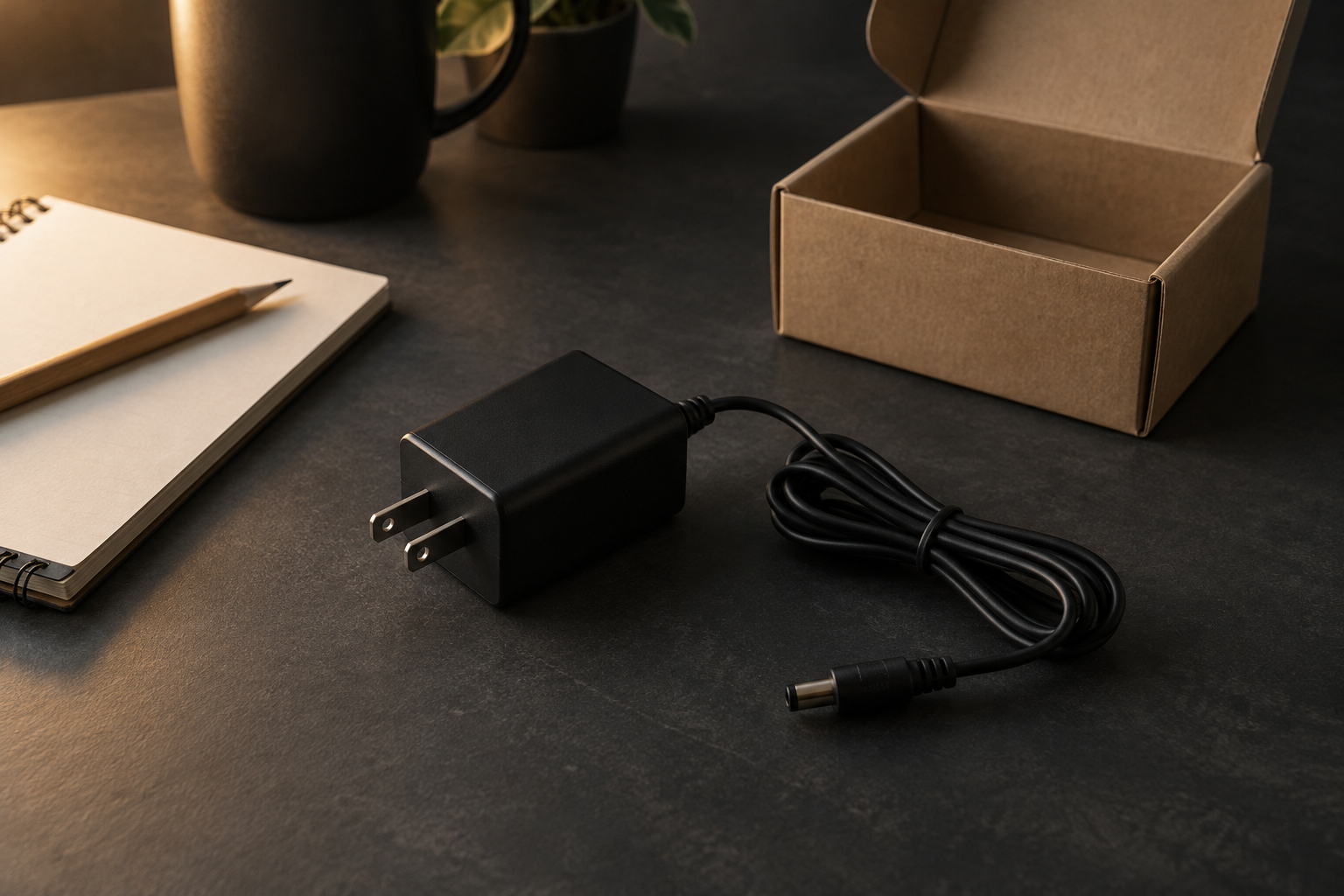
Plug shapes and voltages can also differ between Japan and other countries. A product made for another market may not work directly from a Japanese socket, or its AC adapter may not be intended for Japan, so it helps to check the plug type and supported voltage as well.
Checklist
- Do the photos show the rating label (PSE mark, business name, ratings)?
- Does a mobile battery carry the round PSE mark?
- Ask for photos before buying if none are shown
- Check the description for swelling, damage and condition
- Check that the plug type and voltage work in Japan
Koetsu's related shops on Mercari also sell items bought overseas. If anything about a product's labelling or specifications is unclear, please feel free to ask before you buy. For the legal details, please refer to METI's pages on the Electrical Appliances and Materials Safety Act.
Sources and further reading
- Ministry of Economy, Trade and Industry: outline of the Electrical Appliances and Materials Safety Act (Japanese)(Checked: )
- Mercari guide: dangerous items and items with safety problems (prohibited items) (Japanese)(Checked: )
- Mercari notice: mobile batteries without a PSE mark prohibited from 1 February 2019 (Japanese)(Checked: )