/ Osaka Food / English
What Is Atsuage-yaki at a Yakitori Restaurant? Thick Fried Tofu vs Aburaage, How to Eat the Bonito-Topped Plate, and What to Ask Before Ordering
Atsuage-yaki, grilled thick fried tofu, often appears among the side dishes at yakitori restaurants. Is atsuage the same as namaage, and how does it differ from aburaage? Using a photo Yakitori Senkichi published on Google, this guide explains how they are made, how to enjoy the bonito-topped plate while it is hot, and what to check first if you have a soy or fish allergy.
Written by Koetsu Co., Ltd.
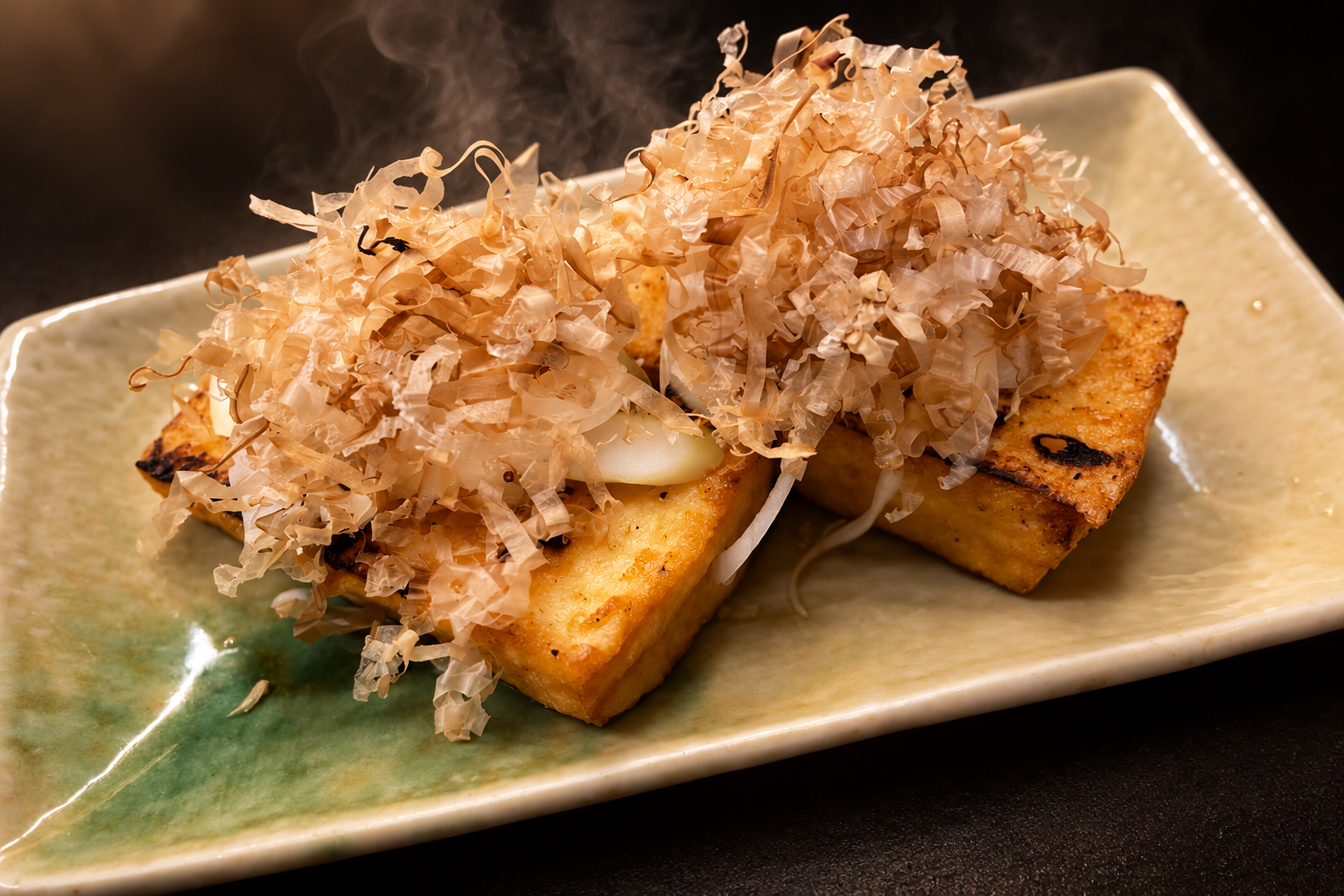
Besides skewers, yakitori menus often include a tofu dish or two. At Yakitori Senkichi in Minamikyuhoji, the side-dish section of the menu as of October 2026 listed atsuage-yaki, grilled thick fried tofu. An earlier article compared it with edamame and fries as something to order alongside skewers. This time we focus on atsuage itself: what it is, and how to enjoy it.
A note up front. We could not confirm from public information where Yakitori Senkichi gets its atsuage, how large the pieces are, how it is grilled, or what is added at the end. The explanation of how atsuage is made comes from encyclopedias and other general sources. Please ask the staff about the day's dish when you order.
The dish in the photo
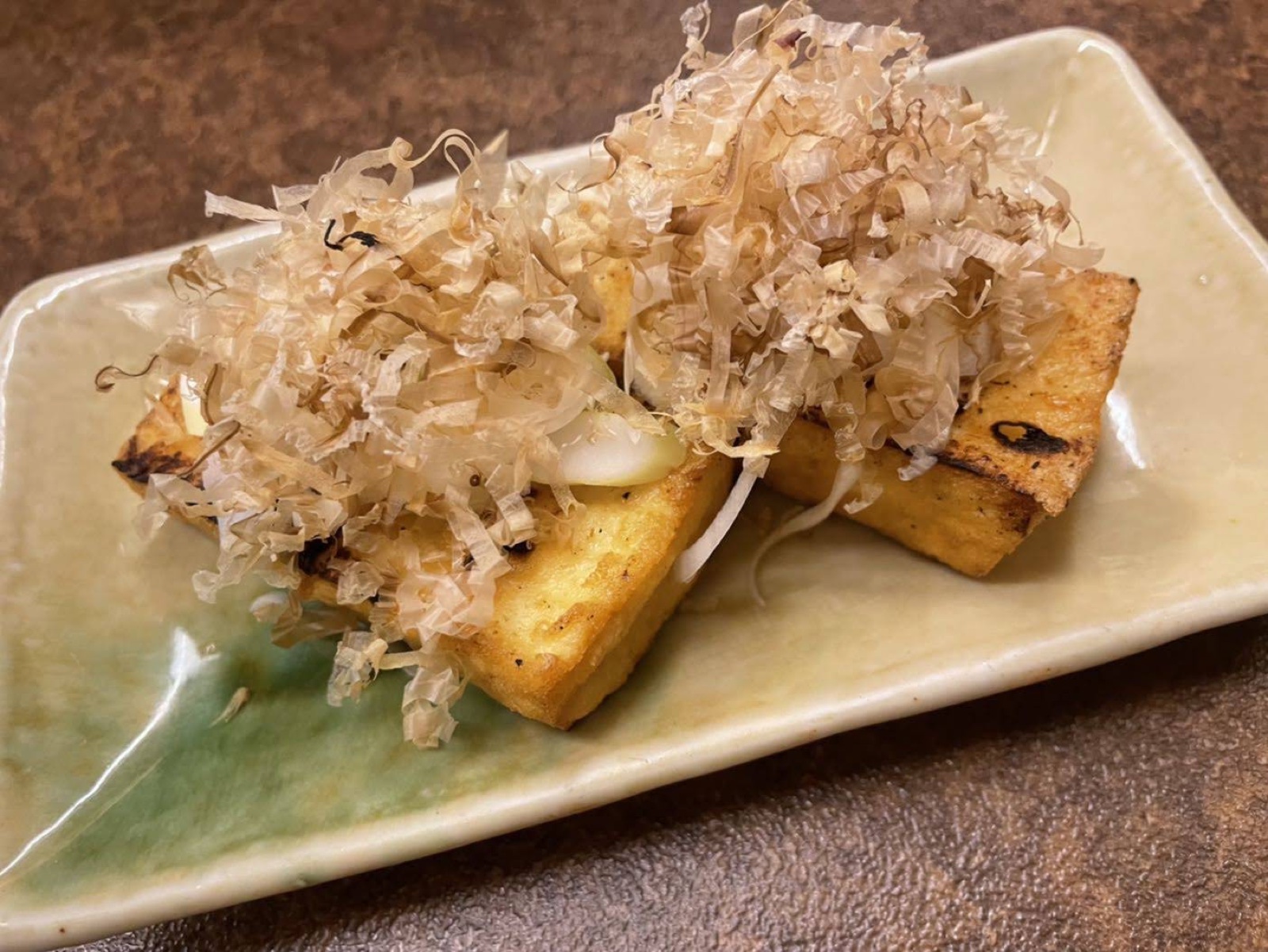
The photo shows two thick pieces of atsuage on a long plate. The sides are golden brown with a few dark grill marks. A fluffy heap of bonito flakes sits on top, with thin white vegetable slices underneath, which appear to be onion. We could not tell from the photo whether any sauce or soy sauce had been added.
Atsuage, namaage and aburaage
First, the names. According to the Nipponica encyclopedia on Kotobank, namaage is also called atsuage, so the two words mean the same thing. Firm tofu is cut thicker than for aburaage and fried in one go in vegetable oil at 180 to 200 C. Aburaage, also called usuage, is made from thin slices of tofu fried twice: first at around 120 C, then at around 180 C. Frying once versus twice is the key difference.
The same encyclopedia explains that during the first fry of aburaage a skin forms on the surface, trapping steam so the slice puffs up to about three times its size, which leaves a net-like inside. Atsuage is fried thick and only once, so the inside keeps a soft, tofu-like texture. Names can shift by region, too: Japan's Ministry of Agriculture notes that while aburaage usually means the thin kind nationwide, in Fukui Prefecture the word refers to a large, thick fried tofu, in other words atsuage.
| Atsuage (namaage) | Aburaage (usuage) | |
|---|---|---|
| Tofu cut | Thick | Thin |
| Frying | Once, at 180 to 200 C | Twice, low then high heat |
| Inside | Stays soft like tofu | Puffs up into a net-like texture |
| Typical dishes (per encyclopedias) | Grilled with grated radish and soy sauce, simmered dishes, oden | Kitsune udon, inari sushi, mixed rice |
Ordering atsuage-yaki means the already-fried tofu is grilled once more before it reaches you. The Heibonsha World Encyclopedia also lists grilling namaage and eating it with grated radish and soy sauce as a common way to serve it. The surface gains a grilled aroma on top of the fried crust, while the inside stays soft, which is why many people order it as a change of texture between skewers.
Eating the bonito-topped plate
When it comes topped with bonito flakes, as in the photo, the shavings are so thin that they may seem to sway in the steam and heat rising from the freshly grilled tofu. That is simply a sign the dish has arrived hot. Bonito flakes go limp as they absorb moisture, so it is best to start eating while they still smell fragrant.
Because atsuage is thick, the tofu inside can be hotter than the outside suggests once it has warmed through. If the pieces are large, split them in half with your chopsticks and let some steam escape before taking a bite. Eating each piece with some of the vegetables and bonito flakes on top gives you a mix of aroma and texture.
How much soy sauce, sauce or condiment is already on the dish varies by restaurant and by day. If you are unsure whether to add anything, taste a bite first or simply ask what it is meant to be eaten with. Adding too much liquid makes the bonito flakes wilt all at once.
What to check before ordering
Atsuage is a tofu product made from soybeans, and bonito flakes are made from fish (skipjack tuna). If you have a soy or fish allergy, or want to know about the frying oil or condiments, tell the staff and check before you order. Whether toppings can be left off also depends on the restaurant.
- Atsuage-yaki o hitotsu onegaishimasu. (One atsuage-yaki, please.)
- Nani o tsukete tabemasu ka? (What do I eat it with?)
- Katsuobushi o nuite moraemasu ka? (Could you leave off the bonito flakes?)
- Daizu (sakana) no arerugii ga arimasu. Daijobu desu ka? (I have a soy [fish] allergy. Is this OK?)
Since it is finished on the grill like the skewers, it may take a little while at busy times. Ordering it with your first round of skewers makes it more likely to arrive at a good moment in between them.
Summary
Atsuage and namaage are the same thing: thick tofu fried once. It differs from aburaage, which is cut thin and fried twice, and keeps a soft tofu texture inside. At a yakitori restaurant, atsuage-yaki is a plate to enjoy hot, with grilled edges and fragrant bonito flakes. For how it compares with other sides, see our guide to side dishes with yakitori.