/ Osaka Food / English
What Is Kanikama-yaki on a Yakitori Menu? What Imitation Crab Is Made Of, How to Read Its Label, and What to Ask If You Have a Shellfish Allergy
What is the kanikama-yaki you may see among the side dishes at a yakitori restaurant? Using a photo Yakitori Senkichi published on Google, this guide explains that kanikama is a fish-paste product, shows an example ingredient label, notes that allergen labeling is not mandatory for restaurant dishes in Japan, and lists what to ask before ordering.
Written by Koetsu Co., Ltd.
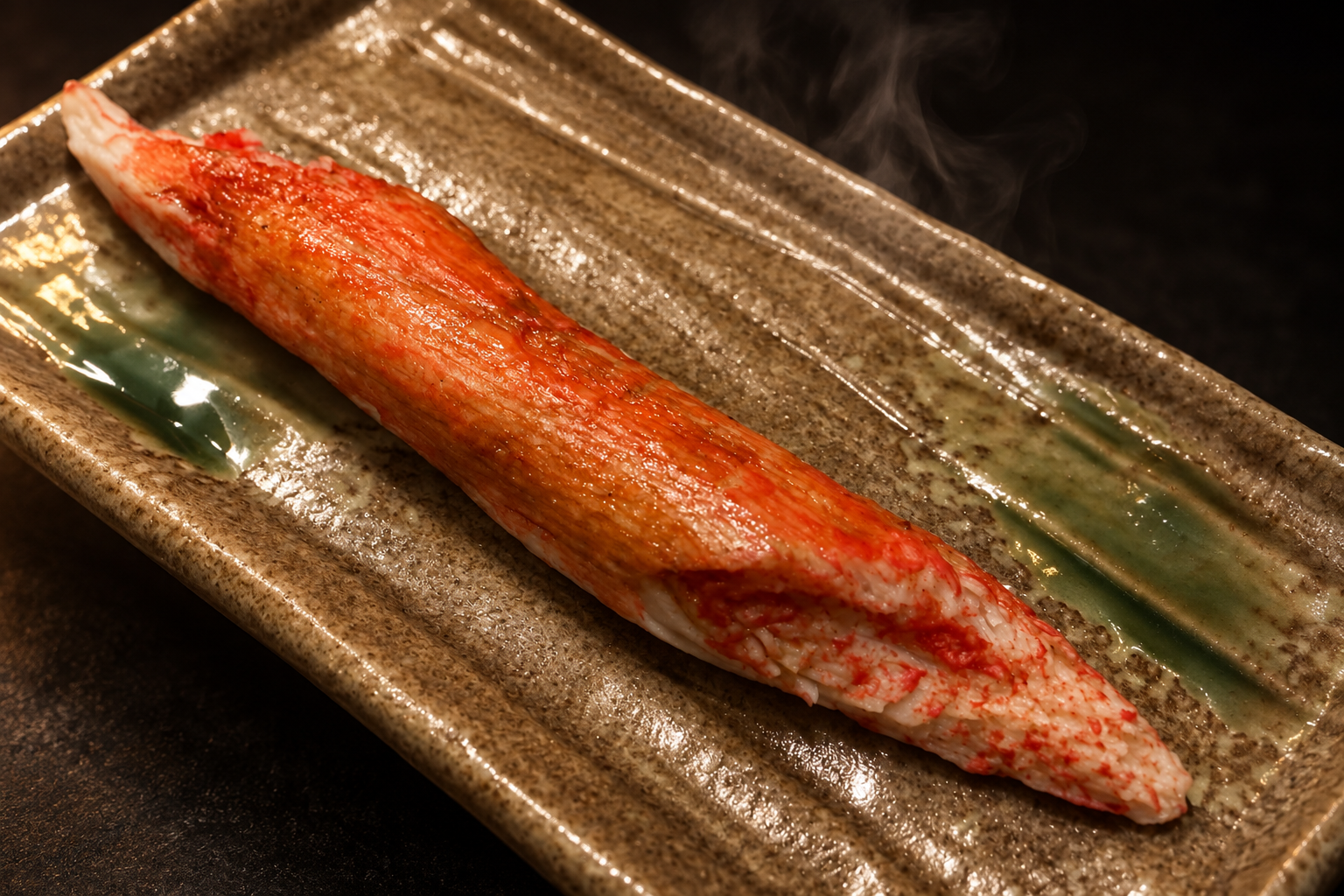
If you see kanikama-yaki on a yakitori menu, you may wonder whether it is grilled crab or something else. At Yakitori Senkichi in Minamikyuhoji, kanikama-yaki was listed under the side dishes on the menu as of October 2026. As the name says, it is grilled kanikama, the crab-flavored fish cake often called imitation crab, not crab itself.
One point up front. We could not confirm from public information which brand of kanikama Yakitori Senkichi uses or what its ingredients are. The ingredient label in this article is one example of a retail product. If you have a shrimp or crab allergy, please ask the restaurant before ordering.
Kanikama-yaki in the photo
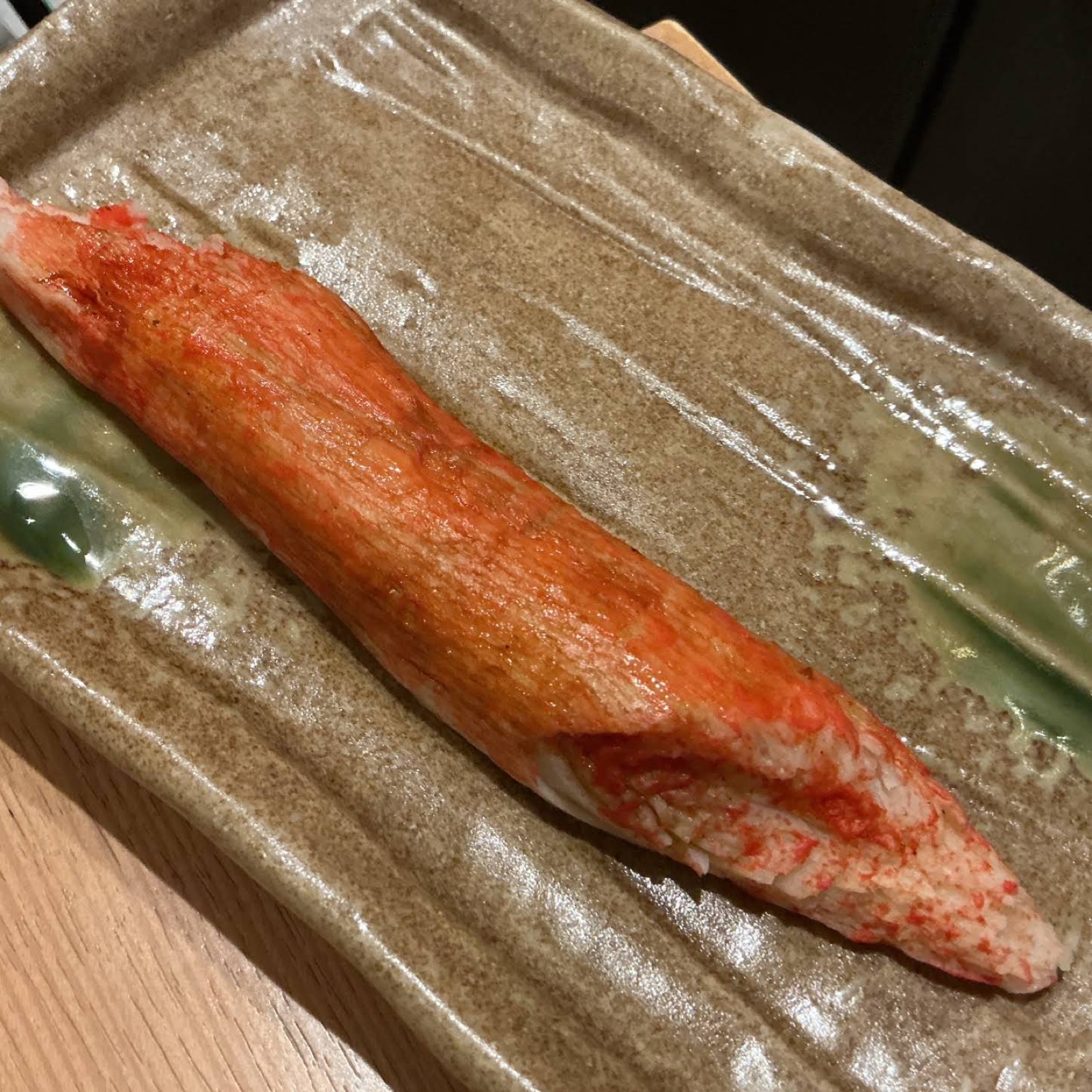
In the photo, one thick stick of kanikama sits whole on a long plate. The surface is red, white flesh shows at the end, and you can see fine fibers like crab leg meat. Since it comes uncut, you can pull it apart with chopsticks to share, or ask whether the staff can cut it.
What is kanikama made of?
Kanikama is a type of fish-paste product known in Japanese as kani-fumi kamaboko, crab-flavored fish cake. Japan's Ministry of Agriculture, Forestry and Fisheries describes fish-paste products as fish meat kneaded with salt and then heated until set. In other words, kanikama is made from fish paste and has already been cooked.
Sugiyo, a maker in Nanao, Ishikawa, says in its company history that it launched the world's first crab-flavored fish cake, called Kaniashi, in 1972. Many companies make it today, in shapes ranging from thin sticks to thick pieces that pull apart into fibers.
Reading a retail label
As an example, here is what the official shop page for Sugiyo's Kaoribako Kiwami lists. Ingredients differ by maker and product, so treat this only as a guide to reading the label.
| Label item | On this product | What it tells you |
|---|---|---|
| Name | Fish-paste product (魚肉ねり製品) | Made from fish paste |
| First ingredient | Fish meat (imported) | Fish is the main ingredient |
| Crab extract | Listed | Contains an ingredient from crab |
| Egg white, starch and others | Listed | Supporting ingredients for texture |
| Coloring | Tomato and paprika color | Source of the red surface |
| Allergens (mandatory items) | Wheat, egg, crab | The line to check if you avoid crab or shrimp |
As this example shows, even though kanikama is mainly fish, some products contain ingredients from crab, such as crab extract. You cannot assume it is safe for a crab allergy just because it is not real crab. Some products also use egg white or wheat, so people with egg or wheat allergies should take care too.
If you have a shrimp or crab allergy
In Japan, packaged processed foods must show nine allergens, including shrimp and crab (cashew nuts were added in April 2026, according to Yamanashi Prefecture). However, as Sakai City explains, this labeling is not mandatory for dishes served at restaurants.
So at a restaurant, it is important to ask. As of October 2026, Yakitori Senkichi's menu also has skewers that use shrimp, such as pork belly wrapped around shrimp and shiso. If it matters to you, ask not only about ingredients but also whether the same grill or tools are used. Please make the final decision yourself after hearing the restaurant's answer.
- Can they show you the ingredient label on the kanikama package?
- Does it contain crab-derived ingredients such as crab extract?
- Does it contain egg, wheat or anything else you avoid?
- Is it cooked on the same grill or with the same tools as the shrimp skewers?
How to eat and order it
Kanikama-yaki is best eaten while it is warm. A thick stick is easy to eat if you pull it apart along the fibers with chopsticks, which also makes it easy to share. You can enjoy the contrast between the grilled surface and the soft, flaky inside.
Because it is a side dish, ordering one plate between rounds of skewers gives you a change from chicken. For other sides, see our guide to side dishes with yakitori, and for drinks, see our guide to the first drink.
Summary
Kanikama-yaki is grilled fish-paste product. It is not crab, but some products contain crab-derived ingredients such as crab extract, and restaurant dishes do not have to carry allergen labels. If you have an allergy, ask the restaurant before ordering. Menus can change, so please check Yakitori Senkichi's official website for current details. This article reflects information as of November 6, 2026.
Sources and further reading
- MAFF: Traditional Japanese foods, fish-paste products (Japanese)(Checked: )
- Sugiyo: Company history (Japanese)(Checked: )
- Sugiyo official store on Rakuten: Kaoribako Kiwami product label (Japanese)(Checked: )
- Yamanashi Prefecture: Food allergen labeling from April 1, 2026 (Japanese)(Checked: )
- Sakai City: Food allergen labeling (Japanese)(Checked: )
- Yakitori Senkichi official website(Checked: )