/ Art Toys / English
Blind Box, Assortment or Confirmed Character: Which Are You Buying?
A sealed random box, an assortment and a listing for a known character offer different buying experiences. Use a real Twinkle Twinkle listing and an official assortment example to understand the wording before you buy.
Written by Koetsu Co., Ltd.
You have found the character you want, but the title still says “blind box.” Separate the way the original series was sold from what this particular listing promises to deliver. A random single box and a confirmed-character listing can belong to the same series while offering very different purchases.
Start with your purpose: do you want the surprise of opening a random box, or do you want one particular design? Neither is the universally better choice. The useful question is which selling format matches your reason for buying.
Recognize the three selling formats
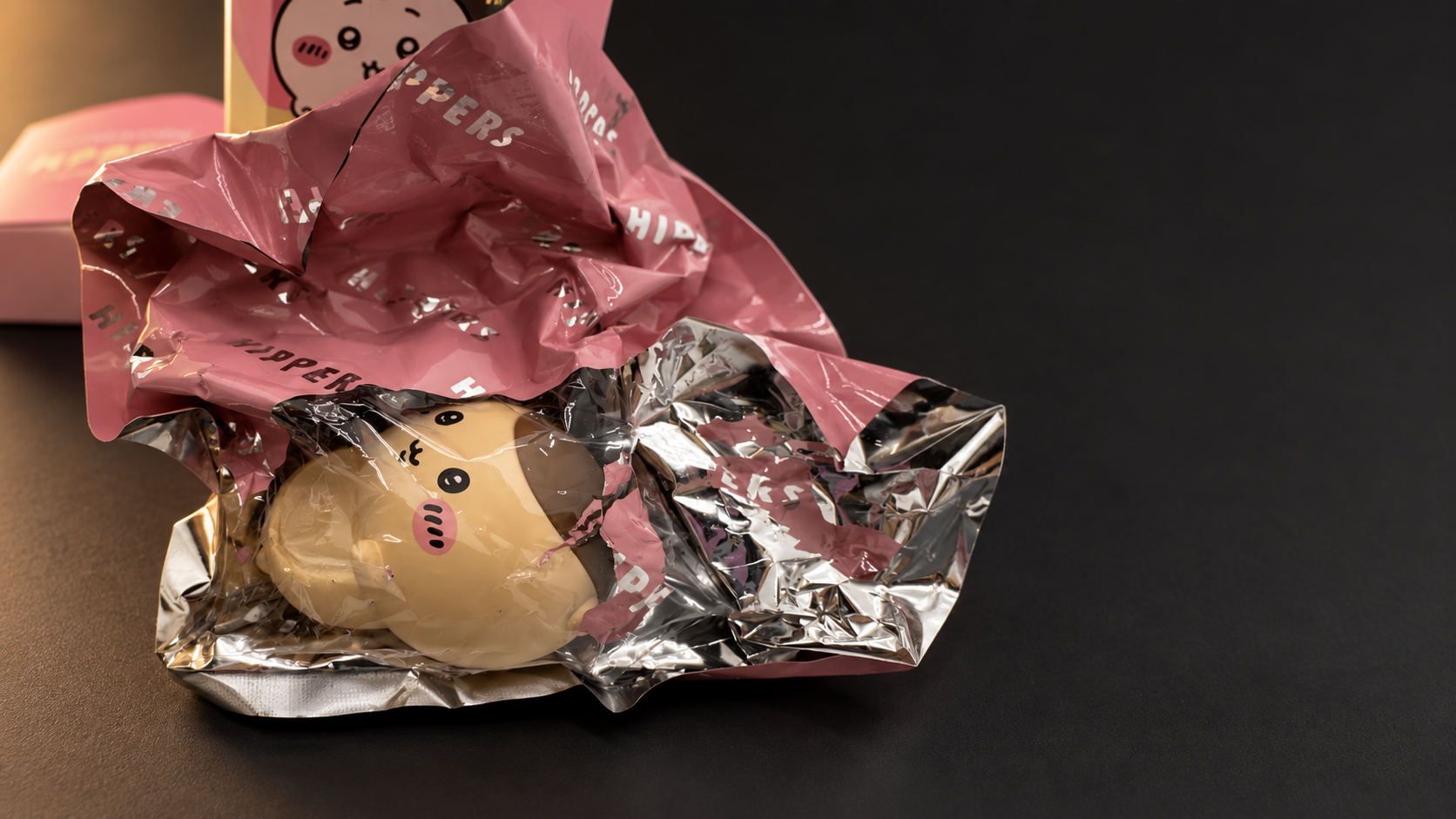
For a sealed random single, expect that the character is not selectable unless the seller explicitly explains otherwise. A photograph of the whole line-up does not mean you receive every design or can choose the pictured character. Read the quantity and description together.
| Format | Main question | Do not assume |
|---|---|---|
| Random single | How many items arrive, and can you choose? | That the line-up image is a selection menu |
| Assortment box | The item count and that product’s assortment rules | That it guarantees every design or a secret |
| Confirmed character | Whether the named design matches the item offered | That the outer box is still unopened |
“Single” describes quantity; “random” describes how the design is selected. A single-item listing is not automatically a confirmed character. Likewise, an “unused” condition label does not by itself explain whether the box or inner bag has been opened.
Count the boxes separately from the designs
The official Dreams HIPPERS Monchhichi page separately describes an assortment containing 12 pieces and a line-up of six regular designs plus one secret. The number of boxes and the number of designs are different pieces of information.
For another series, check that specific product page for its rules on duplicates and secret designs. Do not turn the word “assortment” into a universal complete-set promise. If a guarantee is not stated, ask before treating it as part of the purchase.
A real example: a named Twinkle Twinkle character
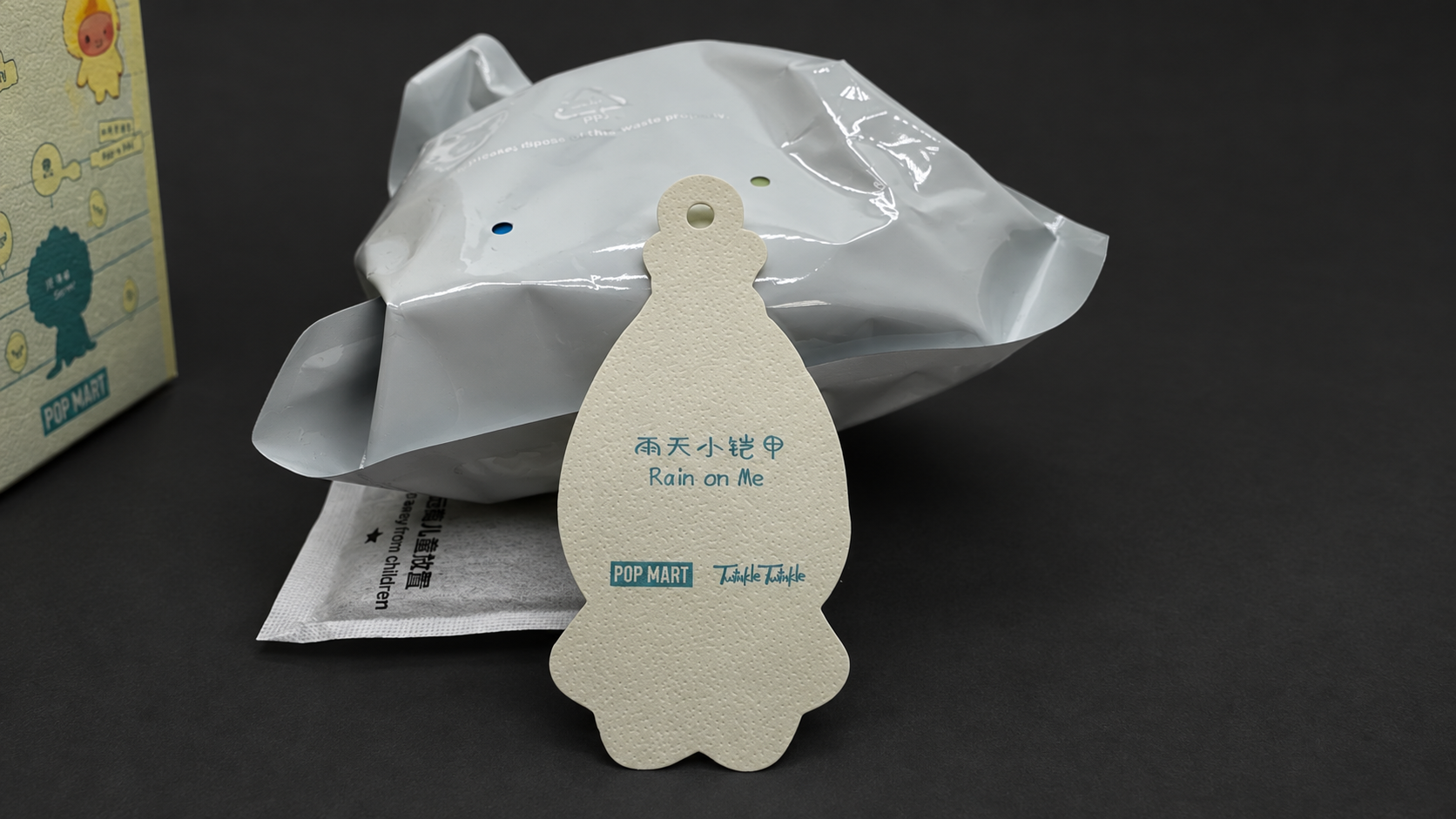
Our Twinkle Twinkle Rain on Me listing names the character and describes the outer box as opened for identification, with the inner bag unopened. This is an example of a named-character offer, rather than an unidentified sealed random box.
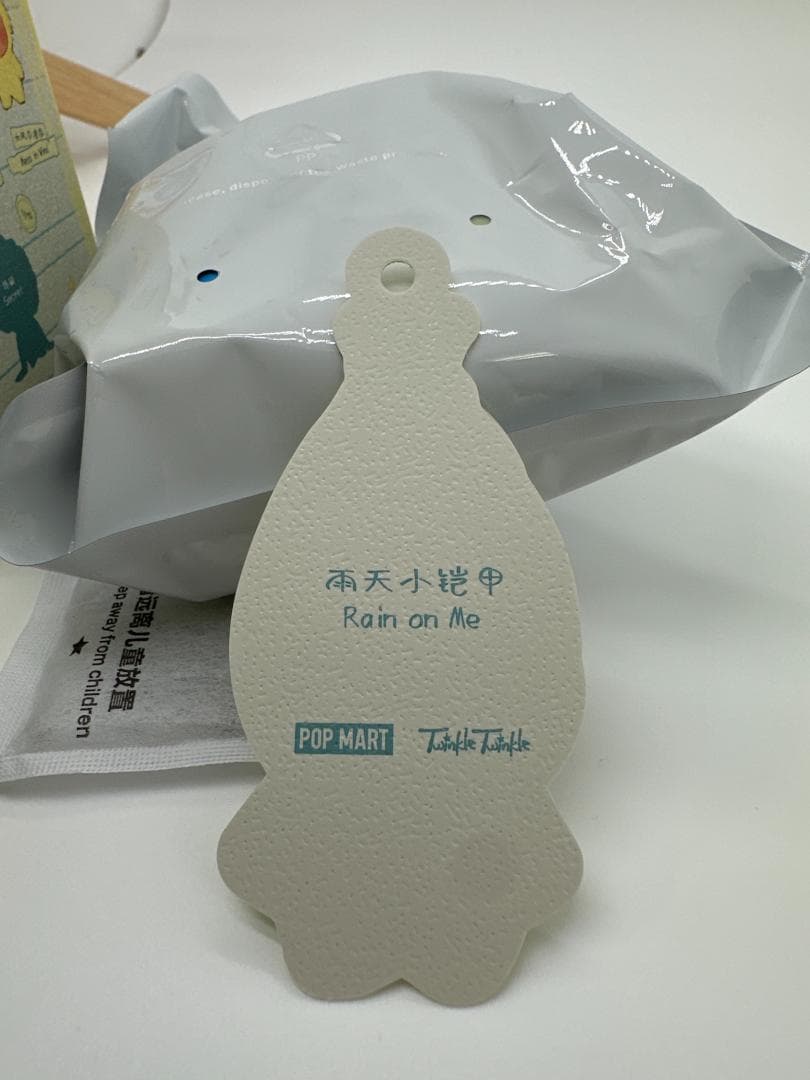
The listing photographs show a card with a rainwear-clad character; its reverse reads “Rain on Me.” Matching that printed name with the Japanese or Chinese wording in the title helps distinguish offers with similar translated names.
The unopened-inner-bag description is the seller’s stated condition. It does not mean we have inspected the concealed plush, and a character card alone is not an authentication result. Keep the description, visible evidence and anything still unknown separate.
Three details to align before buying
First align the series and character name, then check how many items you will receive. Finally read what happens to the outer box, inner bag and card. Together, these checks help prevent buying a random item when you meant to choose a specific design.
The featured listing also states that the outer box will be folded and included, with shipment in an envelope. If you want the box kept assembled for display, clarify the shipping arrangement before buying. Always use the listing’s latest details, since contents and availability can change.
For a closer look at condition, our guide to Japanese art-toy listing descriptions covers boxes, inner bags and accessories. Choose the selling format first, then compare condition within the offers that match your goal.