/ Osaka Food / English
What Is Tsukune at a Yakitori Restaurant? Where the Name Comes From, What Cheese Tsukune Is Like, and What to Check When Ordering at Yakitori Senkichi
Tsukune, a staple at yakitori restaurants, is a skewer of minced meat kneaded and shaped by hand. This guide covers where the name comes from according to a Japanese encyclopedia, how it differs from skewers of a single cut, what the photo of Yakitori Senkichi's cheese tsukune does and does not tell you, and what to check before ordering about hot cheese, allergies and thorough cooking.
Written by Koetsu Co., Ltd.
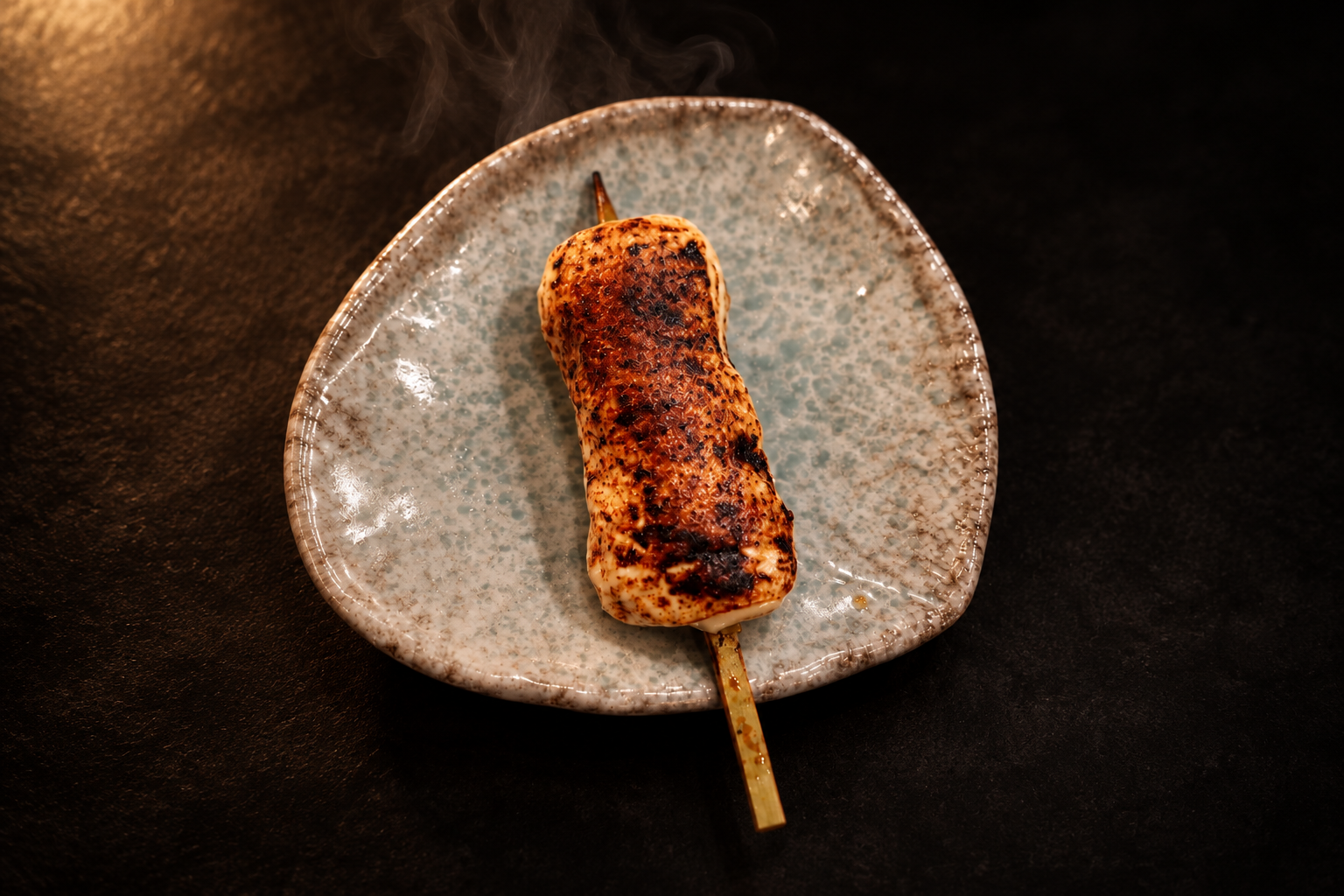
Alongside the names of different cuts, one item you will almost always see on a yakitori menu is tsukune. At Yakitori Senkichi in Minamikyuhoji, the in-store mobile ordering menu we checked in late October 2026 listed "cheese tsukune" at 399 yen in the yakitori section. Prices and items can change, so please check the menu in the restaurant for the latest.
This guide looks at what the word tsukune means, how it differs from skewers of a single cut such as thigh, skin or neck, what the photo on Senkichi's menu shows, and what to check when ordering. We could not confirm from public information the recipe of Senkichi's cheese tsukune, which cheese is used, whether binders are added, or exactly how it is grilled and seasoned.
Tsukune means something kneaded and shaped
The Nipponica encyclopedia published by Shogakukan describes fish or meat ground into a paste, mixed with egg, potato starch and the like, and rolled to the size you want; fried, it is tsukune-age, and simmered, tsukune-ni. It explains that the verb tsukuneru means to bundle or to knead, and that the dish came to be called tsukune from that kneading motion.
In other words, tsukune is not the name of a cut but of minced or ground meat that has been kneaded and shaped. Yakitori restaurants often use minced chicken, but which parts go into the mince, whether cartilage or vegetables are mixed in, and whether it is shaped into several round balls or one long piece all differ from one restaurant to another.
Skewers of cut meat, such as thigh or neck, are about enjoying the texture of each cut. Tsukune, by contrast, is minced first and then shaped, so it tends to be soft all the way through and similar in every bite. That makes it an easy choice for people who are new to skewers of different cuts or who do not like a firm bite.
Senkichi's cheese tsukune in the photo
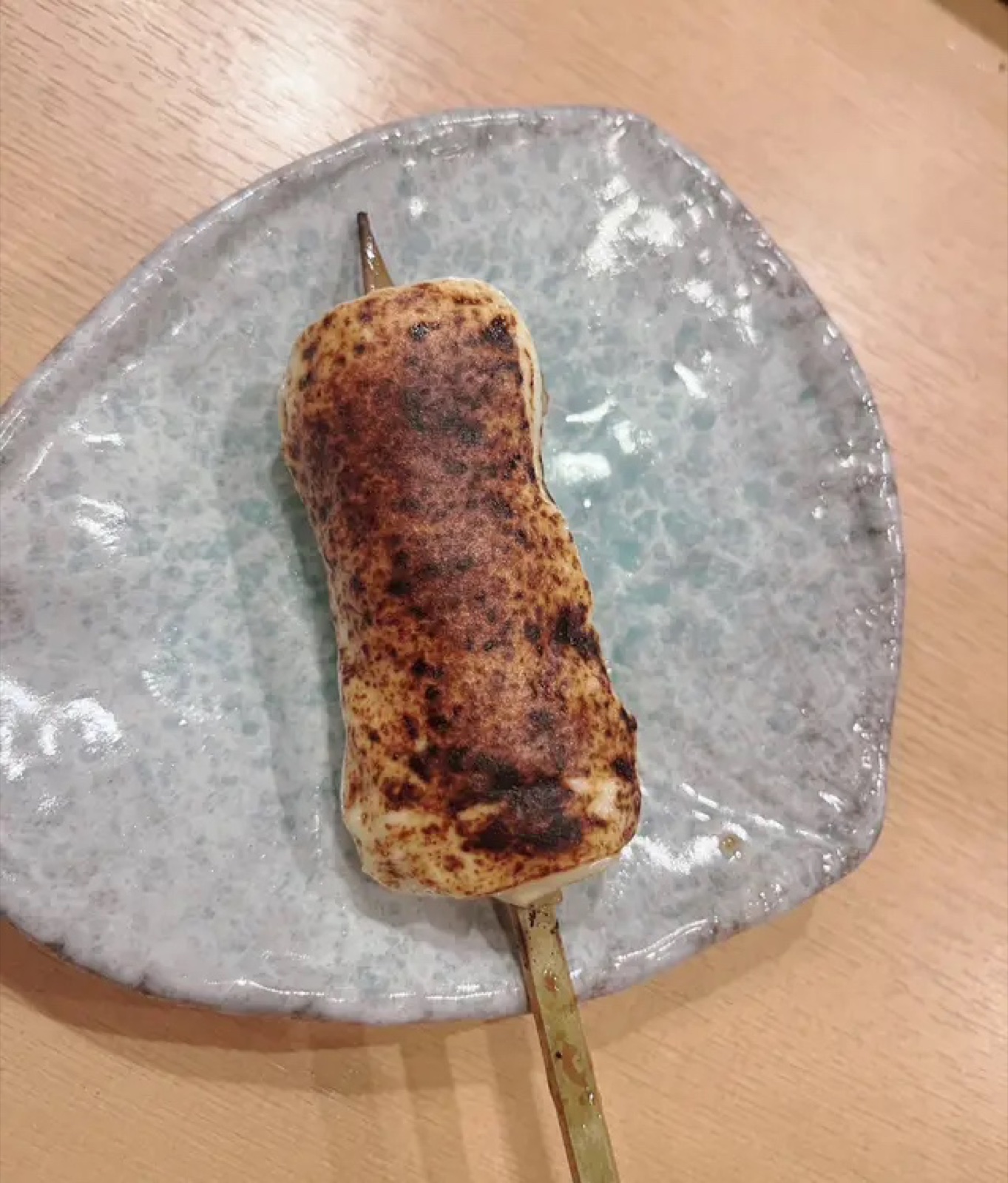
In the photo on Senkichi's menu, a single long, cylindrical piece of tsukune is on a bamboo skewer, with a deep golden-brown colour and black charring all over the surface. It appears to be one whole piece of tsukune on the skewer rather than several round balls.
From the photo alone, however, you cannot tell whether the cheese is wrapped inside or melted on top and browned. The spotted surface could be the colour of grilled cheese, but we cannot say for sure, so if it matters to you, ask the staff when you order.
What to check before you order
Dishes made with cheese can be very hot inside when they are freshly grilled. Rather than biting straight in when it arrives, let it cool for a moment and take a small first bite. The skewer itself can also be hot, so mind where you hold it.
If you have a food allergy, always check before ordering. Cheese is a dairy product, so anyone with a milk allergy needs to avoid it. As the encyclopedia entry notes, tsukune may also contain binders such as egg or potato starch, and some restaurants use ingredients with wheat, such as breadcrumbs. We could not confirm from public information what goes into Senkichi's tsukune, so asking the staff is the surest way.
It is important that chicken is cooked through. To prevent food poisoning from Campylobacter, Japan's Ministry of Health, Labour and Welfare advises heating chicken thoroughly all the way to the centre. With minced chicken it is hard to tell from the outside whether tsukune is cooked through, so if the inside looks pink or seems raw, do not eat it and tell the staff.
Because tsukune is shaped before grilling, it can take a little longer than skewers of cut meat. Ordering it in your first round together with side dishes or vegetable skewers that tend to come out quickly makes the wait easier. For the overall flow of ordering, see how to order yakitori in Osaka.
| What to check | Why |
|---|---|
| Whether the cheese is inside or on top | The photo alone does not show it |
| Milk, egg, wheat and other ingredients | Cheese is dairy, and some restaurants use egg or wheat as binders |
| How long it takes | It is shaped before grilling and can take a little longer |
| Whether it is cooked through | It is hard to tell with minced meat from the outside |
After a few skewers of different cuts, adding a tsukune gives your order a change of texture. For kashiwa, the Kansai word for chicken, and thigh skewers, see what kashiwa means on a yakitori menu. Please check Yakitori Senkichi's official website for the location and opening hours.