/ Osaka Food / English
How to Order Yakitori in Osaka: A First-Timer’s Guide
Learn common yakitori menu names, the difference between shio and tare, and useful Japanese phrases for ordering dinner around Honmachi and Shinsaibashi in Osaka.
Written by Koetsu Co., Ltd.
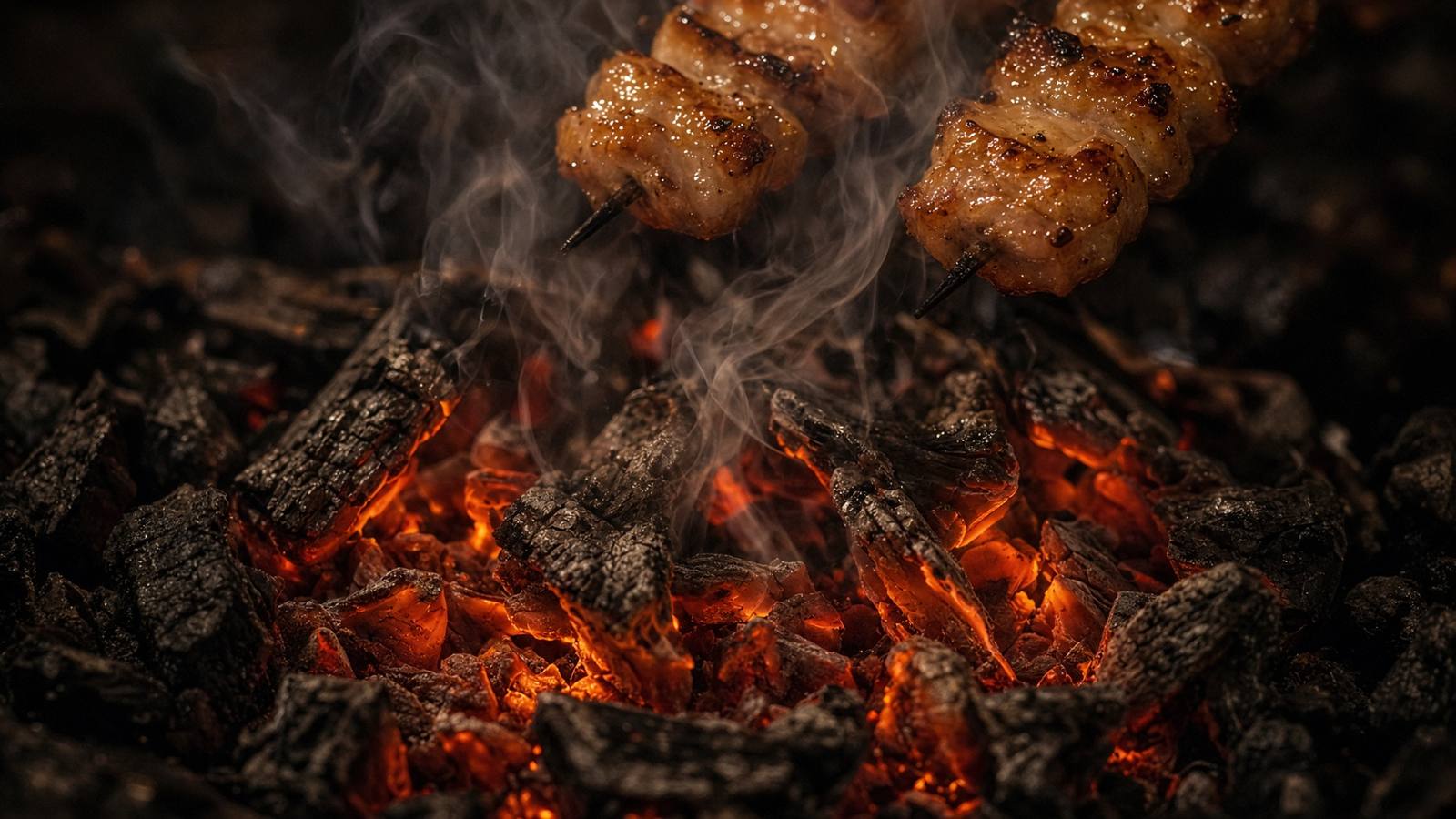
You do not need to memorize an entire Japanese menu to enjoy yakitori in Osaka. Start with three decisions: which skewers you would like, whether you have a seasoning preference, and how many you want to order. A few useful phrases can handle the rest.
If you are planning dinner around Honmachi or Shinsaibashi, this guide will help you read the menu before choosing your first round. The example orders below are suggestions, rather than a fixed set offered by every restaurant.
Three menu names to recognize
Some yakitori names describe a cut of chicken; others describe how a skewer is assembled. These are useful names to keep on your phone:
| Japanese | Say it as | What it means |
|---|---|---|
| ねぎま | Negima | Chicken and Japanese long onion on a skewer |
| せせり | Seseri | Meat from around the chicken’s neck |
| つくね | Tsukune | A mixture made with ground chicken and other ingredients, shaped before cooking |
These basic names are explained in the Japan Foundation’s Japanese learning material. Recipes, toppings and availability still depend on the restaurant. If you need to know exactly what is in a dish, ask about the ingredients rather than relying on its name alone.
A useful way to begin is to choose one skewer you recognize and one you are curious about. For example, you could ask whether negima and seseri are available. After tasting them, you will have a clearer idea of what you would like next, without committing to a large order at the start.
Shio or tare: choosing your seasoning
You may be asked whether you prefer shio, a salt-based seasoning, or tare, a sweet sauce. Not every skewer comes with a choice; some have a set preparation. These two common options are described in JNTO’s yakitori guide.
Choose according to what sounds appealing. You do not need to pass an etiquette test or pick the “expert” option. If you are curious about the difference, ask whether the same skewer can be served both ways. If you would rather follow the kitchen’s suggestion, ask which seasoning they recommend for that dish.
Dietary requirements need a separate conversation. Choosing shio does not by itself confirm all of a dish’s ingredients or how it is prepared. Explain any ingredients you need to avoid before placing your order.
Check what one order actually includes
Before deciding on quantities, check whether the displayed price is for one skewer or a serving containing several. If you are dining with someone else, “two skewers” and “two servings” may produce different amounts of food.
An assortment can be useful when you want variety. Ask how many skewers it contains and which types are included. Mention any cuts you do not want before ordering, and ask whether substitutions are possible instead of assuming they are.
For a flexible first round, consider a small selection of skewers and a side dish that appeals to you. Then decide whether to repeat a favorite or try another item. Check whether additional orders are possible and when the kitchen takes its last order, especially if you arrive later in the evening.
Japanese phrases you can point to
| What you want to ask | Japanese | Pronunciation |
|---|---|---|
| Can we choose salt or sauce? | 塩とたれを選べますか。 | Shio to tare o erabemasu ka? |
| Is this the price for one skewer? | 一本の値段ですか。 | Ippon no nedan desu ka? |
| What is in the assortment? | 盛り合わせには何が入りますか。 | Moriawase ni wa nani ga hairimasu ka? |
| Two negima skewers, please. | ねぎまを二本お願いします。 | Negima o nihon onegaishimasu. |
| Could we have the bill, please? | お会計をお願いします。 | Okaikei o onegaishimasu. |
Pointing to the menu while showing the Japanese sentence can help keep the exchange clear. These phrases are a practical aid; they do not imply that a particular restaurant provides English-speaking service.
Planning dinner around Honmachi and Shinsaibashi
Choose a restaurant with the rest of your evening in mind. Save its full name and address, check the route from your last stop, and think about how you will return to your accommodation. A saved map pin is more useful than relying on a short English name alone.
When asking about a reservation, have your date, party size and expected arrival time ready. Check current opening hours and availability directly with the restaurant.
If your plans bring you to Minamikyuhojimachi, our company’s Yakitori Senkichi Minamikyuhoji restaurant page brings together the address, sample menu, telephone number and map link. Save the Japanese name, 焼鳥千吉 南久宝寺店, alongside the address when planning your visit. It is one way to fit a yakitori dinner into an evening in this part of Osaka.
Written by Koetsu Co., Ltd., the operator of this website and the restaurant mentioned above. This guide combines general food information with editorial ordering suggestions. Sources linked in the article were checked on September 11, 2026.
Sources and further reading
- the Japan Foundation’s Japanese learning material(Checked: )
- JNTO’s yakitori guide(Checked: )