/ Osaka Food / English
Squid Skewers (Ika) at a Yakitori Restaurant: Body vs. Tentacles, Why Squid Turns Tough When Overcooked, and How It Differs from Osaka's Ikayaki
Starting from a photo of a squid skewer that Yakitori Senkichi published on Google, this guide explains the difference between the body and the tentacles (geso), why squid tends to turn tough when overcooked and how to eat it, how it differs from the flour-based snack many people in Osaka picture when they hear "ikayaki", the anisakis caution that applies to raw squid, and what to check before ordering.
Written by Koetsu Co., Ltd.
Besides chicken, yakitori restaurants sometimes list vegetable and seafood skewers, and squid (ika) is one of them. The smoky aroma from the grill and the savoury flavour that comes out as you chew are often said to go well with beer and sake.
Squid, however, changes texture a great deal depending on how it is cooked. Using a photo of a squid skewer that Yakitori Senkichi published on Google as a starting point, this guide covers the difference between the body and the tentacles, why squid turns tough and how to eat it, how it differs from Osaka's "ikayaki", a caution about raw squid, and what to check before ordering.
Looking at the squid skewer in the photo
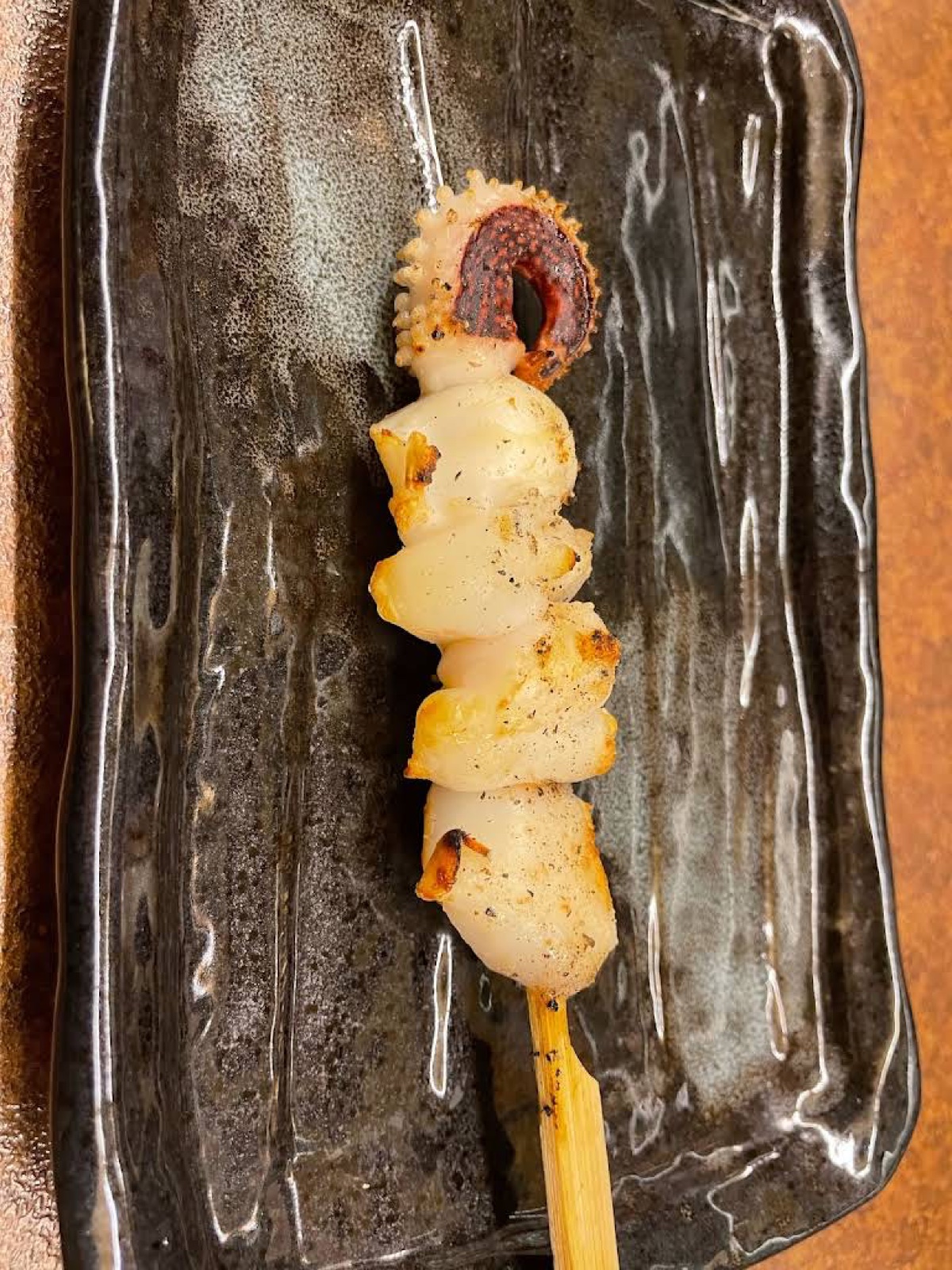
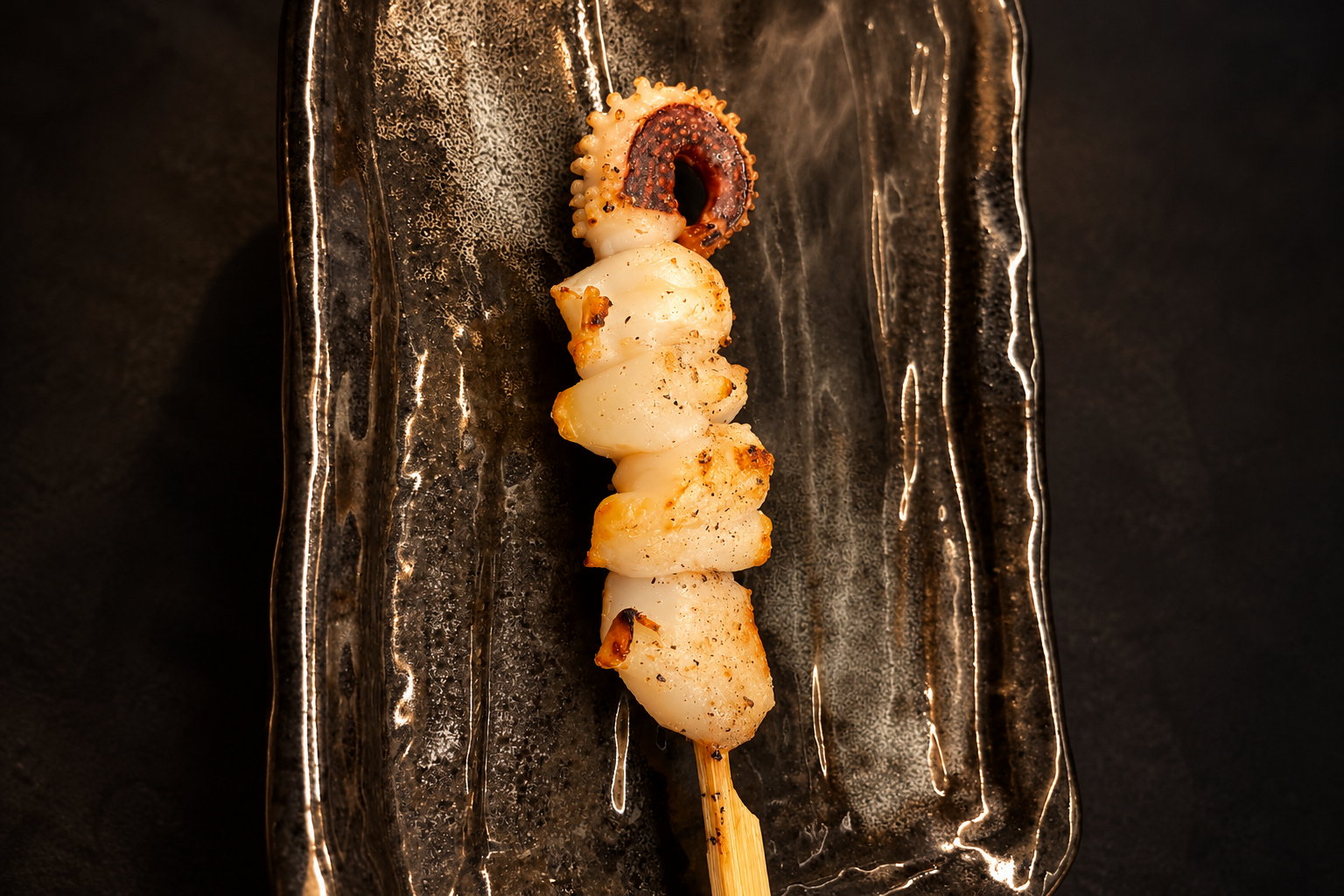
The photo above is one Yakitori Senkichi published on Google, shown without editing. A single skewer of several white pieces of squid sits on a long black-glazed plate, with grill marks here and there and dark specks that appear to be pepper. At the tip, a curled section with suckers, which appears to be the tentacles (geso), is threaded on as well.
A photo, however, only shows what the dish looks like. This guide has not confirmed when it was taken, whether it is still served, its price, or whether it is seasoned with salt. A squid skewer was not listed in the menu section of Yakitori Senkichi's official website when checked on October 26, 2026. If you want to try it, please ask when you visit or by phone.
Body and tentacles: two textures from one squid
Squid is often prepared in two parts: the tube-shaped body (do) and the many arms and tentacles, which are called geso in Japanese. At izakaya you will often see dishes made only from the tentacles, such as geso-yaki (grilled tentacles) and geso-age (fried tentacles).
| Part | Appearance | Typical texture |
|---|---|---|
| Body | White, flat flesh, often scored before grilling | Tender, but tends to turn tough if overcooked |
| Geso (tentacles) | Long, thin arms with suckers; they tend to curl when cooked | Springy and chewy |
Which is better is a matter of taste, but as a rough guide, choose the body if you want tenderness and the tentacles if you enjoy something to chew on. Some restaurants, like the one in the photo, thread both onto the same skewer.
Why squid turns tough when overcooked
Squid flesh shrinks and releases moisture when heated. Cooked quickly, it stays tender, but with longer cooking it contracts, loses moisture and can start to feel rubbery. That is why recipes so often stress not to overcook squid.
As a diner, the longer a squid skewer sits after grilling, the cooler and tougher it tends to feel, so it is best eaten soon after it arrives. The cuts scored into the body are sometimes explained as a way to cook it more evenly, keep it from curling up and make it easier to bite through.
In Osaka, "ikayaki" can mean a different dish
The name is worth a note. In much of Japan, "ikayaki" usually means a whole squid or pieces of squid grilled, often on a skewer. In Osaka, however, the word often refers to a flour-based snack: pieces of squid in a batter, pressed thin and cooked between two hot iron plates.
One well-known shop for this flour-based ikayaki is Hanshin Meibutsu Ikayaki in Snack Park, on the B1 floor of the Hanshin Umeda Main Store. It is a different dish from a yakitori restaurant's squid skewer, so when someone in Osaka says they want ikayaki, it helps to check which one they mean.
Raw squid and anisakis: a reason to choose grilled squid
Japan's Ministry of Health, Labour and Welfare explains that the larvae of a parasite called anisakis can be found in seafood such as mackerel, horse mackerel, Pacific saury, skipjack tuna and squid. Eating them raw or undercooked can cause food poisoning with symptoms such as severe stomach pain.
The ministry's guidance lists heating (to 70°C or above, or 60°C for one minute) and freezing (at -20°C for 24 hours or more) as preventive measures, and notes that vinegar, salt, soy sauce and wasabi in the amounts used in ordinary cooking do not kill the larvae. Squid grilled through is therefore treated differently from raw squid. If you are considering a raw squid dish such as ika somen, please make your own decision after hearing the restaurant's explanation.
What to check before ordering
- Whether a squid skewer is on the menu that day (seafood may depend on what comes in)
- Whether it is body only or includes the tentacles, and whether it is seasoned with salt or tare sauce
- If you are allergic to squid or other seafood, always say so before ordering
- When someone in Osaka says "ikayaki", whether they mean the skewer or the flour-based snack
Adding a seafood skewer between chicken skewers is a nice way to vary texture and flavour. For choosing chicken cuts, see our earlier guides, such as the one on sasami (our sasami guide). To find out whether Yakitori Senkichi has a squid skewer, please ask when you visit or by phone.