/ Osaka Food / English
Ordering Harumaki (Spring Rolls) at a Yakitori Restaurant: Why the Filling Stays So Hot, How to Eat It Without Burning Your Mouth, and What to Check Before Ordering
Starting from a photo of harumaki that Yakitori Senkichi published on Google, this guide explains what harumaki (Japanese spring rolls) are, the fillings commonly used in Japan, why the filling of a freshly fried roll can feel hotter than the outside, how to eat and share it without burning your mouth, and what to check before ordering, such as wheat allergies and whether it is on the menu.
Written by Koetsu Co., Ltd.
Yakitori restaurants and izakaya often list a few fried dishes alongside their skewers, and harumaki, the Japanese spring roll, is one of them. A crisp wrapper around a soft, thickened filling makes it a popular match for beer and other drinks.
A freshly fried harumaki, however, can be very hot inside, and many people have nearly burned their mouth on the first bite. Using a photo of harumaki that Yakitori Senkichi published on Google as a starting point, this guide covers what harumaki is, why the filling gets so hot, how to eat and share it, and what to check before ordering.
What harumaki is: a filling wrapped in a thin sheet and fried
Harumaki is made by rolling a filling into a long, thin wrapper made from wheat flour and deep-frying it. It comes from Chinese cuisine and is familiar in Japan both as a home-cooked dish and on the menus of Chinese restaurants and izakaya. In English it is called a spring roll, which is a direct translation of the Japanese name.
As for the name, which literally means "spring roll", some sources, such as a description of a Japanese food day, say it comes from rolling young spring vegetables around the start of spring. There are several theories, however, and this guide does not treat any one of them as settled.
Common fillings in Japan include pork, bamboo shoots, shiitake mushrooms, carrots and glass noodles (harusame). Many recipes stir-fry these and thicken them into a sauce-like filling before wrapping. Fillings vary by restaurant and household, and this guide has not confirmed what goes into Yakitori Senkichi's harumaki.
Looking at the harumaki in the photo
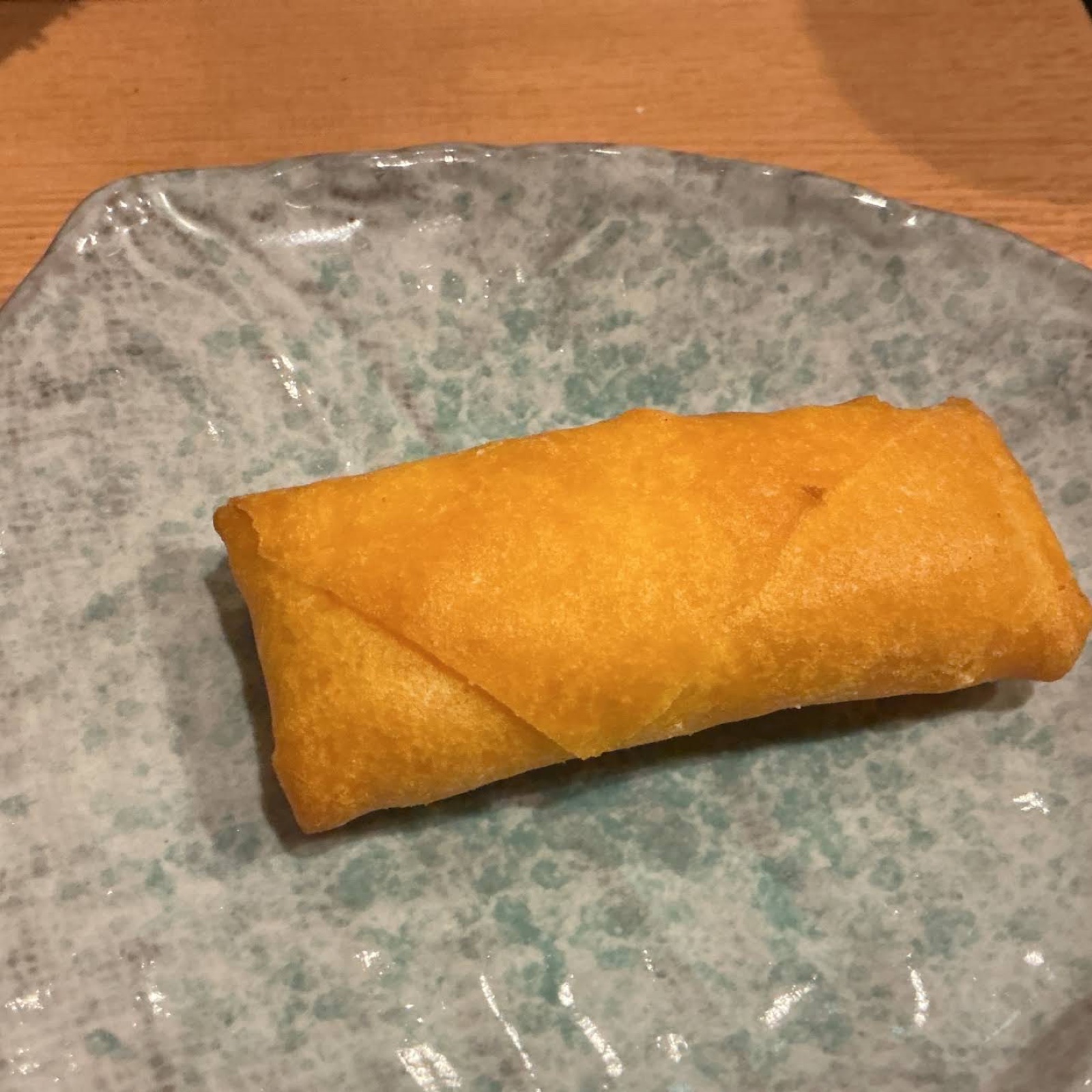
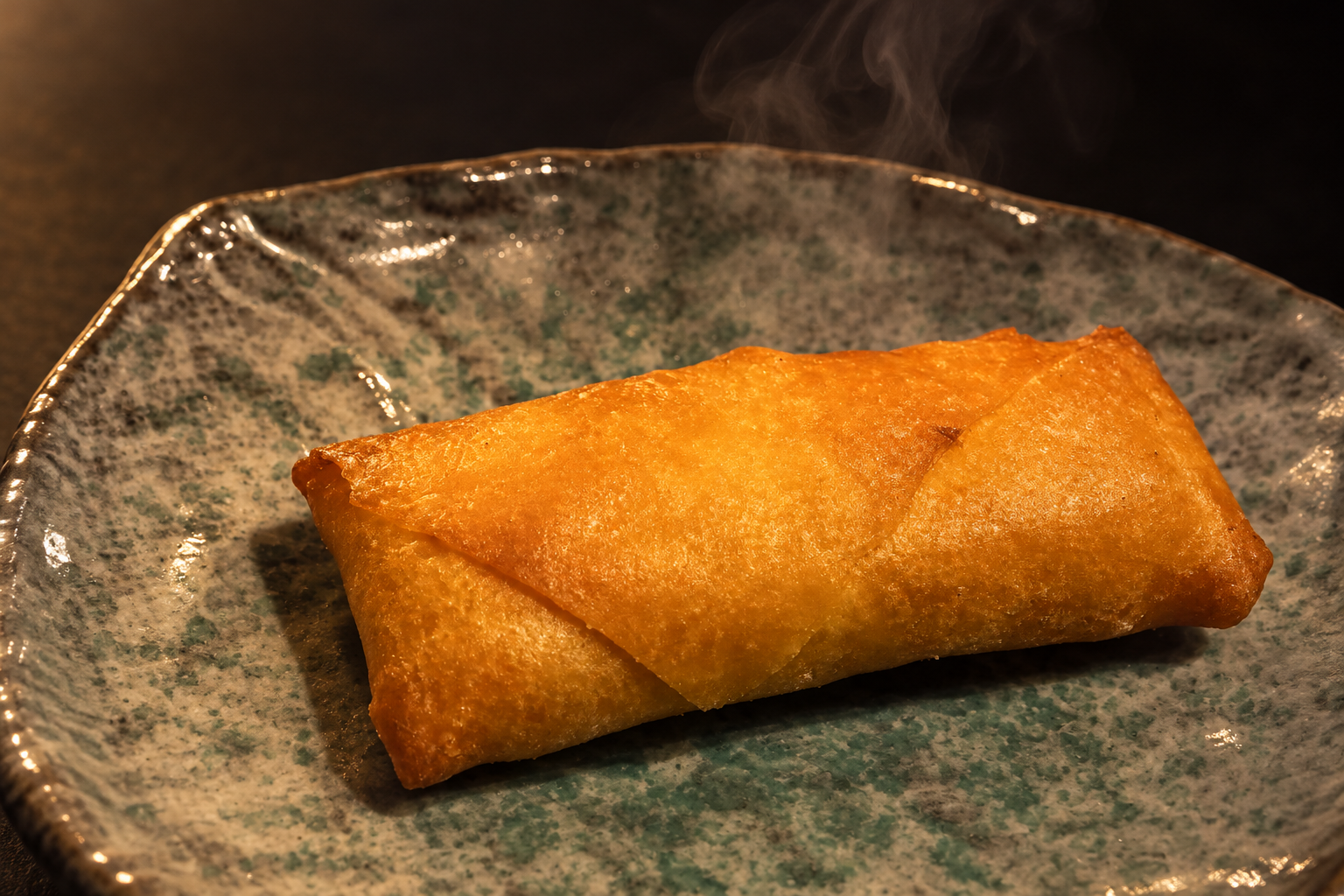
The photo above is one Yakitori Senkichi published on Google, shown without editing. A single golden fried spring roll sits on a grey plate with green speckles. The diagonal seam where the wrapper was folded closed is visible, and the surface is evenly browned.
A photo, however, only shows what the dish looks like. This guide has not confirmed when it was taken, whether the dish is still served, or its price and how many pieces come in an order. Harumaki was not listed in the menu section of Yakitori Senkichi's official website when checked on October 23, 2026. If you want to try it, please ask when you visit or by phone.
Why the filling of a fresh roll can feel so hot
Because the wrapper is thin, the outside browns quickly in the oil and can feel cool enough to hold. The filling inside, however, holds moisture from the ingredients and the thickened sauce, so it keeps its heat and takes longer to cool. As a result, the inside can be much hotter than the outside suggests.
A thickened filling also spreads in the mouth and tends to cling to the tongue and the roof of the mouth, which is likely another reason it feels so hot. At yakitori restaurants, fried dishes are often cooked to order and served piping hot, so take extra care with the first bite.
Eating and sharing it without burning your mouth
Rather than biting into the whole roll the moment it arrives, take a small bite from one end to let the steam escape, or split it in half with your chopsticks and wait a moment before eating. If steam rushes out when you split it, that is a sign to wait a little longer.
When sharing, cut the roll with chopsticks over a small plate so the filling does not spill. Whether the kitchen can cut it for you depends on the restaurant, so ask when ordering if you need it. The wrapper tends to absorb moisture and go soft over time, so once it has cooled a little, it is best eaten while still crisp.
You can eat harumaki as it is, and it is sometimes served with Japanese mustard (karashi) or soy sauce mixed with vinegar. What comes with it depends on the restaurant. If you do not like mustard, you could ask when ordering, "Could you serve the mustard on the side?"
What to check before ordering
- Availability: the photo was published in the past, so ask the restaurant whether it is still served
- Allergies: the wrapper is usually made with wheat, and fillings may include pork, shrimp or other ingredients. If you have concerns, ask the staff
- Waiting time: fried dishes are often cooked to order and may not arrive at the same time as your skewers
- Portion and sharing: ask how many rolls come on a plate and mention how many people are sharing
For another fried dish, see our earlier guide to ordering karaage at a yakitori restaurant, which also covers eating it fresh from the fryer. Yakitori Senkichi is a yakitori restaurant in Minamikyuhoji, Osaka, and according to its official website it is open from 5:00 pm to 10:30 pm. If there is a dish you are curious about, feel free to ask when booking or visiting.