/ Osaka Food / English
Ordering Karaage at a Yakitori Restaurant: Eating It Hot, Asking Before You Squeeze the Lemon, and Why Chicken Must Be Cooked Through
Starting from a photo of fried chicken (karaage) that Yakitori Senkichi published on Google, this guide covers how to eat karaage safely while it is piping hot, why it is polite to ask before squeezing lemon over a shared plate, the Ministry of Health, Labour and Welfare's guideline for cooking chicken (at least 75°C at the center for at least one minute) and the basics of Campylobacter food poisoning, and how to store and reheat leftovers.
Written by Koetsu Co., Ltd.
Besides grilled skewers, yakitori menus often include fried side dishes, and fried chicken, or karaage, is one of the most familiar. Many people order it while waiting for their skewers, but freshly fried karaage is very hot inside, and when a plate is shared, even the lemon can call for a little consideration.
Taking a photo of karaage that Yakitori Senkichi published on Google as a starting point, this guide covers tips for eating it fresh from the fryer, why it is worth asking before adding lemon, the Ministry of Health, Labour and Welfare (MHLW) guideline for cooking chicken, and how to handle leftovers.
Looking at the karaage in the photo
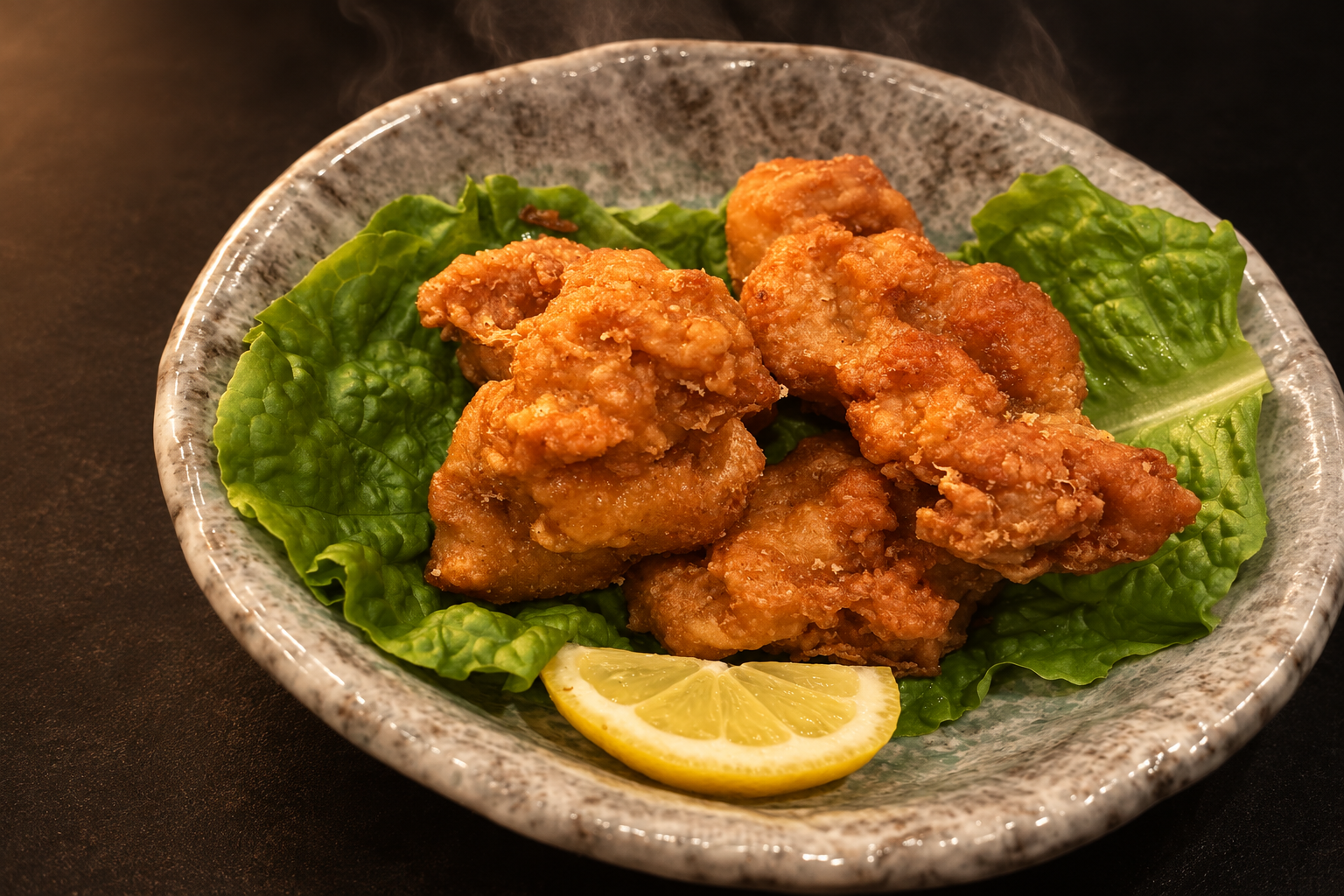
The photo below is one Yakitori Senkichi published on Google, shown without editing. Several pieces of karaage with a golden-brown coating sit on lettuce in a grey ceramic bowl, with a lemon wedge at the front.
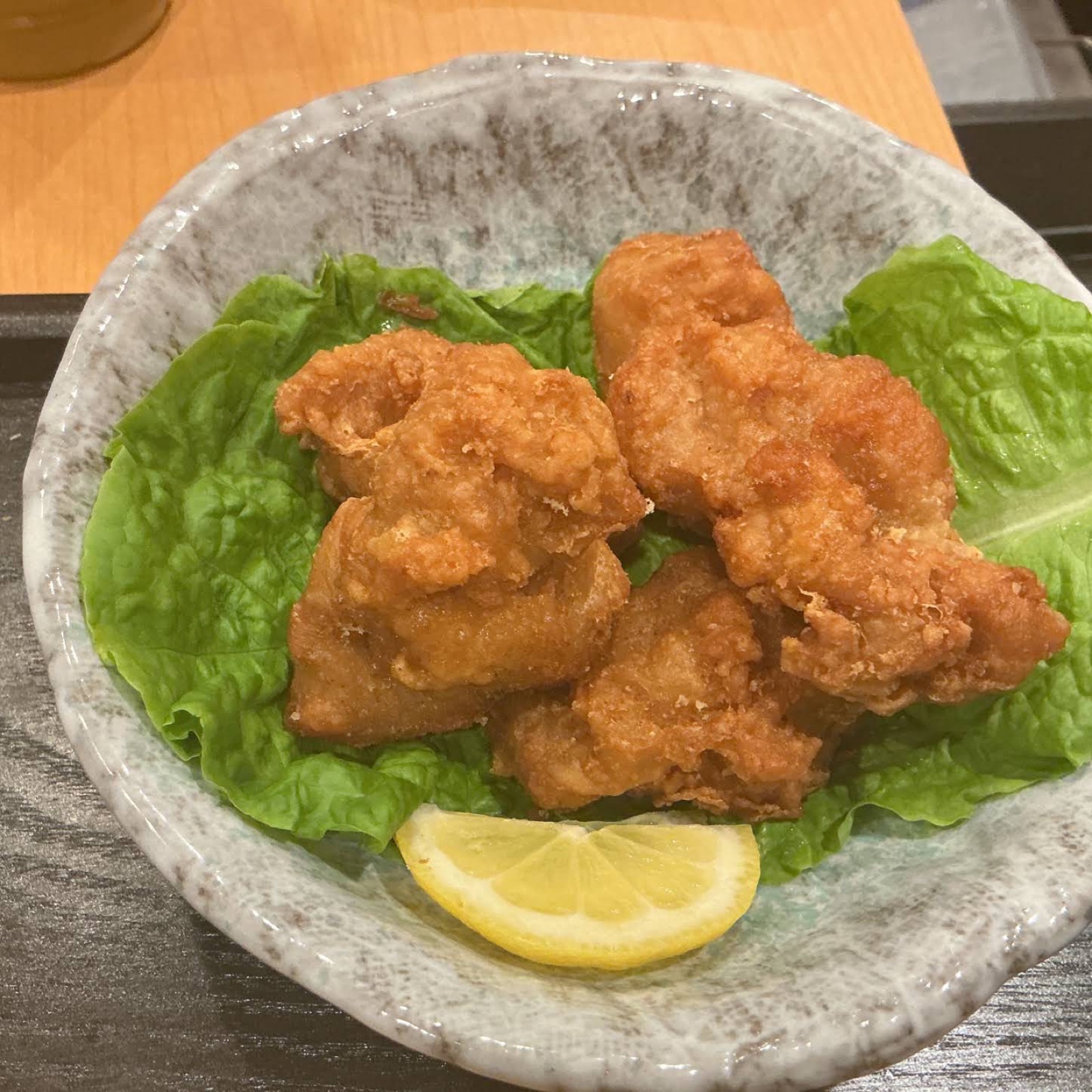
A photo, however, only shows what the dish looks like. This guide has not confirmed which cut of chicken is used, what goes into the marinade or coating, when the photo was taken, or whether the dish is still on the menu. Karaage coatings and marinades often contain wheat and soy (soy sauce), so if you have a food allergy, please check with the staff before ordering.
Tips for eating karaage fresh from the fryer
With freshly fried karaage, the meat and juices inside can be hotter than the crisp coating. Putting a large piece in your mouth all at once makes it easy to scald yourself on the hot juices. Biting off about half first lets the steam escape, so you can check the temperature before eating the rest.
When a plate is shared, the usual approach is to use the serving chopsticks, if there are any, and move pieces to your own small plate before eating. If none are provided, staff can often bring a pair, so do not hesitate to ask.
Ask before you squeeze the lemon
Some people like lemon on their karaage, while others prefer the crisp coating and the plain flavor. Once lemon has been squeezed over the whole plate, there is no undoing it, so asking "Is it all right if I add lemon?" before squeezing it over a shared plate keeps everyone happy.
If in doubt, take your share onto your own plate first and squeeze lemon over just your pieces. Squeezing close to the plate and cupping your hand around the wedge keeps the juice from spraying the people around you.
Chicken is meant to be cooked all the way through
MHLW's Q&A on preventing Campylobacter food poisoning explains that raw or undercooked chicken and cross-contamination from poor handling during cooking are strongly suspected as causes. It states that it is important to cook meat thoroughly, heating the center to at least 75°C for at least one minute.
According to the same Q&A, the main symptoms include diarrhea, abdominal pain, fever, nausea and headache, and the incubation period is relatively long, generally one to seven days. It also notes that Guillain-Barré syndrome, which can cause paralysis of the limbs, may develop a few weeks after infection.
| Item | Guideline | Source |
|---|---|---|
| Cooking guideline | Center at 75°C or higher for at least one minute | MHLW Q&A |
| Main causes | Raw or undercooked chicken; cross-contamination during cooking | MHLW Q&A |
| Incubation period | Generally one to seven days | MHLW Q&A |
| Fridge temperature | 10°C or below | MHLW home food-safety page |
| Reheating | 75°C or higher | MHLW home food-safety page |
Karaage is deep-fried until it is cooked through. If something seems wrong while you are eating, such as the center of a piece looking raw, stop eating it and let the staff know. It is easier for the restaurant to deal with an issue when it is told straight away.
If you cannot finish it
Whether you can take leftover karaage home depends on the restaurant and the season, so ask the staff first. For food taken home, MHLW's page on preventing food poisoning at home advises storing leftovers with clean utensils and dishes, dividing them into shallow containers so they cool quickly, keeping the fridge at 10°C or below, and reheating thoroughly, to 75°C or higher.
Yakitori Senkichi's official site lists opening hours of 17:00 to 22:30, with occasional irregular closures (checked on October 20, 2026). Please check in person or by phone whether karaage and other side dishes are currently available and whether take-away is possible.