/ Osaka Food / English
Sasami at a Yakitori Restaurant: Chicken Tenderloin with Wasabi or Plum, and Why to Choose Well-Cooked Chicken
Sasami on a yakitori menu is chicken tenderloin. Here is where it comes from, why it is so often paired with wasabi or plum and shiso, what Japan's farm ministry and Osaka City say about rare chicken and Campylobacter, and the Japanese for asking for it well cooked.
Written by Koetsu Co., Ltd.
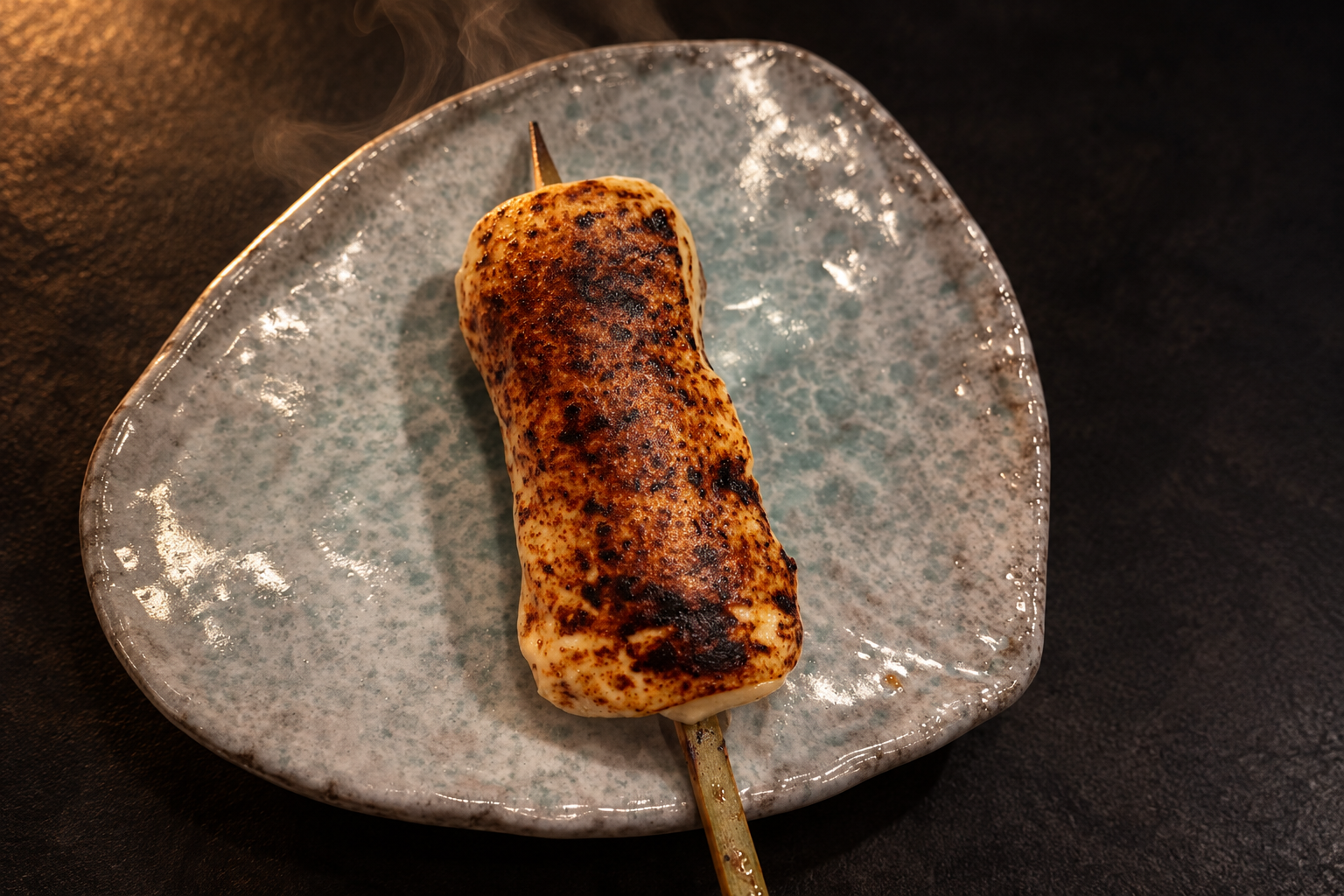
Sasami often appears on a yakitori menu alongside thigh, negima and tsukune, and it is frequently listed with a condiment, as in sasami wasabi or sasami ume-shiso. This guide explains which part of the chicken sasami is, how it is usually served, and, based on information from Japanese public authorities, what to know about food poisoning before ordering chicken that is not fully cooked.
Which part of the chicken is sasami?
According to an explainer by NH Foods (Nippon Ham), sasami is part of the breast meat, the strip that runs along the ribs. Its name comes from its shape, which resembles a bamboo leaf (sasa). Like breast meat, it has a light, clean flavour.
The same explainer notes that sasami dries out easily. Because it is lean and mild, yakitori restaurants often grill it with salt and top it with something sharp or fragrant, such as wasabi, pickled plum (ume) or shiso leaf. People tend to order it as a lighter skewer between richer ones like thigh or skin.
| How it may appear on a menu | What it means | Worth checking |
|---|---|---|
| Sasami wasabi | Tenderloin topped with wasabi | How much wasabi, and whether it can come on the side |
| Sasami ume-shiso | Tenderloin with pickled plum paste and shiso | Whether you like the sour plum and the herb |
| Sasami (shio) | Salt-grilled, no condiment | Whether tare sauce is an option |
These are common examples only. Whether a restaurant serves sasami at all, and with which toppings, varies, so check that day's menu.
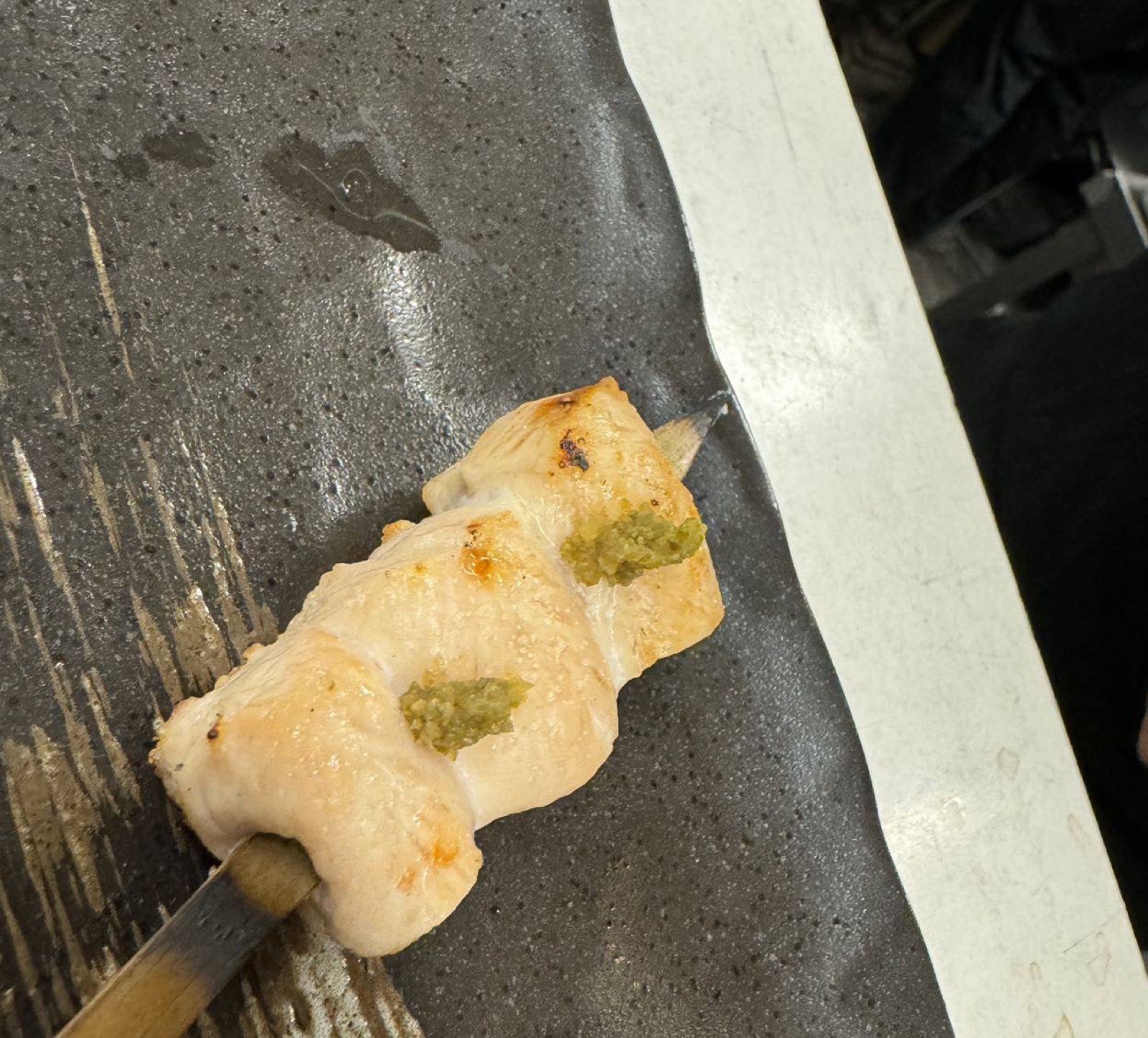
How to eat sasami with wasabi or shiso
When a skewer comes with a topping, simply eating it straight from the skewer gives you a little of the condiment with each bite. If the wasabi feels like too much, it is fine to move some aside with your chopsticks. For sharing, see our guide on whether to eat yakitori on the skewer or slide it off.
Because it has little fat, sasami cools and firms up quickly, so it is best eaten soon after it arrives. If you order several skewers at once, placing sasami somewhere in the middle of your order makes it easier to enjoy at its best.
Before ordering rare chicken or chicken sashimi
With chicken, the main concern is food poisoning caused by Campylobacter. Osaka City lists raw or undercooked meat dishes such as chicken sashimi and seared chicken tataki as the main sources. Typical symptoms are diarrhoea, stomach pain and fever, appearing one to seven days after eating.
Japan's Ministry of Agriculture, Forestry and Fisheries warns that many cases come from half-raw dishes such as sashimi of chicken liver or sasami and chicken tataki, as well as from undercooked chicken in general. It also points out that freshness does not make chicken safe to eat raw, because live birds can carry the bacteria.
The guideline for cooking is at least 75°C at the centre for at least one minute, and the ministry's advice for eating out is to choose dishes that are well cooked. Because sasami is so lean, it is sometimes offered close to rare; if that worries you, there is no need to order it that way. Simply ask for it cooked through.
Osaka City's page also explains that serving beef liver and pork (including liver and other offal) in an undercooked state, such as tataki or rare, is prohibited by law. So if you order beef or pork skewers at a yakitori restaurant, they are not supposed to be served undercooked either.
Japanese for asking for it well cooked
- “Sasami wa, yoku-yaki de onegai shimasu.” Sasami well done, please.
- “Naka made shikkari yaite moraemasu ka?” Could you cook it all the way through?
- “Wasabi wa sukuname de onegai shimasu.” Just a little wasabi, please.
- “Sasami wa, kyō arimasu ka?” Do you have sasami today?
Ordering at Yakitori Senkichi in Minamikyuhoji
Yakitori Senkichi's official site lists yakitori skewered on the day and charcoal-grilled skewers from 220 yen. It does not list individual skewers such as sasami or how they are topped, so check the menu when you visit or ask the staff. If you have a preference for how well it is cooked, mention it when you order.
According to the official site, the restaurant is open 17:00–22:30 with some irregular closing days, and the phone number is 06-4256-3135. For directions, see our guide from Hommachi Station to Yakitori Senkichi.
In short, sasami is part of the breast, a lean cut that is often livened up with a condiment. To enjoy it safely, choose chicken that is well cooked and ask the restaurant before ordering if anything is unclear.