/ Osaka Food / English
What Is Kashiwa on a Yakitori Menu? Why Kansai Calls Chicken Kashiwa, What a Thigh Skewer Is Like, and Ordering It at Yakitori Senkichi
Kashiwa, a word you will see at yakitori restaurants in Osaka, is what people in Kansai and some other regions call chicken. This guide covers the oak-leaf explanation often given for the name, how menus differ from those in Tokyo, what the photos of Yakitori Senkichi's kashiwa (thigh) and negima skewers show, and what to check when ordering.
Written by Koetsu Co., Ltd.
At yakitori restaurants and butchers in Osaka, chicken is sometimes written as kashiwa. At Yakitori Senkichi in Minamikyuhoji, the in-store mobile ordering menu we checked in late October 2026 listed "kashiwa (thigh)" at 275 yen and "negima (recommended)" at 288 yen in the recommendations section. Prices and items can change, so please check the menu in the restaurant for the latest.
This guide looks at what the word kashiwa means and the explanation often given for it, how it differs from menus in the Tokyo area, what the two photos on Senkichi's menu show, and what to check when ordering. We could not confirm from public information where Senkichi's chicken comes from, which brand it is, how it is cut, how long it is grilled or exactly how it is seasoned.
Kashiwa is a name for chicken
Inshokuten.com, a site for the restaurant trade, explains that chicken is called kashiwa in parts of the Chubu region, in Kansai and in Kyushu. The web edition of Serai magazine, in an article on a Kyoto chicken shop, also notes that people in Kansai have long called chicken kashiwa.
As for where the name comes from, the same Inshokuten.com article introduces the explanation that the brown of fallen oak (kashiwa) leaves resembled the feather colour of Japanese native chickens. It adds that when white-feathered broiler chickens arrived, people called the meat of brown-feathered native birds kashiwa to tell them apart, and the word is thought to have later become a general name for chicken. Other explanations exist, so treat this as a popular theory rather than a settled origin.
In other words, when a menu says only kashiwa, it simply means chicken, and which cut is used depends on the restaurant. When it says "kashiwa (thigh)" as Senkichi's menu does, you know it is a thigh skewer. Where there is no note in brackets, the surest way is to ask the staff which part they use.
Senkichi's kashiwa and negima in the photos
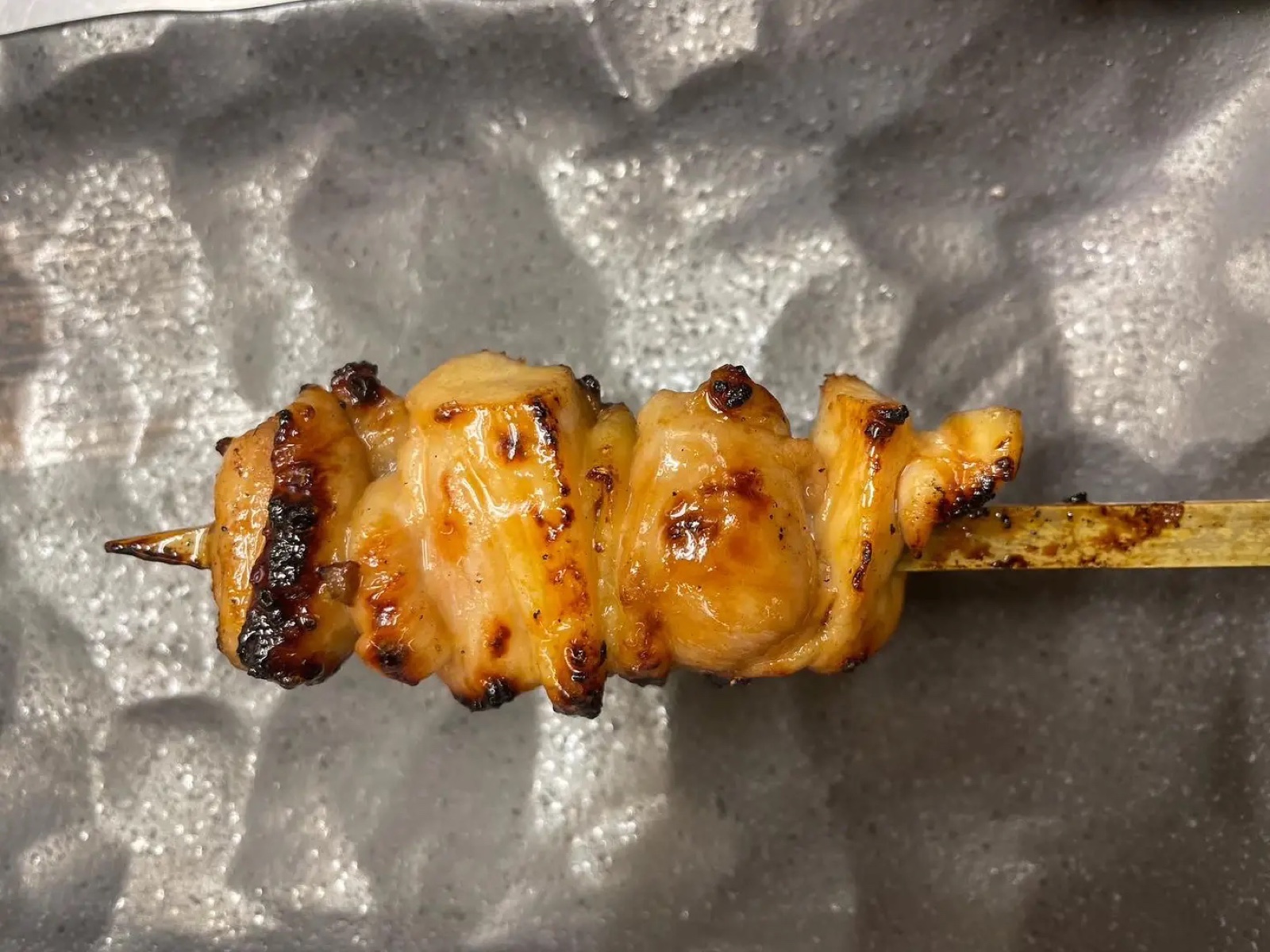
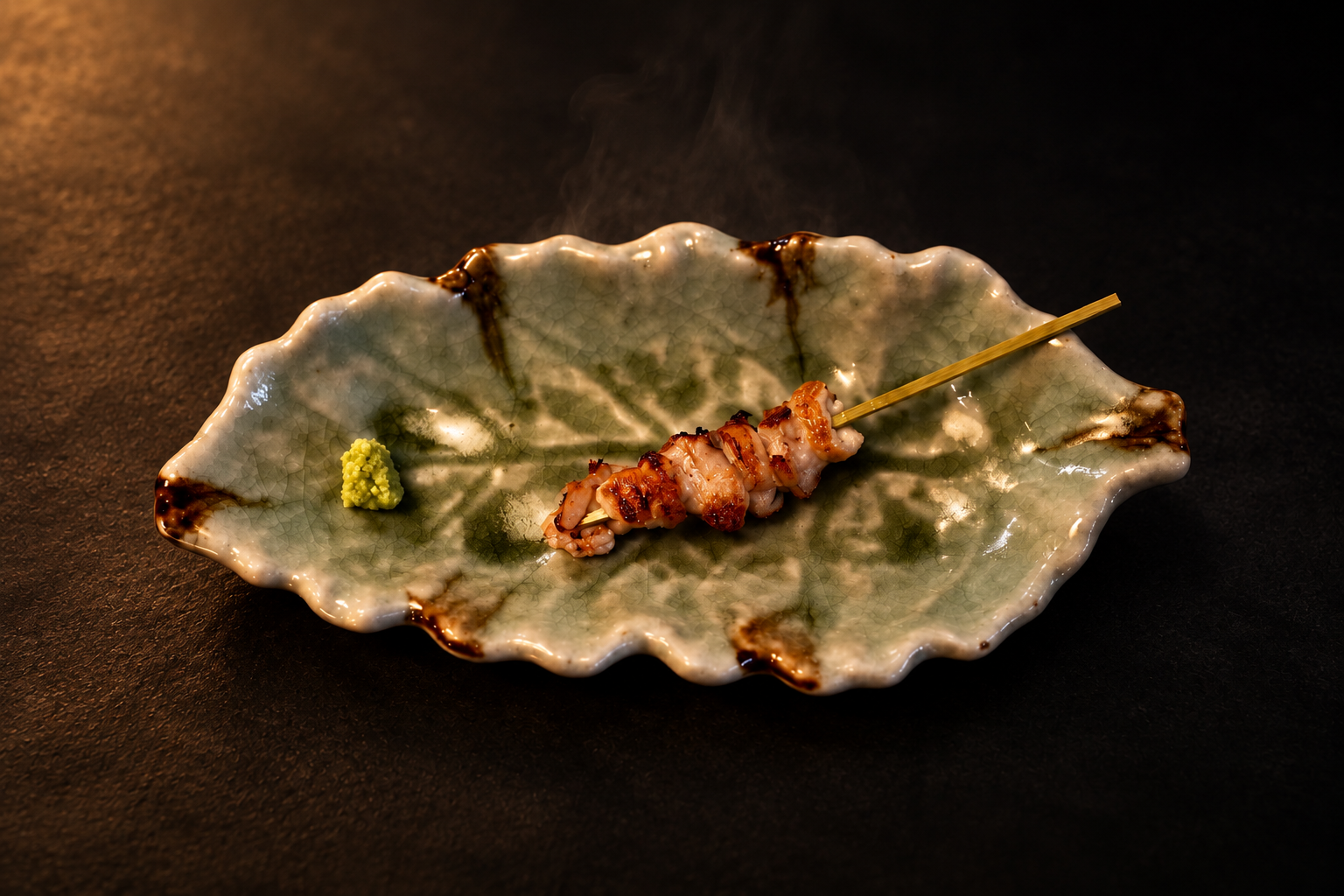
In the kashiwa photo, about five pieces of thigh are packed tightly on the skewer. The meat looks plump, the surface is glossy and the edges are charred black. The menu simply says "kashiwa (thigh)" with no note on whether it comes with salt or tare sauce. Please ask the staff when you order whether you can choose.
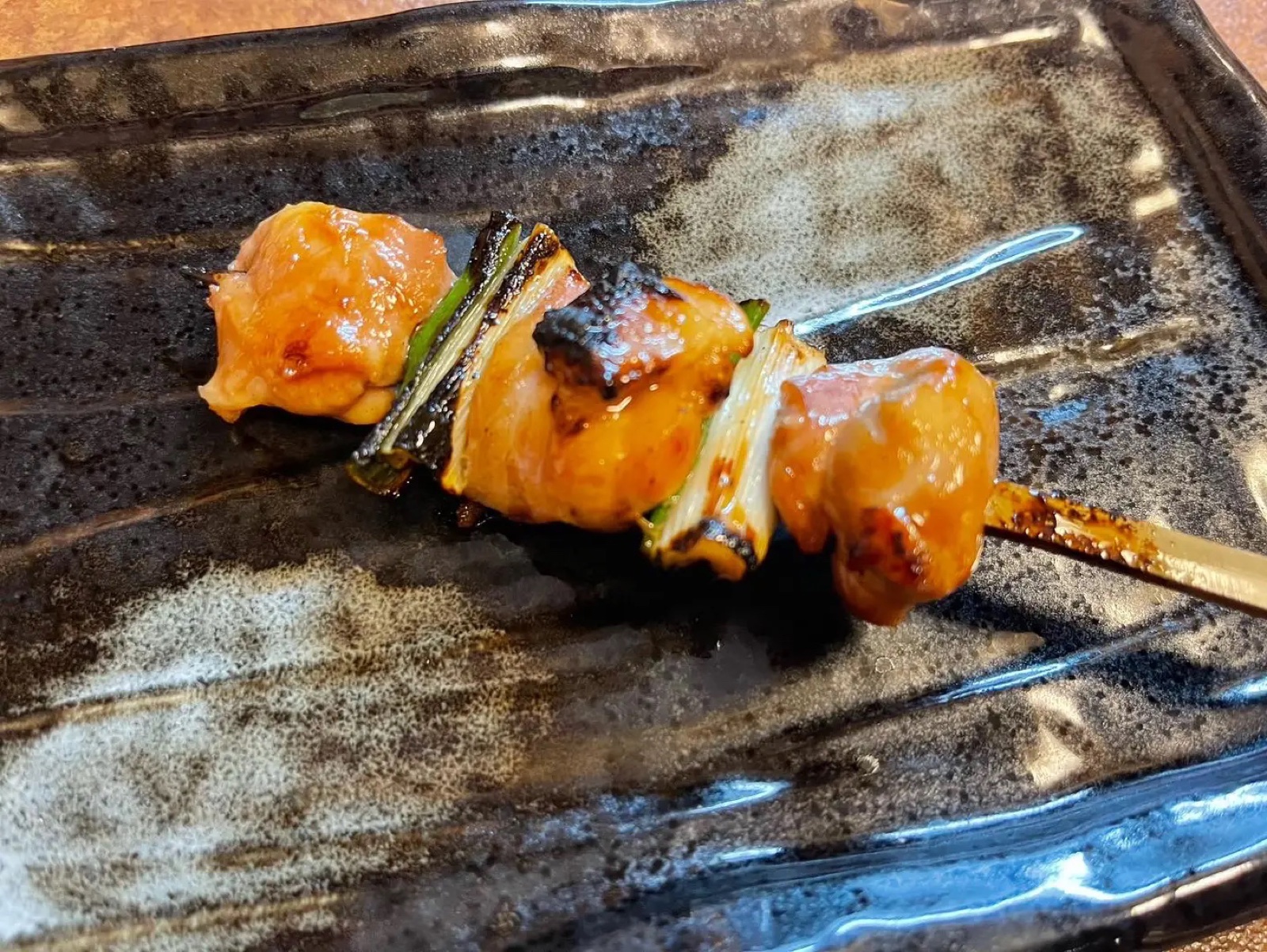
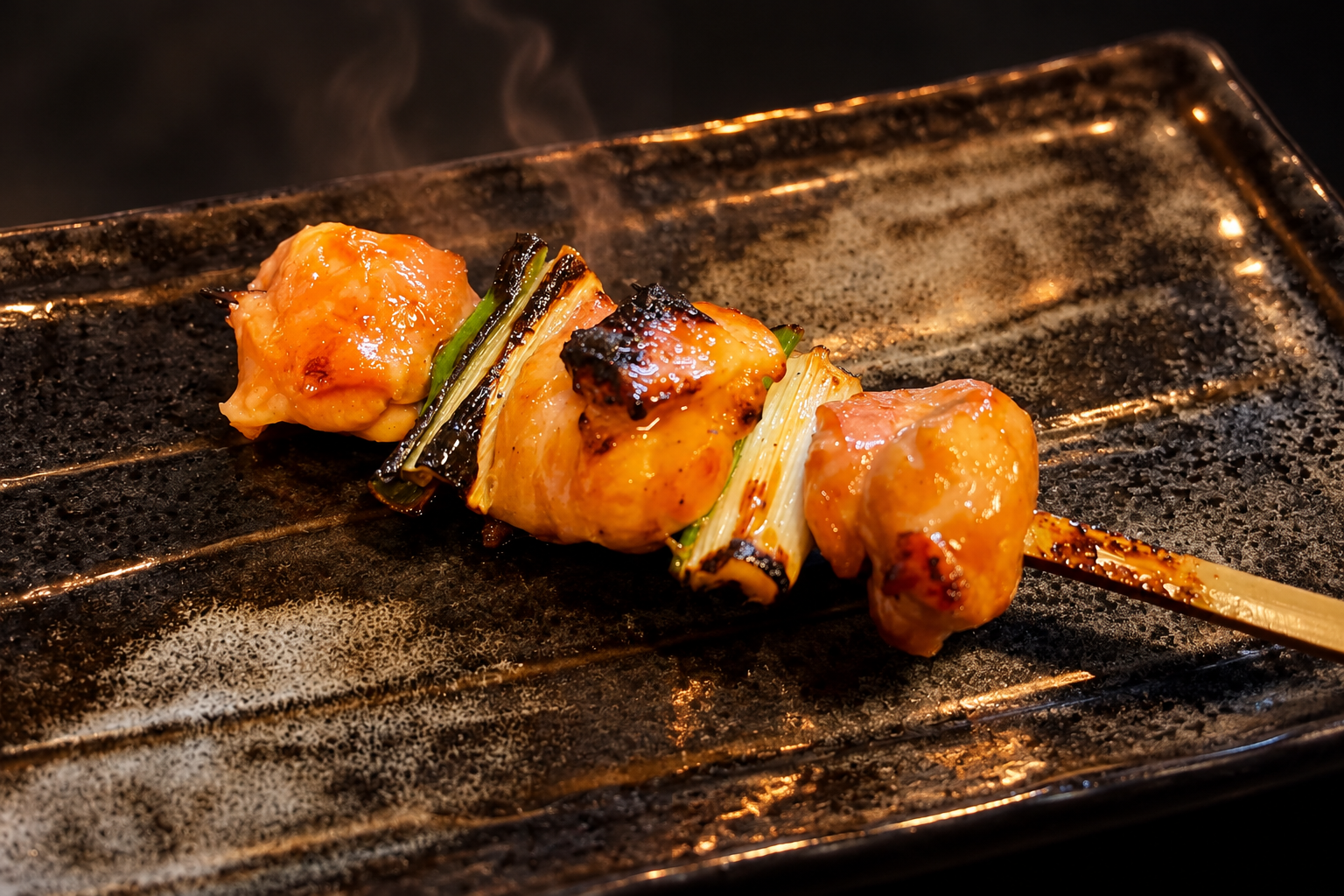
In the negima photo, two pieces of leek, showing both the white and green parts, sit between three pieces of thigh. The cut ends of the leek are charred, and the meat has the same glossy look as the kashiwa skewer. We cover the leek itself in more detail in our guide to negi skewers.
What a thigh skewer is like, compared with other cuts
Thigh meat comes from the part of the leg between the hip and the knee and is a yakitori staple. It is generally described as fattier than breast or tenderloin, juicy when you bite into it, and pleasantly springy. Some restaurants skewer it with a little skin left on, which crisps up on the grill.
| Menu name | Cut | What it is like |
|---|---|---|
| Kashiwa (thigh) | Thigh only | All about the meat itself and its juices |
| Negima | Thigh and leek | Adds the sweetness and aroma of leek |
| Seseri | Neck meat | A hard-working muscle with more bounce |
| Kawa | Chicken skin | Fatty; crisp or soft depending on how it is grilled |
If it is your first visit, one approach is to order a kashiwa or negima skewer first to get a feel for the meat, then add cuts with different textures such as seseri or kawa. The fat in thigh meat firms up as it cools, so it is best eaten soon after it comes off the grill.
What to check when ordering
- When a menu says only kashiwa, ask which cut it is (Senkichi's menu says thigh)
- Whether you can choose salt or tare (not stated on Senkichi's menu)
- Whether it comes with skin, or with leek in between (the difference between kashiwa and negima)
- Chicken should be cooked through. If you are concerned, talk to the staff about how it is grilled
Yakitori restaurants in the Tokyo area usually write momo for thigh, so visitors from there may be puzzled by the word kashiwa. If you remember that kashiwa means chicken when you see it in Osaka, menus become much easier to read. For ordering yakitori in general, see also our guide to ordering yakitori in Osaka.
Yakitori Senkichi is a yakitori restaurant in Minamikyuhoji, Osaka. Please check opening hours, reservations and the latest menu on the official website or in the restaurant.