/ Osaka Food / English
Kawa, the Chicken Skin Skewer: Tare or Salt, Crispy or Soft, How Fatty It Really Is, and Tips for Ordering at Yakitori Senkichi
Kawa, the chicken skin skewer, is a yakitori staple. Should you have it with tare or salt, and what makes it crispy or soft? Using the photo Yakitori Senkichi shows on its ordering menu, this guide covers how much fat chicken skin contains according to Japan's food composition tables, how grilling changes the texture, and how to ask for it when ordering.
Written by Koetsu Co., Ltd.
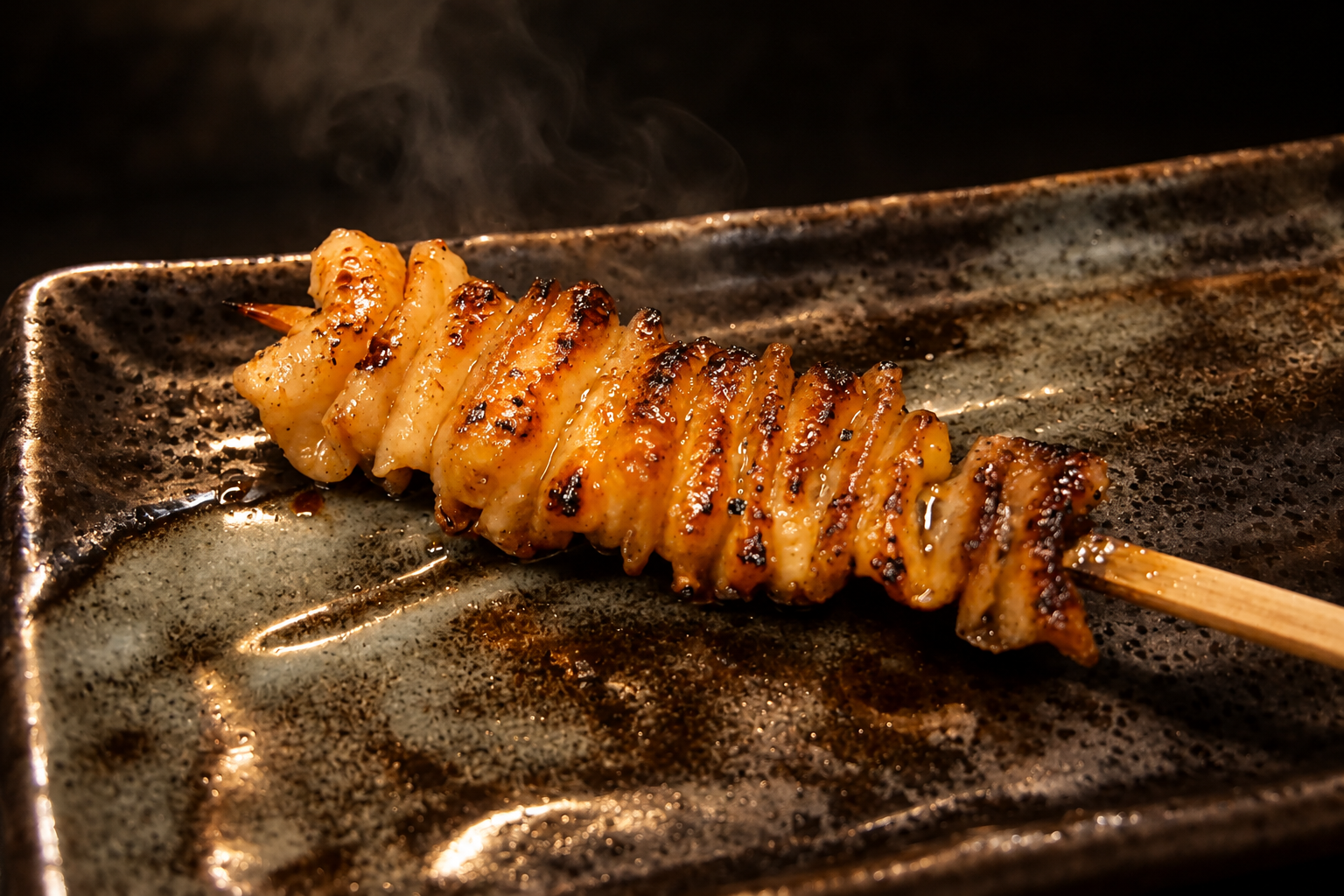
Alongside negima and thigh skewers, one item you will see on almost every yakitori menu is kawa: chicken skin threaded on a skewer and grilled. At Yakitori Senkichi in Minamikyuhoji, the in-store mobile ordering menu we checked in late October 2026 listed kawa at 275 yen. Prices can change, so please check the menu in the restaurant for the latest.
Kawa varies a lot from one restaurant to the next even though the name is the same. Some places grill it until it is crisp all the way through, others leave it soft and slightly springy, and the choice of tare or salt also differs. Using Senkichi's photo, this guide looks at what makes chicken skin distinctive and the points people tend to wonder about when ordering. We could not confirm from public information where Senkichi sources its skin, how it is prepared or how long it is grilled.
Senkichi's kawa in the photo
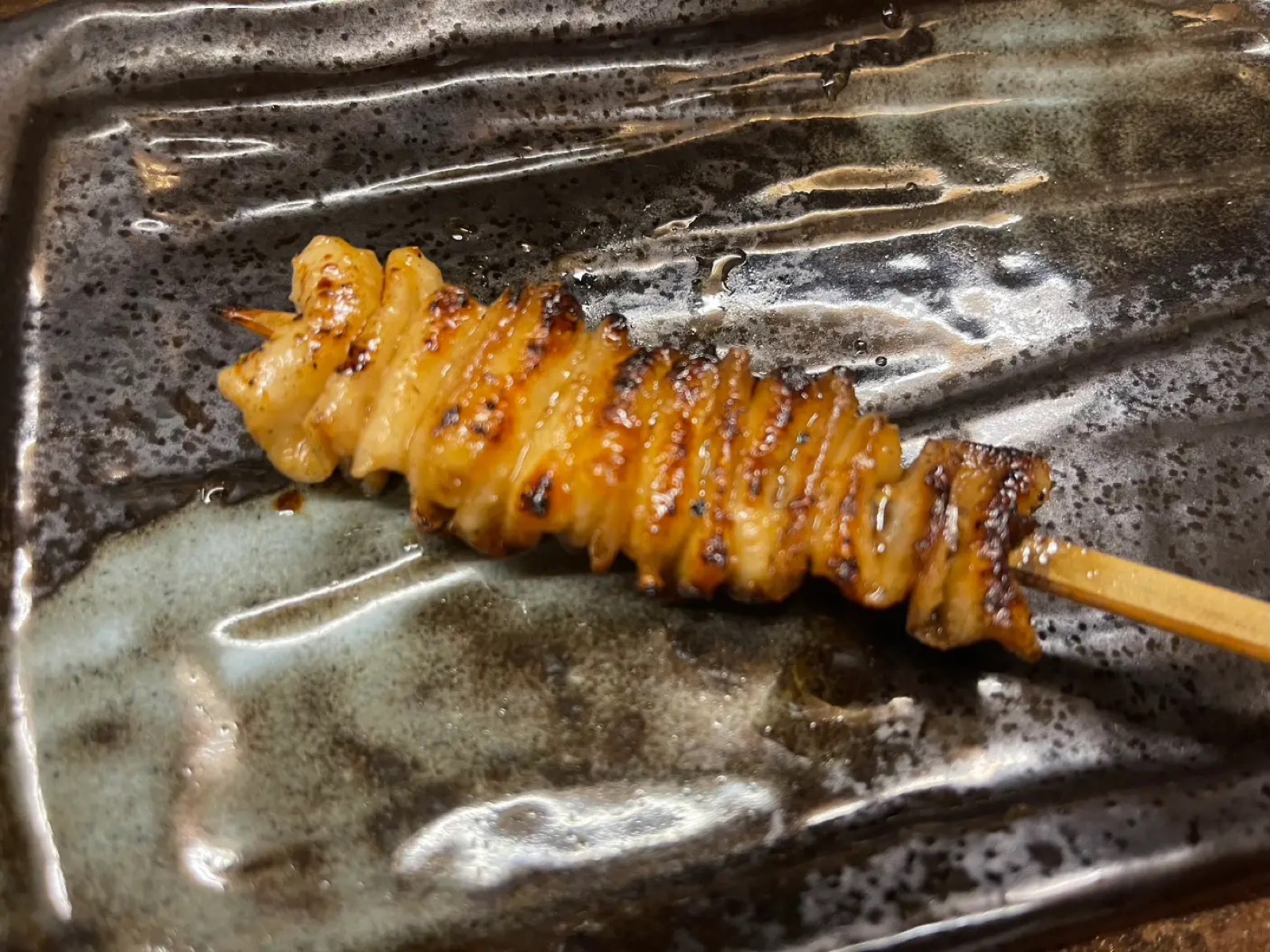
In the photo, the skin is folded back and forth onto the skewer like an accordion, and the ridges are deeply browned. The surface is glossy and looks as if it was grilled with tare. The menu, however, simply says kawa with no description of the seasoning, so please ask the staff when you order whether it comes with tare or salt and whether you can choose.
How fatty is chicken skin?
Chicken skin tastes so rich because it is mostly fat. According to the Food Composition Database run by Japan's education ministry (the Standard Tables of Food Composition in Japan), raw chicken thigh skin contains 474 kcal, 51.6 g of fat, 41.6 g of water and 6.6 g of protein per 100 g. Breast skin has 466 kcal and 48.1 g of fat per 100 g. In both cases roughly half the weight is fat.
| Raw chicken skin, per 100 g | Thigh | Breast |
|---|---|---|
| Energy | 474 kcal | 466 kcal |
| Fat | 51.6 g | 48.1 g |
| Water | 41.6 g | 41.5 g |
| Protein | 6.6 g | 9.4 g |
These figures are for raw skin. Fat melts and drips off during grilling, so how much remains in a finished skewer depends on the amount of skin and the way it is cooked, and the tables cannot tell you that. What is clear is that it is one of the fattiest skewers on the menu, so pairing it with sasami, breast meat or vegetable skewers makes for a more balanced order.
What makes it crispy or soft?
The texture mostly comes down to how much fat renders out and how much moisture cooks off. When the skin is folded tightly onto the skewer, fat and moisture tend to stay inside, so the outer ridges turn crisp and fragrant while the inside stays soft. Grilling longer while letting the fat drip away pushes the whole skewer toward a crunchy texture. In the photo the ridges are charred while the inner folds still look pale, which suggests a skewer that is crisp outside with some chew inside.
In places such as Fukuoka, a style called torikawa, where the skin is wound around the skewer and repeatedly dipped in sauce and grilled again, is a local specialty. Even among chicken skin skewers, the way they are threaded and grilled varies completely by region and restaurant. There is no single right answer, so tell the staff whether you like it crisp or soft and enjoy the way that restaurant does it.
Tare or salt?
If you can choose and are not sure, tare, the sweet soy glaze, combines with the richness of the fat for a bold flavor that goes well with rice or beer. Salt lets you taste the sweetness of the fat and the char of the grill directly, and a little lemon or shichimi keeps it light. At a restaurant you have not tried before, you can ask for the house style or order two and compare tare and salt.
- Kawa o ippon onegaishimasu. (One chicken skin skewer, please.)
- Kawa wa tare desu ka? Shio desu ka? (Is the kawa with tare or salt?)
- Kawa wa shio demo dekimasu ka? (Can I have the kawa with salt?)
- Karikari-me ni yaite moraemasu ka? (Could you grill it extra crispy? Depends on the restaurant.)
Things to keep in mind
Fresh off the grill, the fat on the surface is very hot. Whether you slide the pieces off the skewer or bite straight from it, give it a moment first. Tare skewers can drip onto your clothes, so it is safer to eat over the plate. For more on how to order and eat skewers, see our guide to ordering yakitori in Osaka.
Raw or undercooked chicken can cause food poisoning from Campylobacter. Japan's Ministry of Agriculture advises heating chicken until the center reaches at least 75 C for at least one minute, and choosing well-cooked dishes when eating out. Skin is part of the chicken too, so if you are unsure about how well it is cooked, do not hesitate to tell the staff.
Summary
Raw chicken skin is about half fat by weight, one of the fattiest cuts in yakitori. The appeal of the skewer lies in grilling off some of that fat so the outside turns fragrant while the inside stays tender. Tare gives a bolder flavor; salt shows off the sweetness of the fat and the char. Kawa is on the menu at Yakitori Senkichi, so check the seasoning and order it alongside other skewers. For the different wing cuts, see our guide to tebasaki and other chicken wing skewers.