/ Osaka Food / English
Tebasaki at a Yakitori Restaurant: Chicken Wing Cuts and How They Differ from Nagoya-Style Wings
Tebasaki and tebane on a yakitori menu are chicken wings. Here is where the wing tip, middle section and drumette come from, how charcoal-grilled wings differ from Nagoya's famous fried tebasaki, how to eat a bone-in skewer, and useful Japanese for ordering.
Written by Koetsu Co., Ltd.
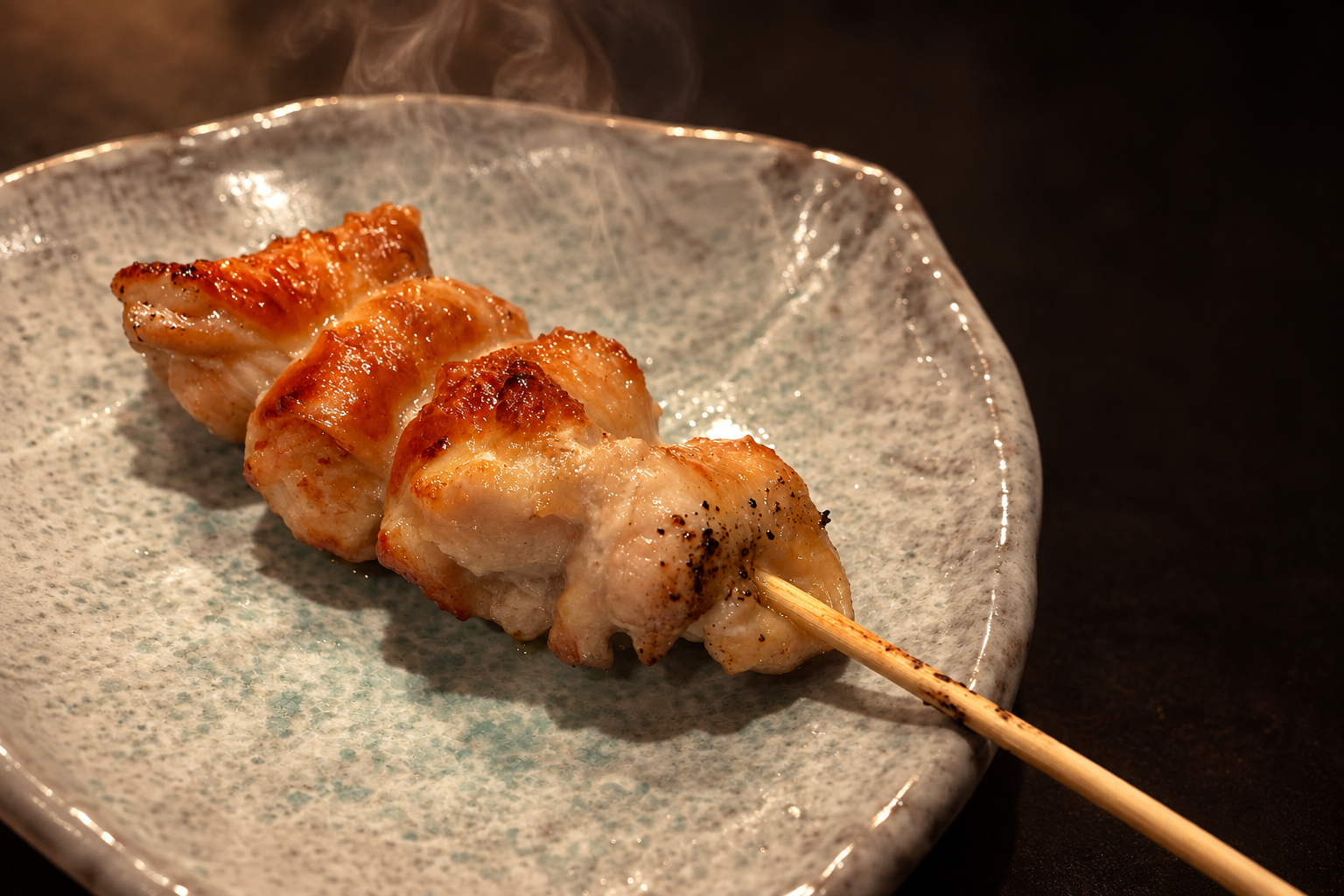
On a yakitori menu you may see tebasaki or simply tebane next to thigh, negima and tsukune. Both refer to the chicken wing, but Japanese also has the words tebanaka and temoto, which can be confusing. This guide explains the different wing cuts, how a grilled wing differs from Nagoya's famous fried tebasaki, how to eat a bone-in skewer, and the Japanese you can use to order.
Which part is tebasaki, tebanaka or temoto?
The meat of a chicken's wing is called tebane in Japanese. According to an explainer by NH Foods (Nippon Ham), tebasaki runs from the joint out to the very tip of the wing; because it has plenty of skin it is rich in gelatin and fat. Tebanaka is the tebasaki with the tip removed, and temoto is the part that joins the wing to the breast, with less fat and more meat.
| Name | Where it is | Notes (from NH Foods) |
|---|---|---|
| Tebasaki | From the joint to the wing tip | Skin-on, rich in gelatin and fat; suits frying and grilling |
| Tebanaka | Tebasaki without the tip | A well-used muscle, so the meat is firm |
| Temoto | Where the wing joins the breast | Less fat, more meat |
In short, tebasaki on a menu is the outer, bone-in part of the wing, while temoto is the meatier section near the body with a thicker bone. How a yakitori restaurant cuts the wing for a skewer, and whether it writes tebane or tebasaki, differs from place to place, so ask if you are unsure.
How it differs from Nagoya's tebasaki
Many people hear tebasaki and think of Nagoya. Nagoya's official tourism site, Nagoya Concierge, explains that the local speciality is, strictly speaking, tebasaki karaage: wings deep-fried without batter, brushed with a sweet and savoury sauce and finished with spices and sesame.
The same site notes that because the wing tip has lots of gelatin and fat but little meat, it was once mainly used for animal feed. At a yakitori restaurant, by contrast, ordering tebasaki usually brings a wing grilled on a skewer, often over charcoal. If it is the fried Nagoya style you are after, look in the fried-food section of the menu or simply ask.
A wing skewer at Yakitori Senkichi
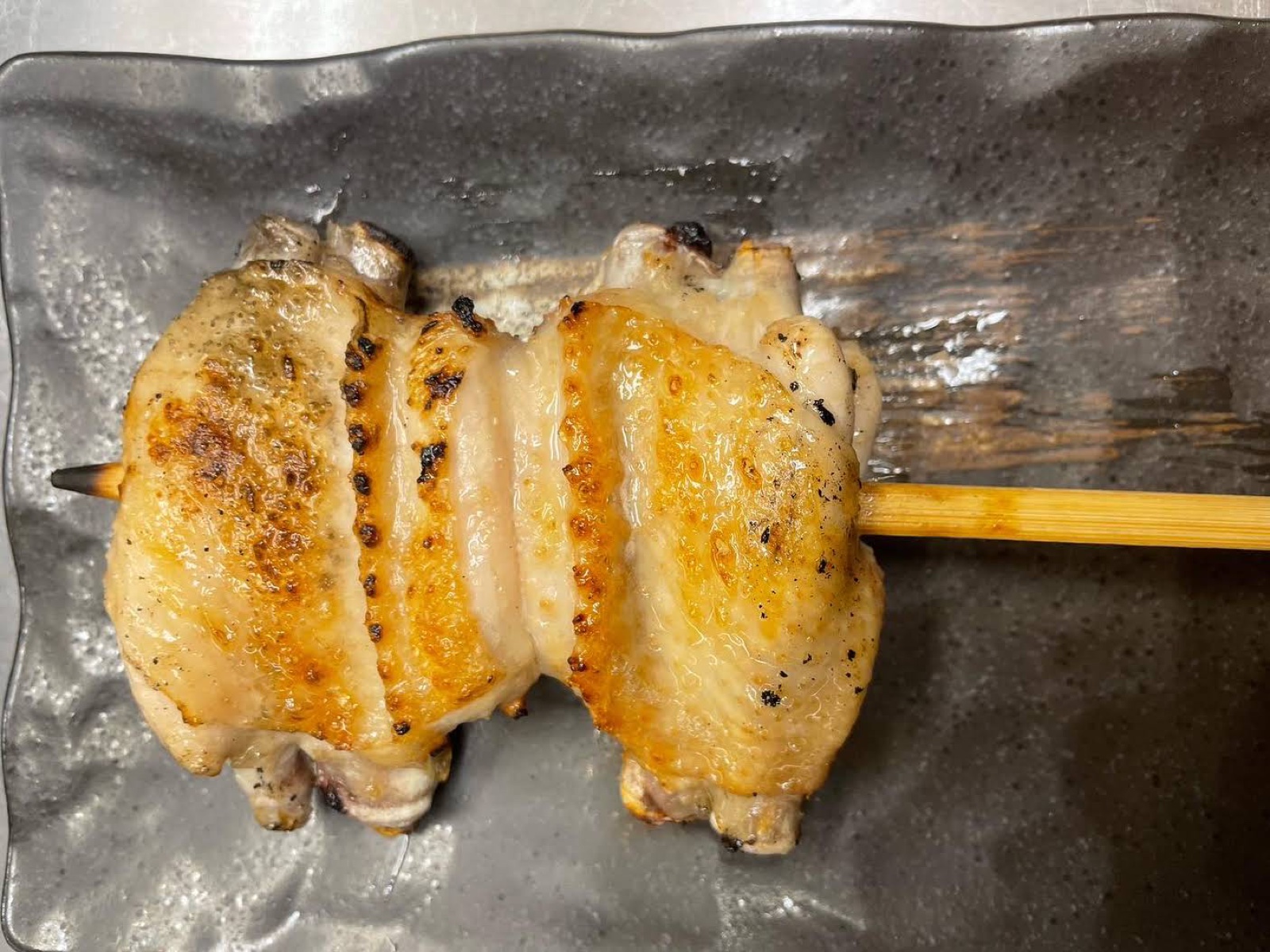
Among the photos Yakitori Senkichi in Minamikyuhoji has published on Google is a chicken wing grilled on a bamboo skewer. The skin is well browned and you can see the bone at each end. Because the wing carries a lot of skin, grilling brings out a crisp, savoury skin and plenty of flavour from the fat.
When we checked the Yakitori Senkichi official site on 6 October 2026, both its same-day skewered yakitori and its charcoal-grilled skewers were listed from ¥220. The site does not list wings or their price separately, so please check the menu or ask the staff on the day. Opening hours are given as 17:00 to 22:30 (closed on some irregular days), and the phone number as 06-4256-3135.
Eating a bone-in wing skewer
Wings are often skewered with the bone in, so if you bite straight off the skewer as with other yakitori, meat tends to stay on the bone. If that is awkward, slide the wing off with your chopsticks and pick the meat away from the bone on your small plate. We cover whether to eat straight from the skewer in How to eat yakitori: on the skewer or off?.
Straight off the grill, hot fat can collect under the skin and around the bone, so give it a moment before eating. Put the finished bones together on the edge of your plate, and the skewer in the skewer holder if there is one. An oshibori (wet towel), if provided, is handy for your fingertips.
Useful phrases
- Tebasaki o nihon onegaishimasu: two wing skewers, please
- Tebane wa honetsuki desu ka: is the wing bone-in?
- Tebasaki wa shio to tare, dochira ga osusume desu ka: salt or sauce, which do you recommend for the wing?
- Tebasaki wa kyō arimasu ka: do you have wings today?
- Torizara o itadakemasu ka: could I have a small plate?
Salt or sauce is a matter of taste: some people order wings with salt to enjoy the crisp skin, others with the sweet and savoury tare. If you cannot decide, ask for the house recommendation. The basics of cuts and seasoning are in How to order yakitori in Osaka.
A wing skewer is fairly filling on its own, so start with about one per person alongside other skewers and add more as you go. For a sense of how much to order, see How many yakitori skewers to order per person.