/ Osaka Food / English
Grilled Leek (Negi) Skewers at a Yakitori Restaurant: How They Differ from Negima, What the White Part Really Is, and Why Grilled Leek Tastes Sweet
Starting from a photo of a leek skewer that Yakitori Senkichi published on Google, this guide explains how a skewer of leek alone differs from negima (chicken and leek), why the white part of a Japanese long onion is layered leaf rather than stem, why grilled leek tends to taste milder and sweeter, how to eat a skewer that stays very hot inside, and what to check before ordering.
Written by Koetsu Co., Ltd.
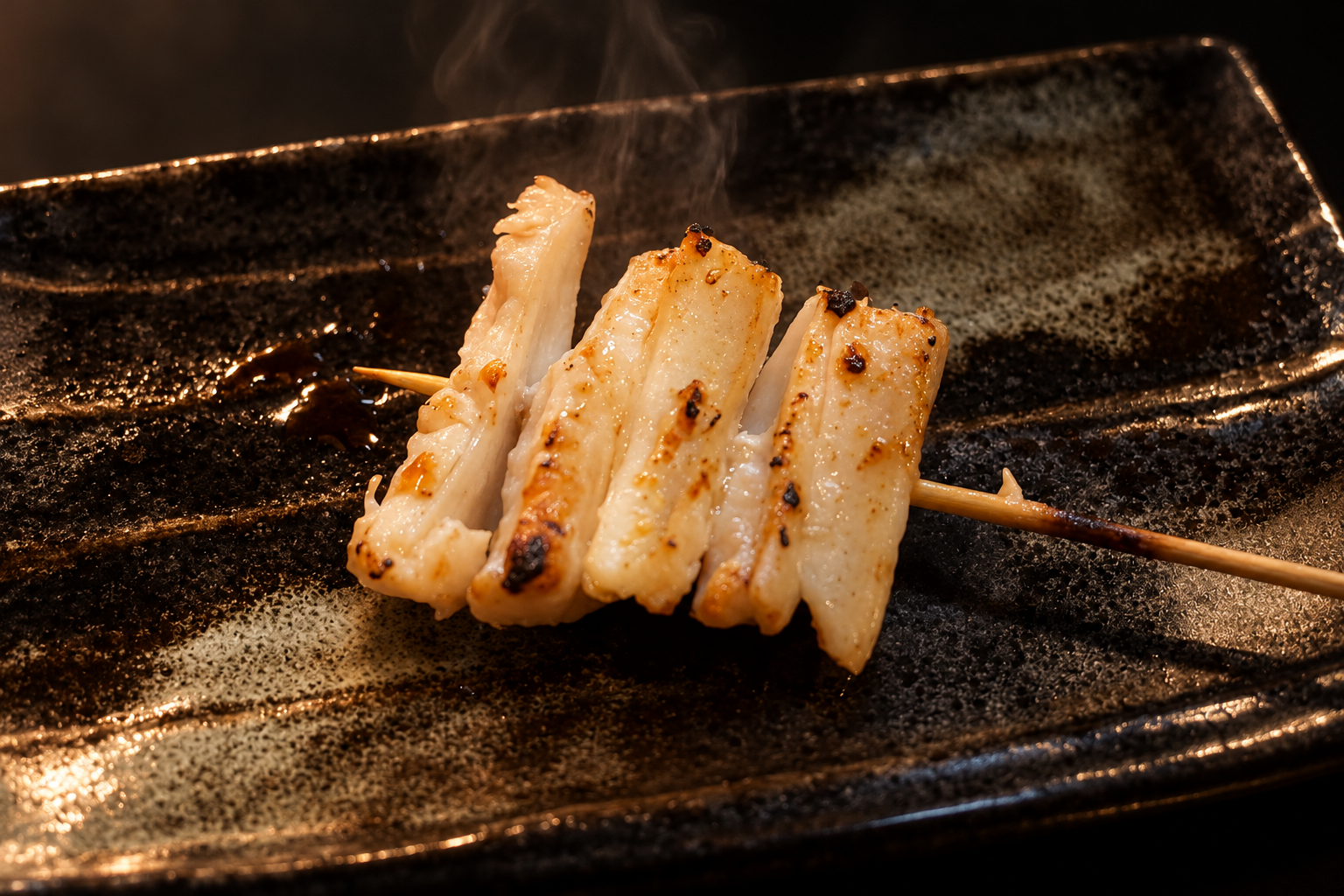
On a yakitori menu you will sometimes see a skewer simply called negi among the chicken items. It is a skewer of leek alone, with no chicken. It looks plain, but over charcoal it picks up a toasty aroma and sweetness, and plenty of people order it between meat skewers.
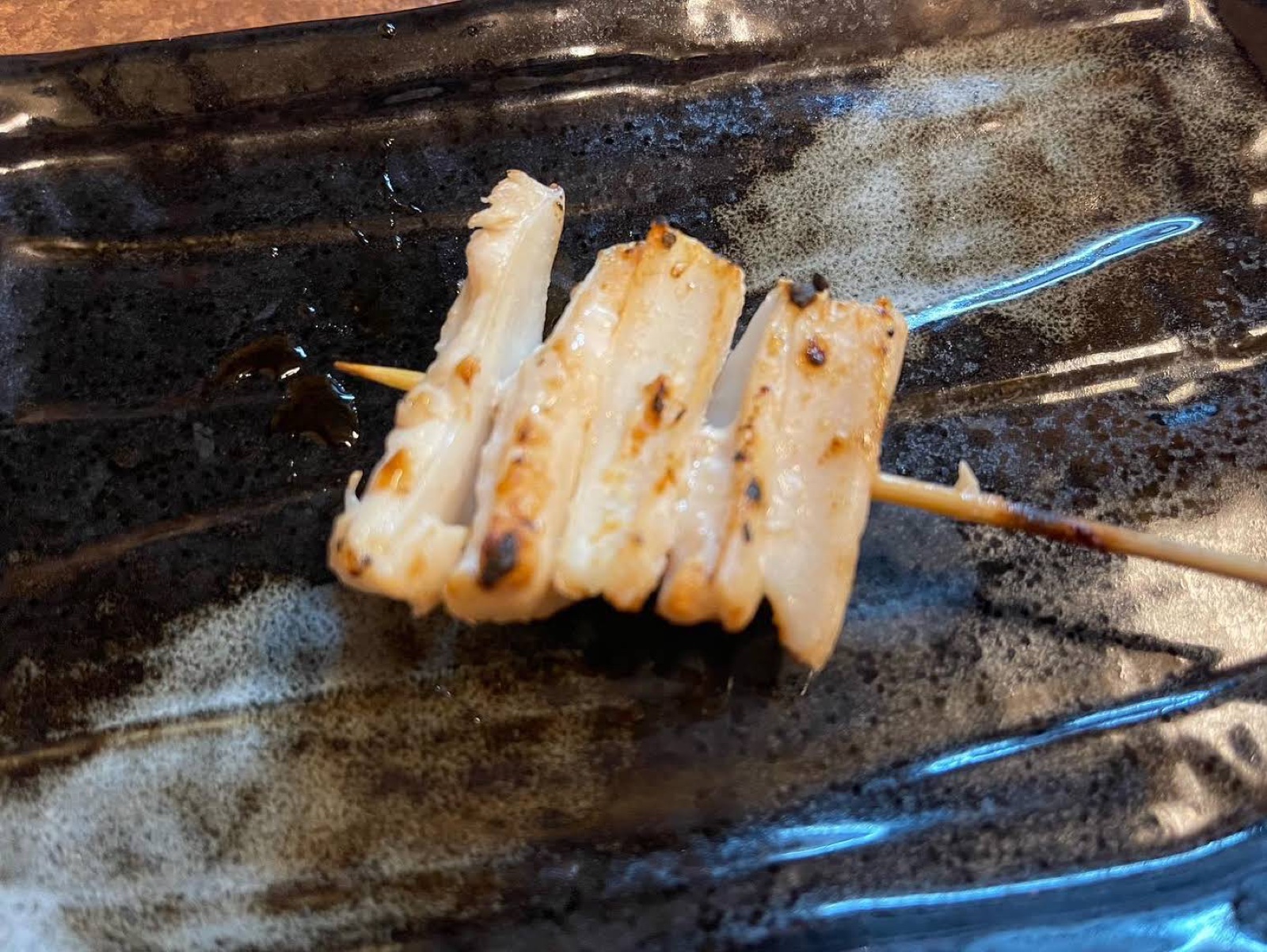
The photo in this article was published on Google by Yakitori Senkichi in Minamikyuhoji, Osaka. Thick pieces of white leek are threaded on a skewer and grilled until the surface is spotted with char. The pale finish looks salt-grilled rather than glazed with tare. Menus and prices can change, so please check on the day or by phone whether it is available.
Negi and negima are different skewers
The name that causes confusion is negima. Negima is a skewer that alternates chicken (usually thigh) with pieces of leek, and it is one of the yakitori standards. When a menu just says negi or negi-kushi, it usually means a vegetable skewer of leek alone.
| Menu name | What it is | When to order it |
|---|---|---|
| negi / negi-kushi | Leek only | Between meat skewers, as a change of pace |
| negima | Chicken and leek alternated | Among the first few skewers, as a staple |
If you are not sure which one you are looking at, you can ask, "Negi wa, toriniku nashi no negi dake desu ka?" (Is the negi just leek, without chicken?). For more on non-chicken skewers, see our guide to beef, pork and vegetable skewers on a yakitori menu.
The white part is leaf, not stem
The white part of the leek used on skewers looks like a stem, but the Ministry of Agriculture, Forestry and Fisheries describes it as the leaf sheath, the part where many white leaves are wrapped around one another. Cut it crosswise and you can see the thin layers, and the cut ends in the photo show them too.
According to the same source, most white or long leeks sold in shops belong to the Senju group, which grows a thick, long white section. The Kujo group, named after Kyoto, is now grown mainly in western Japan and is eaten as a green leaf onion because its leaves are soft and less pungent. Some people in the Kansai region picture green leaf onions when they hear negi, but yakitori skewers usually use the thicker white leek.
Why grilled leek tastes sweet
Bite into raw leek and you get a sharp, pungent bite. The compounds behind that pungency change easily with heat, so once the leek is cooked through the sharpness fades and the leek's own sweetness becomes easier to notice. That is the usual explanation for why slowly charcoal-grilled leek tastes soft and sweet.
How sweet it tastes still depends on the variety, the time of year, the thickness and how it is grilled. A little char on the surface adds aroma, while heavy charring turns bitter. Salt lets the leek's own sweetness come through, and tare gives a sweet-savoury finish. A light shake of shichimi pepper also suits it.
It stays hot inside, so give it a moment
Leek holds moisture between its many layers, so straight off the grill the inside can be hotter than the outside. Bite down hard and the inner layers can slide out together with hot juice. When it arrives, wait a moment and nibble from the end.
If you prefer to take the pieces off the skewer, hold them with chopsticks and pull the skewer out, which also makes sharing easier. When sharing in a group, ordering one per person rather than splitting one skewer means everyone gets to eat it while it is hot.
When to order it
- As a palate refresher after several chicken skewers
- Side by side with negima, to taste the difference chicken fat makes
- Easy to pair with beer, highballs or sake
- Order a little early, since it can take time to grill
For yakitori ordering in general, see our basic guide to enjoying yakitori in Osaka. The official site of Yakitori Senkichi (Sankyubashi Gardenscape E, 3-2-15 Minamikyuhojimachi, Chuo-ku, Osaka) lists opening hours of 17:00 to 22:30, with occasional irregular closing days. Please check the official site for the latest information before visiting.