/ Osaka Food / English
Beyond Chicken: Reading a Yakitori Restaurant Menu in Osaka
Beef skewers, pork rolls and shishito peppers can sit alongside chicken on a yakitori menu. Learn to identify ingredients and ask about mixed platters, with an example from Minamikyuhojimachi, Osaka.
Written by Koetsu Co., Ltd.
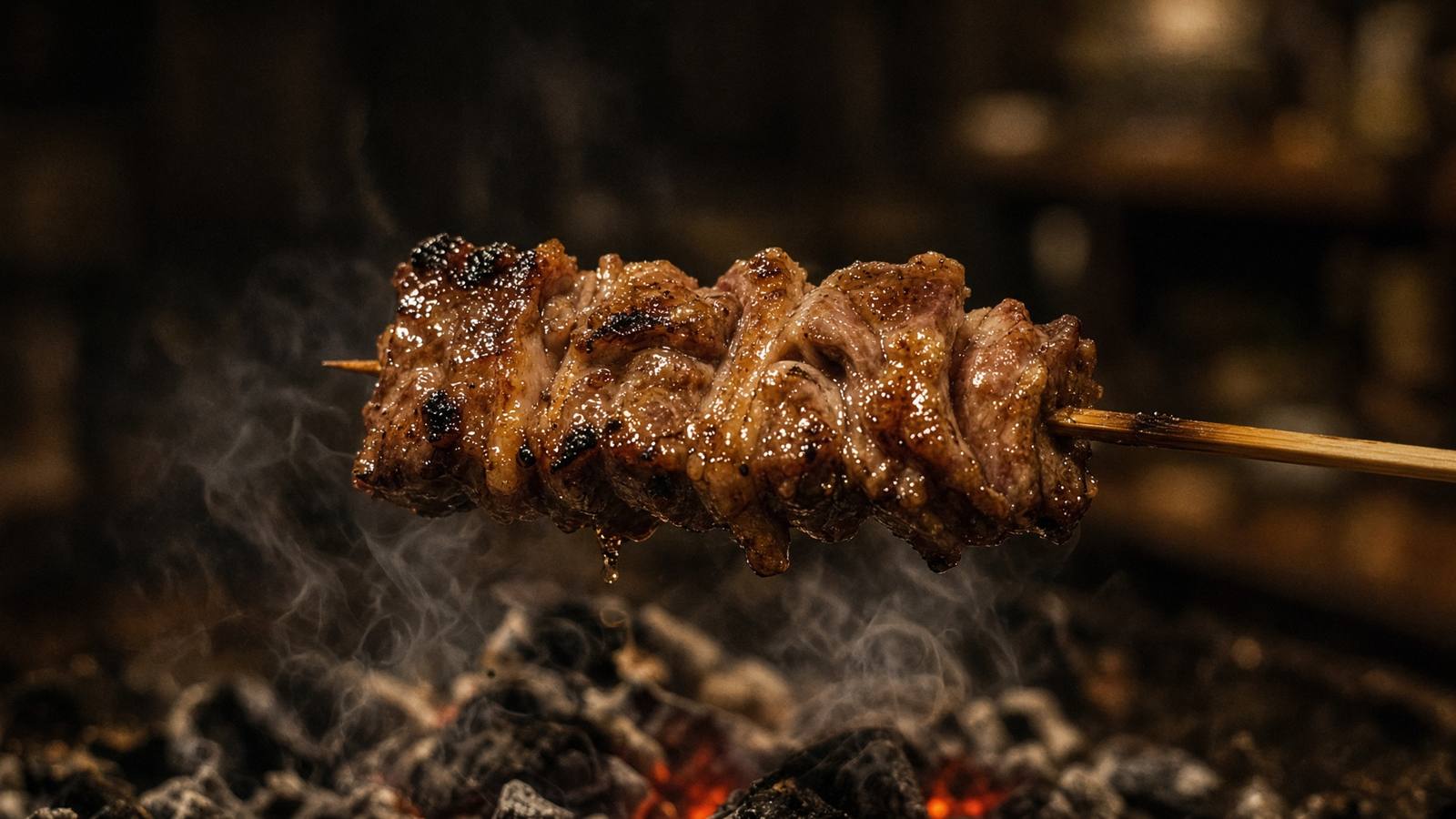
You may want chicken skewers for dinner while your travel companion prefers beef or vegetables. Before ruling out a yakitori restaurant, look beyond its name and read the grilled dishes and side dishes sections. The chicken selection may be only one part of the menu.
When choosing dinner around Honmachi or Shinsaibashi in Osaka, identifying ingredients helps you compare restaurants. This guide focuses on what a dish contains and how to combine different options, rather than revisiting every chicken cut.
Yakitori and kushiyaki: what the menu is telling you
Yakitori points you toward grilled chicken skewers. Kushiyaki is a broader label for grilled skewered food, so a section with that heading may include beef, pork or seafood. Restaurants arrange menus differently; use the dish name and description to check what you are actually ordering.
JNTO’s yakitori guide also describes non-chicken choices, including beef tongue, pork belly and vegetable dishes. That is useful context when browsing a menu, but it does not mean every yakitori restaurant offers those dishes.
Look for the ingredients inside the dish name
Wagyu-kushi identifies a beef skewer, while butabara-maki indicates a dish wrapped in pork belly. With a rolled dish, read both the filling and the wrapping. The ingredient named first may not be the only meat or seafood on the skewer.
| Menu wording | Ingredient clue | Useful follow-up |
|---|---|---|
| 和牛串 / wagyu-kushi | Beef | Availability and seasoning |
| 海老と大葉の豚バラ巻き | Shrimp, shiso and pork | Both the filling and the wrapping |
| イカ下足 / ika-geso | Squid tentacles | Preparation and seasoning |
| ししとう / shishito | Shishito peppers are the main ingredient | Toppings, sauce and preparation |
This table helps decode names; it is not a complete ingredient list. A vegetable-led dish is not automatically free of animal ingredients. If you have particular food requirements, ask about the sauce, toppings and preparation before ordering.
A published menu from Minamikyuhojimachi
The published menu for Yakitori Senkichi Minamikyuhoji, the restaurant presented on Koetsu’s website, lists wagyu skewers, squid tentacles, shrimp and shiso wrapped in pork belly, grilled thick fried tofu and shishito alongside chicken. These are concrete options to look for when comparing dinner choices.
The published menu is a sample and can change with purchasing and season. If one dish is the reason for your visit, confirm that it is being served before you travel or place an order. Editorial images also do not establish today’s portion size or presentation.
Ask what is in the platter
One person might prefer mostly chicken while another wants some beef and vegetables. Explain those preferences before choosing a platter. This is a way to plan an order together, not a set menu or a course advertised by the restaurant.
A useful question is “Moriawase ni nani ga hairimasu ka?”—“What comes in the assortment?” Check the types of skewers, the number included and how you want to share them. Do not assume a platter contains only chicken, or that vegetables will necessarily be included.
If the ingredient is unclear, point to the dish and ask “Kore wa nan no niku desu ka?”—“What meat is this?” Combining a short question with the written menu gives the person helping you something specific to clarify.
Once you have chosen your mix of ingredients, our yakitori ordering guide explains chicken cuts and salt or sauce. Match your companions’ preferences to the menu available that evening to plan a dinner everyone can enjoy.
Sources and further reading
- JNTO: Guide to yakitori(Checked: )
- Yakitori Senkichi Minamikyuhoji: published menu(Checked: )