/ Osaka Food / English
What Is Chicken Harami on a Yakitori Menu? How It Differs from Beef Harami, Why It Has a Bite, and What to Know Before Ordering the Garlic-Grilled Plate
Which part of the chicken is the tori harami on a yakitori side-dish menu? Using a photo Yakitori Senkichi published on Google, this guide explains that it is a cut from the abdominal wall rather than the diaphragm used for beef and pork harami, that each bird yields only a little, what the texture is like, and what to check before ordering the garlic-grilled plate.
Written by Koetsu Co., Ltd.
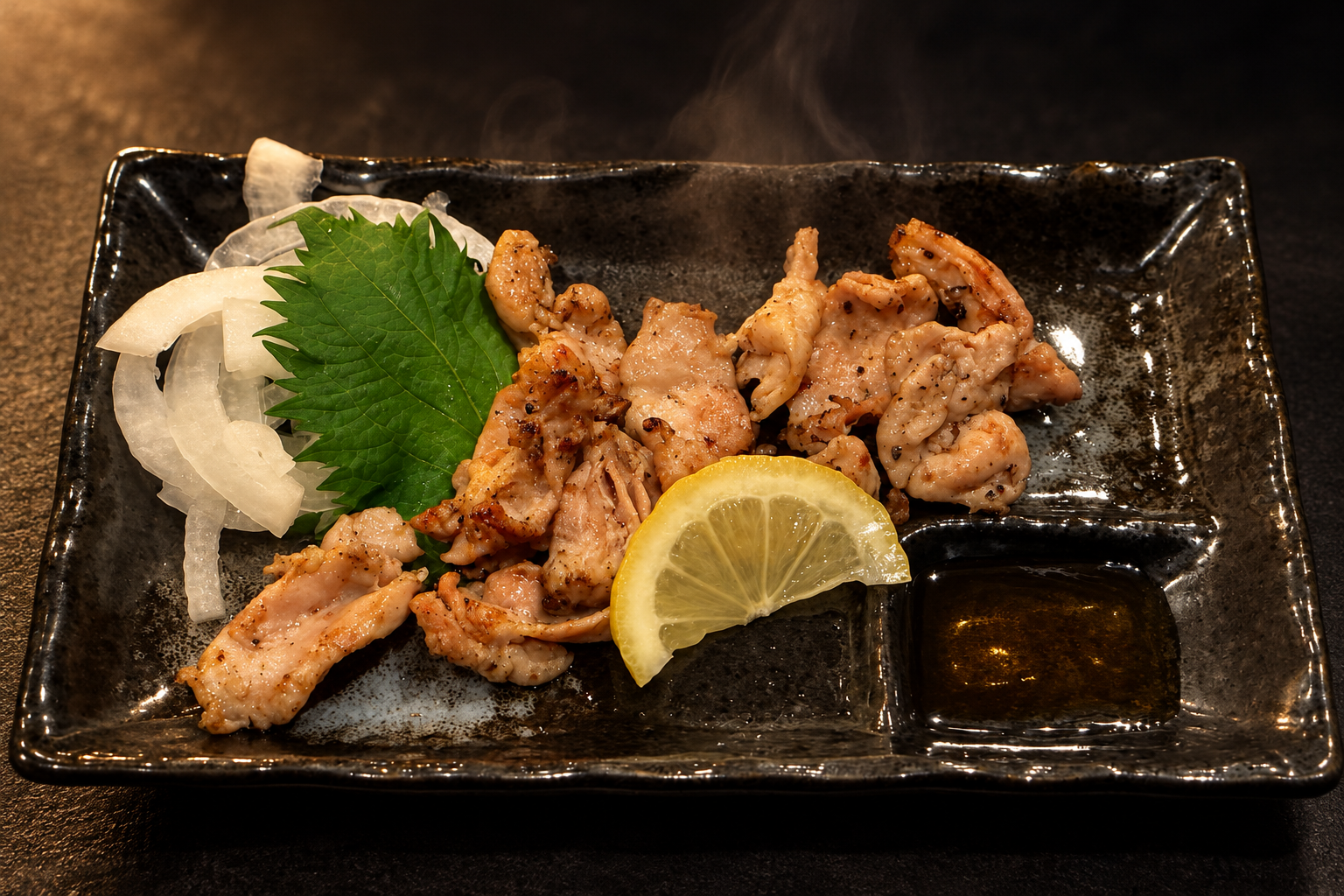
At a yakiniku restaurant, harami usually means beef skirt, the meat of the diaphragm. Yakitori menus, however, sometimes list tori harami, chicken harami. At Yakitori Senkichi in Minamikyuhoji, the side-dish section of the menu as of October 2026 listed a garlic-grilled chicken harami plate (鳥ハラミのニンニク正味焼き). This guide explains which part of the bird it is and what to look for when ordering.
A note up front. We could not confirm from public information where Yakitori Senkichi's chicken harami comes from, how the garlic is used, or what the word 正味 in the dish name refers to. The explanation of the cut below is general information. Please ask the staff when you order if you want details.
The dish in the photo
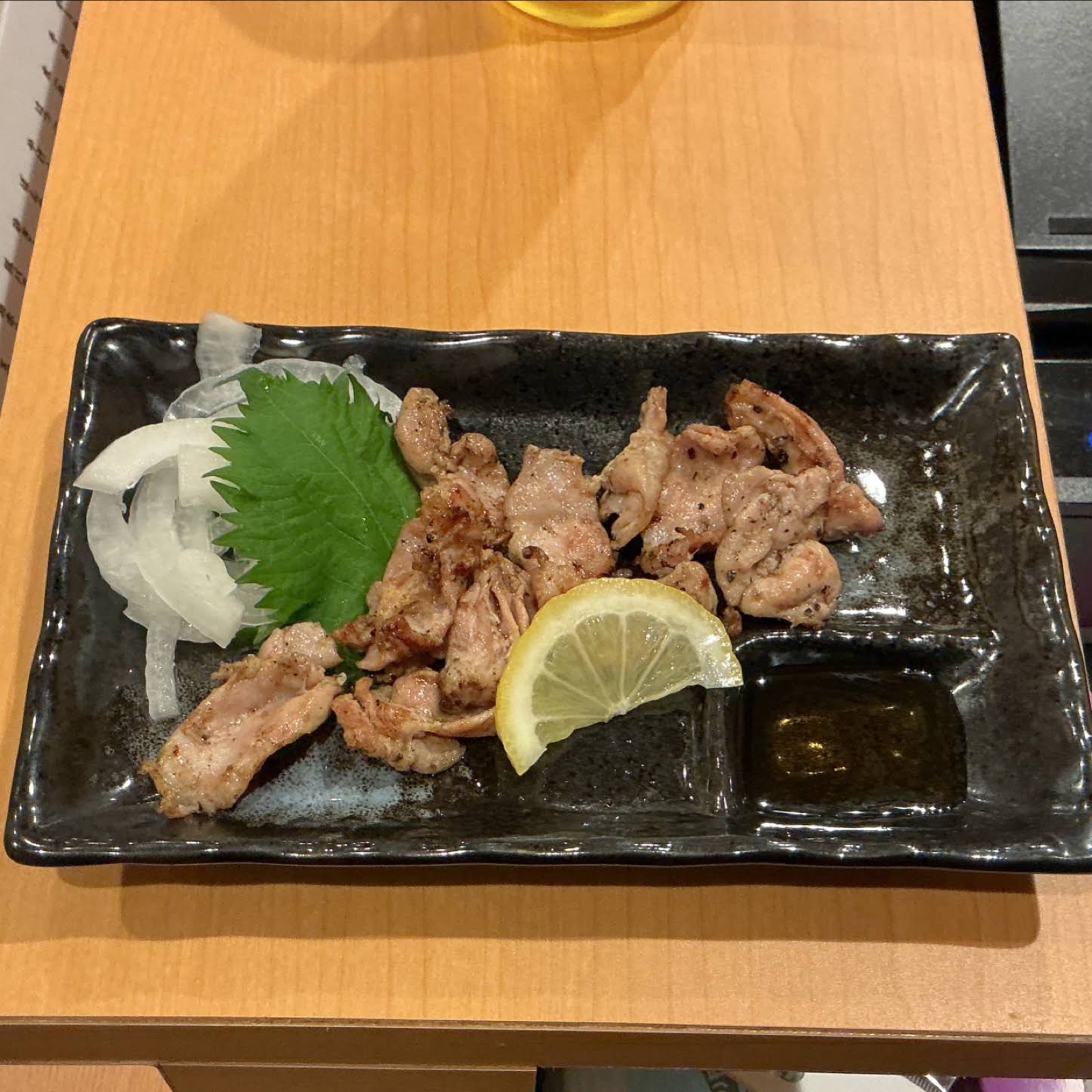
In the photo, the chicken harami is not on skewers. Small pieces, smaller than a single bite, are piled together on a long black plate. You can see browning and specks of black pepper on the surface. The plate also has a shiso leaf, sliced onion and a lemon wedge, and a small compartment at the right end holds a sauce. The photo does not show what kind of sauce it is.
Not the same place as beef harami
For beef and pork, harami means the muscle of the diaphragm. According to the recipe site DELISH KITCHEN, chicken harami comes from a completely different place: the part of the abdominal wall that protects the organs near the base of the thigh, in other words the abdominal muscle. Despite the shared name, it is not simply the chicken version of beef harami.
The same article says each bird yields only about 4 to 10 g of chicken harami, so it is treated as a rare cut, and that although it looks like meat, it is classed as offal (horumon) under the Ministry of Agriculture, Forestry and Fisheries' trading standard for chicken. Because it is not always on menus, many people try it when they happen to see it.
Taste and texture
DELISH KITCHEN describes chicken harami as rich, with sweet-tasting fat, juicy, and with a slightly crunchy bite somewhere between meat and offal. It notes that the meat has some chew but is easy to bite through. It may help to picture something less firm than gizzard but with more bite than thigh meat.
If you like firm, chewy cuts, see also our guide to sunagimo, chicken gizzard. Gizzard is stomach muscle, a different place and a different texture from chicken harami. Trying both side by side shows how different two chewy cuts can be.
Before you order the garlic-grilled plate
- The dish name includes garlic, so think about the amount and timing if the smell matters, for example if you are meeting people afterward
- It comes on a plate rather than skewers, which makes it easy to share. Ask when ordering if you want to know the portion size
- Use the lemon and sauce as you like. Before squeezing lemon over the whole plate, it is polite to check with the people you are sharing with
- Ask the staff if you want to know how the garlic is used, grated or chopped, or how strong it is
Garlic and the richness of chicken harami are a combination many people enjoy with beer or a highball. If you are deciding on a first drink, see our guide to draft beer and highballs. If you do not drink, a squeeze of lemon also keeps it light.
Chicken should be cooked through
Chicken can carry Campylobacter, a cause of food poisoning. Japan's Ministry of Health, Labour and Welfare says the key to prevention is cooking meat until the center reaches at least 75°C for at least one minute, and that avoiding raw or undercooked chicken is the most effective step. Chicken harami is chicken too, so eat it cooked all the way through.
Small pieces cook quickly, but a thicker piece can end up in the mix. If something looks pink inside or feels cold, do not hesitate to tell the staff. For fried chicken dishes, see also our karaage guide.
Summary
Chicken harami is not the diaphragm, as with beef and pork, but part of the bird's abdominal wall. Each bird yields only a little, and its texture is described as somewhere between meat and offal. Yakitori Senkichi serves it as a side dish on a plate. For things we could not confirm here, such as sourcing or how the garlic is used, please ask at the restaurant.