/ Osaka Food / English
What Is Sunagimo at a Yakitori Restaurant? Why This Chicken Gizzard Is Not Liver, Why It Is So Crunchy, and How to Order It
Despite having the character for "liver" in its name, sunagimo is not liver but the muscular part of a chicken's stomach, the gizzard. Using a photo Yakitori Senkichi published on Google, this guide explains why it is crunchy, how it differs from hatsu (heart) and white liver, the other names you may see, the Japanese to use when ordering, and how to ask for it to be cooked through.
Written by Koetsu Co., Ltd.
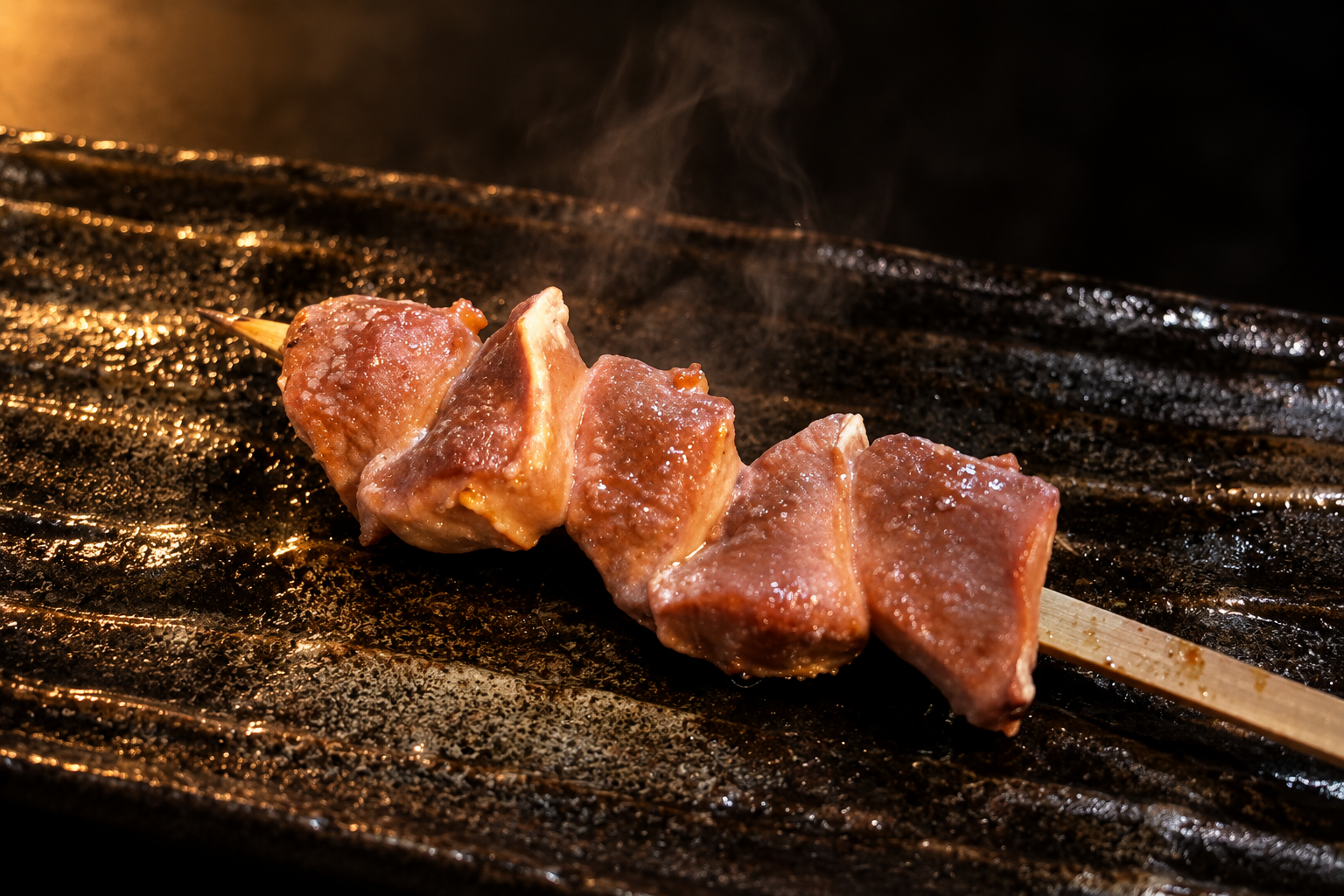
If you see sunagimo (砂肝 or 砂ぎも) on a yakitori menu, the character for "liver" in the name may make you think it is a kind of reba. It is not. Sunagimo is the gizzard, the muscular part of a chicken's stomach, so it has none of liver's creamy texture and instead gives a firm, crunchy bite.
This page covers what the part actually is, why it feels the way it does, how it differs from similar items, and the Japanese you can use to order it. The photos come from Yakitori Senkichi in Minamikyuhoji, Osaka, which published them on Google.
Which part of the chicken is it?
Chickens have no teeth. Food they swallow is generally described as being ground down in a thick, muscular part of the stomach, together with grit and small stones they have also swallowed. That organ is called the gizzard, and as a food in Japanese it is sunagimo, literally "sand organ". It helps to read the 肝 in the name loosely as "innards" rather than as "liver".
Japan's official food composition database also lists sunagimo separately from liver, with the English name gizzard. Per 100g raw, it gives 86 kcal, 18.3g of protein and 1.8g of fat. Those figures are for the raw gizzard itself, not a grilled skewer with salt or sauce, but they do show that this is a lean cut.
Why it is so crunchy
The crunch comes from the thick muscle that develops to grind food. Because there is so little fat, it does not flood your mouth with juices the way thigh or tail does. Instead it releases a simple, savoury flavour the longer you chew. Take your time with each piece and you will notice it more.
Gizzards have a tough membrane known as ginpi (silver skin), which is usually trimmed off during preparation. How much is removed and how large the pieces are cut both change the bite, so sunagimo can feel quite different from one restaurant to the next. If you are eating with small children or anyone who finds chewing difficult, take the pieces off the skewer and cut them smaller.
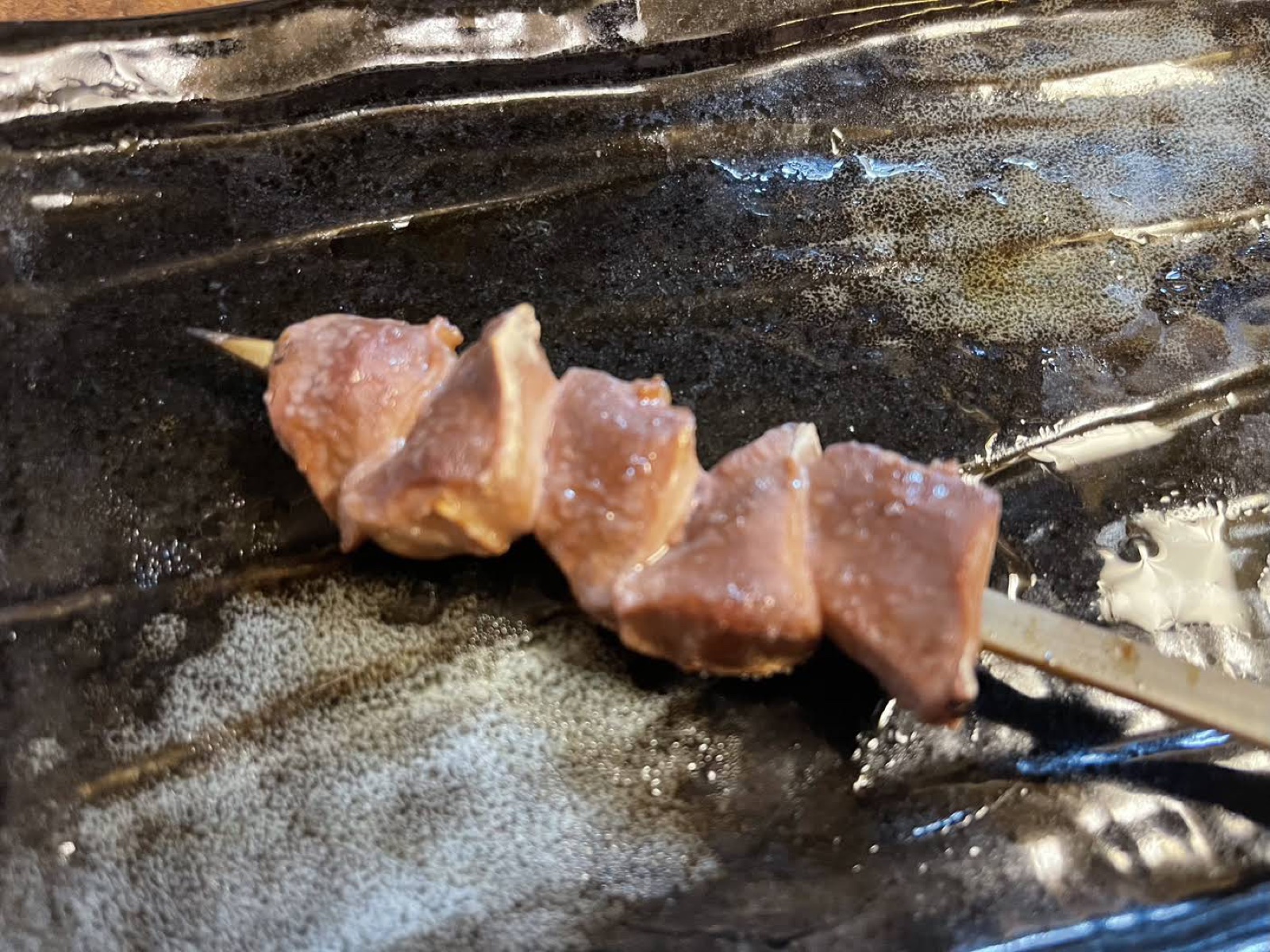
How it differs from hatsu and white liver
Sunagimo often sits in the same section of the menu as other offal skewers such as hatsu and white liver. Yakitori Senkichi's ordering menu lists all three (as checked in October 2026; the menu can change). They are quite different parts with quite different textures, so ordering them side by side makes for a good comparison. The textures below are a general guide.
| On the menu | Part | Typical texture |
|---|---|---|
| Sunagimo | Muscular part of the stomach (gizzard) | Crunchy and firm |
| Hatsu | Heart | Springy, with juices when you bite |
| White liver (shiro reba) | Liver | Soft and creamy |
Some restaurants write it as sunazuri or simply zuri. These are regional or house names for basically the same part. If you cannot spot it on the menu, ask "Sunagimo wa arimasu ka?" (Do you have gizzard?) and you will be understood. For liver, see our guide to reba skewers.
Salt or sauce?
Because sunagimo is lean and all about texture and simple savoury flavour, it is commonly served with salt. The skewer in the photo above shows no sauce glaze either. Some places also offer it with sauce, so ask when you order. If shichimi or lemon is on the table, a little partway through makes a nice change.
- "Sunagimo o shio de ippon onegai shimasu": one skewer, with salt, please
- "Sunagimo wa arimasu ka?": do you have gizzard?
- "Yoku-yaki de onegai dekimasu ka?": could you cook it well, please?
Slotting a sunagimo skewer in after a few richer ones freshens your palate before the next round. If you are not sure how many to order to begin with, our guide to how many skewers per person may help.
If you want it cooked through
Japan's Ministry of Health, Labour and Welfare explains that Campylobacter is frequently detected in chicken meat and offal, that "fresh" does not mean "safe", and advises against eating raw or undercooked chicken. Its guide for home cooking is at least 1 minute at 75°C or above at the centre. It also notes that infants, older people and those with weaker resistance may become seriously ill.
With charcoal-grilled skewers, colour alone does not always tell you how well the inside is cooked. If you are concerned, say "Yoku-yaki de onegai dekimasu ka?" when you order. If a piece looks undercooked when it arrives, do not hesitate to tell the staff. The same goes if you are pregnant or not feeling your best.
Eating it in Minamikyuhoji
Yakitori Senkichi is at Sankyubashi Gardenscape E, 3-2-15 Minamikyuhojimachi, Chuo-ku, Osaka. Its official site lists hours of 17:00 to 22:30 with occasional irregular closures (checked 2 November 2026). Availability and preparation of sunagimo can vary from day to day, so if you have your heart set on it, call 06-4256-3135 first. For ordering in general, see our guide to ordering yakitori in Osaka.