/ Osaka Food / English
Reba at a Yakitori Restaurant: Chicken Liver with Salt or Tare, Why It Should Be Well Cooked, and a Note for Pregnancy
Reba on a yakitori menu is chicken liver. Here is how to choose between salt and tare, how it differs from heart and gizzard, why to ask for it well cooked, and what Japan's food composition tables and Food Safety Commission say about its very high vitamin A content in early pregnancy.
Written by Koetsu Co., Ltd.
On a yakitori menu, reba means chicken liver. It has a soft, creamy texture and a distinctive flavour; some people order it every time, others avoid it. This guide covers whether to order it with salt or tare, how it differs from heart and gizzard, why it should be eaten well cooked, and why pregnant women are advised to limit it, based on information from Japanese public bodies.
What reba is, and how it differs from hatsu and sunagimo
In the Japanese government's food composition database, reba is listed as chicken liver under chicken by-products. Yakitori menus often place it next to other offal skewers such as hatsu (heart) and sunagimo (gizzard), which can be hard to tell apart by name alone.
| Menu name | Part | Typical texture |
|---|---|---|
| Reba (sometimes kimo) | Liver | Soft and creamy |
| Hatsu (sometimes kokoro) | Heart | Springy and firm |
| Sunagimo (sometimes sunazuri) | Gizzard | Crunchy |
Names vary between restaurants, and some put liver and heart on the same skewer. If you are unsure, point at the menu and ask kore wa doko no bui desu ka? (which part is this?).
Salt or tare?
Many restaurants grill liver with a sweet soy-based tare. The sweetness and caramelised edges soften its distinctive flavour, so tare is an easy place to start if you are new to liver or find the smell strong. Some places grill it with salt instead, sometimes with sesame oil or a condiment, which suits people who want the taste of the liver itself.
Many restaurants serve each skewer one way only, so check the menu or ask reba wa shio to tare, eraberu? (can I choose salt or tare for the liver?).
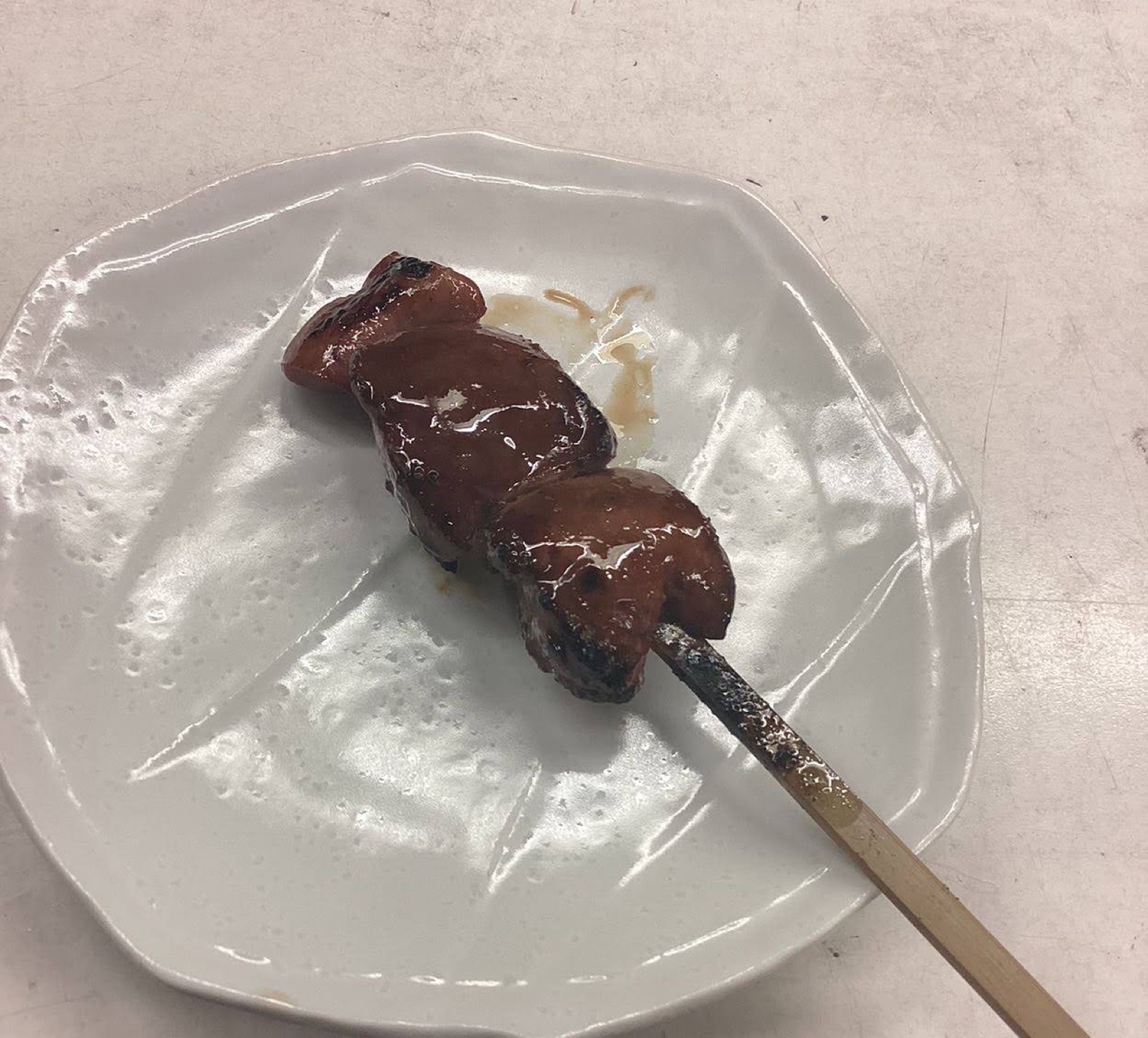
Order liver well cooked
Japan's Ministry of Agriculture, Forestry and Fisheries warns that many cases of Campylobacter food poisoning come from half-raw dishes such as chicken liver or sasami sashimi and seared chicken tataki, as well as undercooked chicken in general. It also stresses that fresh does not mean safe.
The cooking guideline is at least 75°C at the centre for at least one minute, and the ministry's advice when eating out is to choose well-cooked dishes. Liver firms up when cooked longer, so some people prefer it soft in the middle; if that concerns you, simply say reba wa yoku-yaki de onegai shimasu (the liver well done, please).
Our guide to sasami (chicken tenderloin) covers the same issue for rare chicken more generally.
Go easy on liver during pregnancy
According to Japan's food composition tables, 100 g of raw chicken liver contains 14,000 µg of vitamin A (retinol activity equivalents), 9.0 mg of iron and 1,300 µg of folate. It is rich in vitamin A and iron, but with vitamin A there are situations where the amount matters.
Japan's Food Safety Commission advises that very high vitamin A intake in early pregnancy (up to about three months) raises concern about birth defects, and asks expectant mothers to avoid chicken and pork liver where possible. It gives the example that about two-thirds of a yakitori liver skewer, roughly 20 g, provides 2,800 µg RAE of vitamin A, which exceeds the tolerable upper intake level for one day. If you are or may be pregnant, choosing other skewers is the simple option.
Leaving liver out of a platter or course
Chef's-choice platters and set courses sometimes include liver. If you would rather skip it, ask when ordering: reba wa nuite moraemasu ka? (could you leave out the liver?) or reba no kawari ni betsu no kushi ni dekimasu ka? (could I have a different skewer instead?). Whether a restaurant can do this, and what it substitutes, varies.
- Reba o tare de (shio de) onegai shimasu. — Liver with tare (with salt), please.
- Reba wa yoku-yaki de onegai shimasu. — The liver well done, please.
- Moriawase no reba o nuite moraemasu ka? — Could you leave the liver out of the platter?
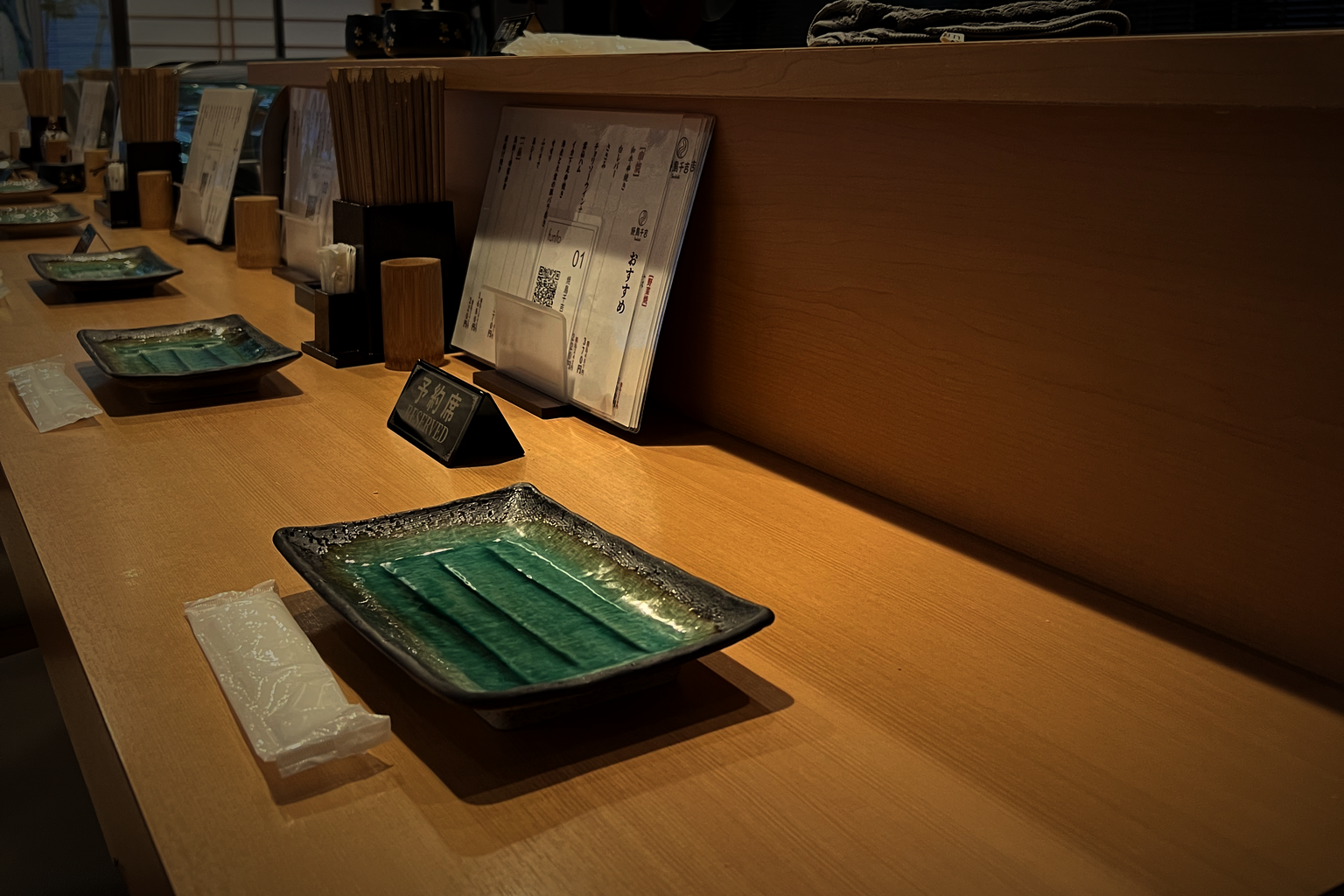
At Yakitori Senkichi in Minamikyuhoji, you can check the day's menu and what goes into each skewer at the restaurant or by phone. Please let the staff know about parts you would rather avoid or how you would like things cooked when you order.
Sources and further reading
- MEXT Food Composition Database: chicken liver, raw (Japanese)(Checked: )
- Food Safety Commission of Japan: for expectant mothers and those around them (Japanese)(Checked: )
- Ministry of Agriculture, Forestry and Fisheries: Campylobacter and chicken (Japanese)(Checked: )
- Yakitori Senkichi Minamikyuhoji official site (Japanese)(Checked: )