/ Osaka Food / English
What Is Chicken Skin Gyoza (Torikawa Gyoza) at a Yakitori Restaurant? How It Differs from Stuffed Chicken Wings, How to Eat It While the Juices Are Hot, and What to Check Before Ordering at Yakitori Senkichi
Chicken skin gyoza (torikawa gyoza) on a yakitori menu is a filling wrapped in chicken skin instead of a dumpling wrapper. This guide covers what the menu photo and description of Yakitori Senkichi's chicken skin gyoza (3 pieces) show, how it differs from stuffed chicken wings and grilled chicken skin skewers, why chicken is always cooked through, and how to eat it without burning yourself on the hot juices.
Written by Koetsu Co., Ltd.
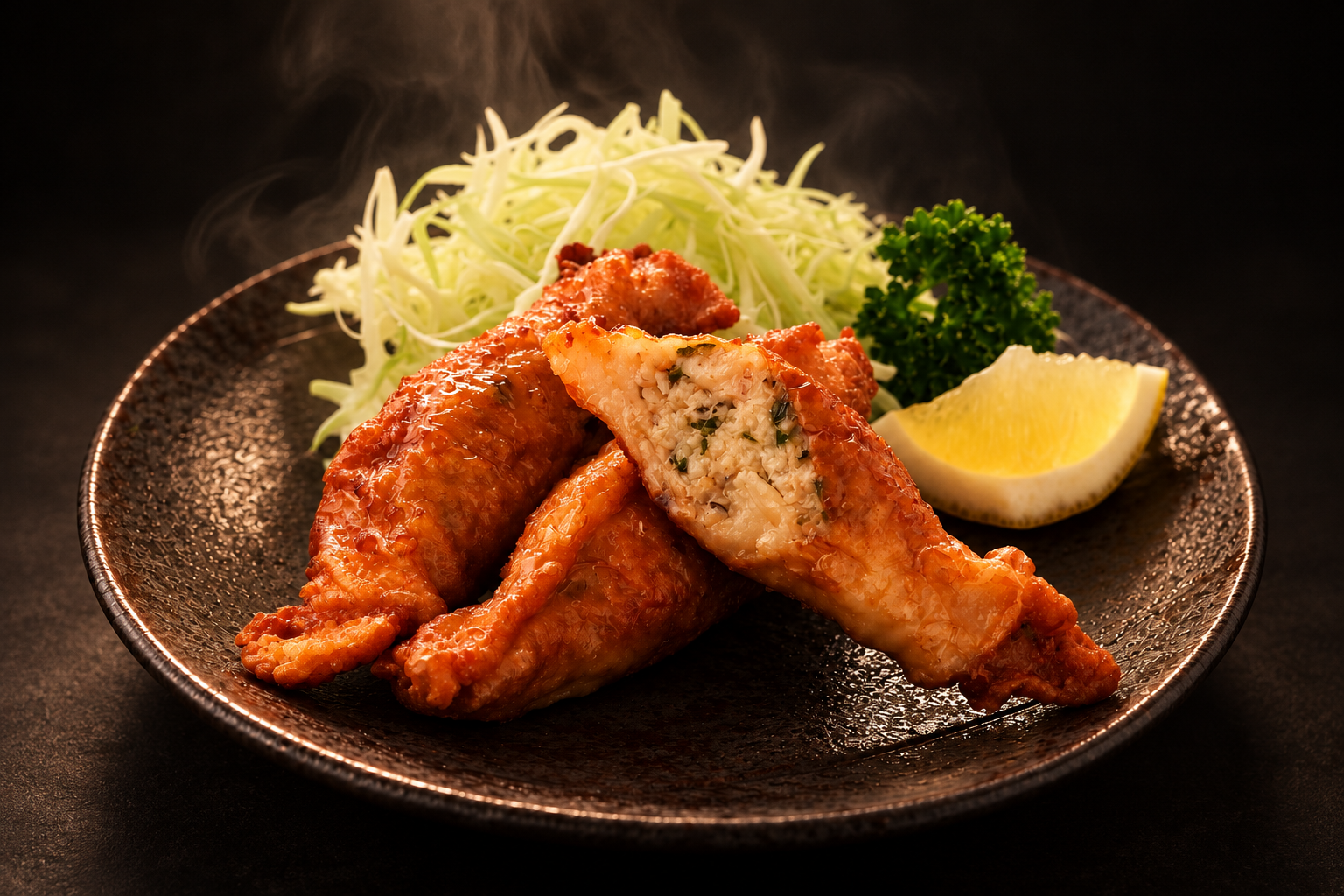
If you have seen "chicken skin gyoza" (torikawa gyoza) on a yakitori menu, you may have wondered what it is. At Yakitori Senkichi Minamikyuhoji, chicken skin gyoza (3 pieces) is listed in the "Today's recommendations" section of the mobile ordering menu.
This guide sets out what Senkichi's menu photo and description tell you, how the dish differs from stuffed chicken wings and grilled chicken skin skewers, why chicken dishes are cooked through to the centre, how to eat it without burning your mouth on hot juices, and what to check before ordering.
What chicken skin gyoza is
Senkichi's menu describes it as a juicy filling wrapped in crisp chicken skin instead of a gyoza wrapper. In other words, the filling that an ordinary gyoza wraps in a wheat-flour skin is wrapped in chicken skin here. The description says the flavour of the chicken skin and the juices of the filling spread through your mouth, and that it goes very well with beer.
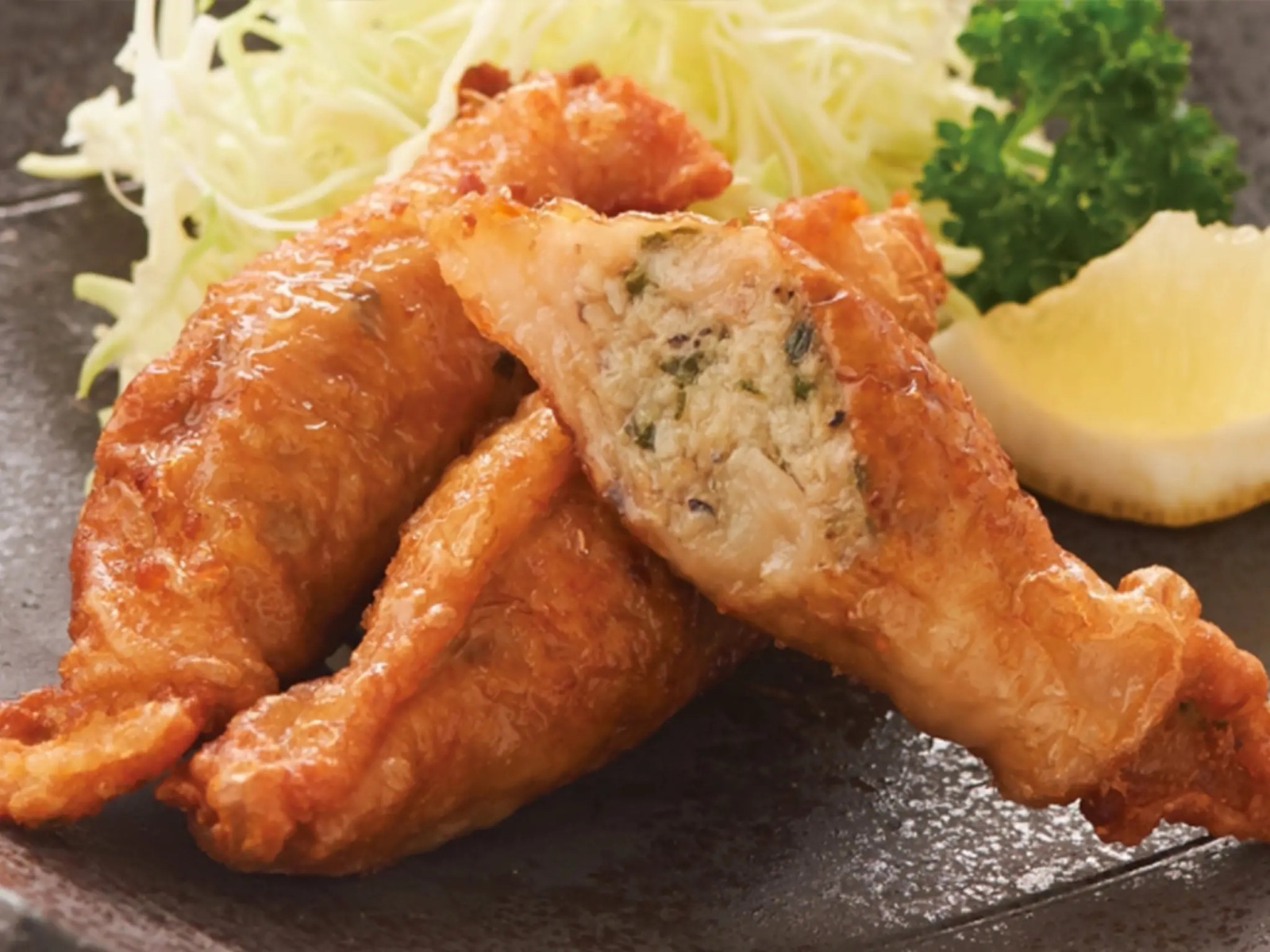
The menu photo shows three long pieces served with shredded cabbage, parsley and a lemon wedge. One piece has been cut to show the inside, a pale filling mixed with something green that looks like chopped vegetables. The surface is golden, and in the photo it looks as if it has been deep-fried.
The photo and description alone do not tell you exactly what goes into the filling or how it is cooked, and this guide does not guess at anything the menu does not say. If you want to know the ingredients, please ask the staff before you order.
How it differs from tebagyoza and chicken skin skewers
A dish with a similar name is tebagyoza. Tebagyoza is a chicken wing with the bones taken out and a filling stuffed inside, so the outside is the wing's own skin and meat. Chicken skin gyoza is different in that only the skin wraps the filling. We explain tebagyoza in detail in our guide to stuffed chicken wings.
The classic kawa skewer is chicken skin itself threaded on a skewer and grilled, with nothing wrapped inside. We cover how a skin skewer differs with sauce or salt in our chicken skin skewer guide. Chicken skin gyoza uses that skin as a wrapper, so you eat it together with the filling.
| Dish | Outside | Inside | Where it is on Senkichi's menu |
|---|---|---|---|
| Chicken skin gyoza (3 pieces) | Chicken skin | Filling (ask the staff about ingredients) | Today's recommendations |
| Tebagyoza (stuffed wings) | Skin and meat of a boned chicken wing | Filling | Covered in an earlier guide |
| Kawa (skin skewer) | Chicken skin | Nothing | Today's recommendations |
Chicken dishes are cooked through to the centre
Chicken skin gyoza is a dish that is served with both the skin and the filling cooked right through. The Ministry of Health, Labour and Welfare's Q&A on Campylobacter food poisoning explains that Campylobacter is frequently found on chicken meat and offal, and that "fresh" does not mean "safe". For home cooking too, it says the important thing is to heat food so the centre reaches at least 75°C for at least one minute.
Osaka Prefecture's food-poisoning page for food businesses also notes that many cases are caused by raw or undercooked chicken, and asks restaurants not to serve raw or undercooked chicken but to cook it thoroughly. A filling that is hot all the way through is part of what this dish is.
Mind the hot juices when you eat
Because it is cooked right through, the filling and juices of a freshly served piece are very hot. As the description says, it is a juicy dish, so if you put a whole piece in your mouth at once it is easy to burn yourself. It is safer to bite a little off one end first to let the steam out, or to break it in half with your chopsticks before eating.
The menu photo shows a lemon wedge on the side. Whether to squeeze it is up to you, but it is considerate to ask the others at your table before you do it for the whole plate. We also discuss freshly fried food and lemon in our guide to karaage at a yakitori restaurant.
What to check before ordering
- Quantity: as the name says, one plate is 3 pieces. Decide how many plates to order for your group
- Price: it was 666 yen on the mobile ordering menu when we checked on 27 October 2026. Please check the current price on the ordering screen
- Ingredients: the menu does not list what is in the filling. If you have a food allergy, always tell the staff before you order
- Timing: because it is cooked right through, it may take longer than other dishes
- Availability: dishes in Today's recommendations can change from day to day
Chicken skin gyoza makes a change of texture between skewers. If it is your first time, try ordering one plate alongside a skin skewer or other skewers and sharing it around the table.
For the location and opening hours of Yakitori Senkichi Minamikyuhoji, see the information at the bottom of this page or the official website.