/ Trade / English
What Is the Giteki Mark? What to Check Before Using Bluetooth Devices, Radio-Controlled Toys or Walkie-Talkies Bought Overseas in Japan, or Buying Them Online or Second-Hand
In Japan, devices that emit radio waves, such as Wi-Fi gear, Bluetooth earbuds, radio-controlled toys and walkie-talkies, are as a rule used only if they carry the giteki mark. Based on the Ministry of Internal Affairs and Communications Q&A, this guide explains what the mark means and where to find it, what happens if you use a device without it, what to check before buying overseas products or second-hand items, and the special scheme for experiments.
Written by Koetsu Co., Ltd.
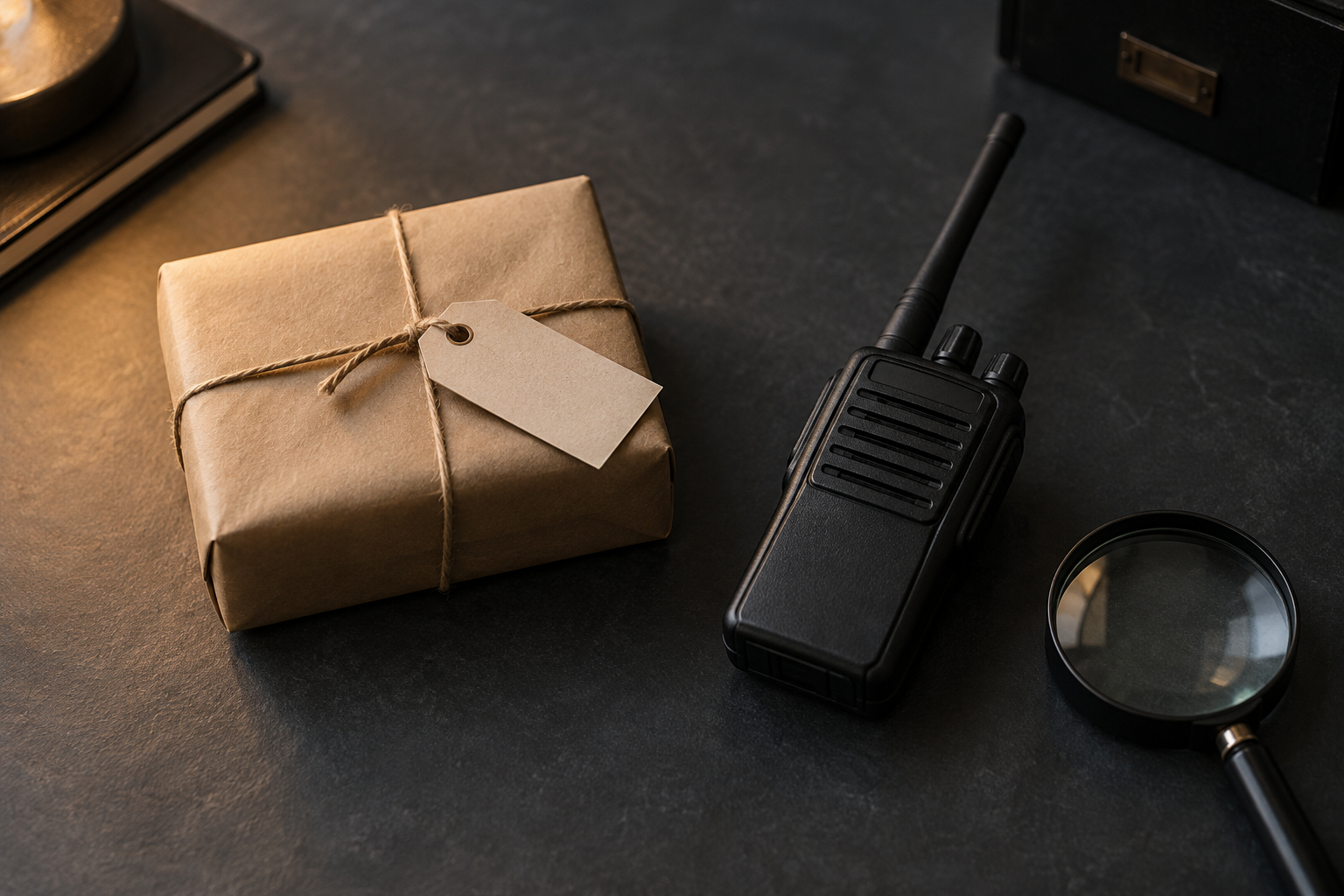
You may buy Bluetooth earbuds or speakers, radio-controlled toys or walkie-talkies from overseas shopping sites or on a trip. When you use devices like these that emit radio waves in Japan, the thing to check is the giteki mark. The same applies when you buy them second-hand or on flea-market apps.
Based on the Ministry of Internal Affairs and Communications (MIC) giteki mark Q&A and related pages, this guide explains what the mark means, where it is shown, what happens if you use a device without it, and what to check before buying. If you need a ruling on a specific case, please consult your regional MIC Bureau of Telecommunications.
What the giteki mark is
The giteki mark certifies that a radio device conforms to the technical standards set under Japan's Radio Act, and it is attached to each individual device. MIC's Q&A explains that devices such as low-power transceivers, home and office Wi-Fi, cordless phones and Bluetooth devices can be used without a radio station licence if they carry the mark.
However, some radios need a licence or registration from the Minister of Internal Affairs and Communications even if they carry the mark, such as amateur radio and digital simple radio. The mark does not mean you can use anything freely, and the Q&A advises checking with the seller for devices such as transceivers.
Where to find the mark
According to MIC's Q&A, the mark is usually shown on the device's nameplate, alongside the model name and manufacturer. Many mobile phones and smartphones display it on screen through the settings, and wireless routers connected to a PC by cable may show it in their settings screen. Some Bluetooth earbuds and similar devices show it on the charging case or in the manual.
The Q&A also explains that the number starting with T on landline telephones shows conformity with the standards for connecting to telecommunications lines, while numbers under the Radio Act's giteki mark start with R. Smartphones carry both a T number and an R number.
What happens if you use a device without the mark
MIC's Q&A says that using a radio device without the giteki mark may violate the Radio Act, punishable by imprisonment of up to 1 year or a fine of up to 1 million yen, and by imprisonment of up to 5 years or a fine of up to 2.5 million yen if it interferes with radio stations of high public importance. It also explains that if you modify a device that has the mark, the certification loses its effect and the mark must be removed.
| Device | What MIC's Q&A says (summary) |
|---|---|
| Bluetooth earbuds and speakers | They always emit radio waves, because they send a signal to identify themselves when connecting; the mark is needed even if they "only receive" |
| Wi-Fi equipment | These carry the mark; using one without it may violate the Radio Act |
| Drones | Except for those using very weak radio with an extremely short range or infrared, they carry the mark; some need a licence depending on the radio used |
| Smartphones made for overseas markets | Using one without the mark violates the Radio Act; there is a special provision for short-term visitors bringing them in |
| Foreign walkie-talkies (such as FRS and GMRS) | FRS and GMRS are US standards for use in the US; using them in Japan violates the Radio Act |
On the other hand, under the Radio Act, stations emitting extremely weak radio waves do not need a licence. MIC buys radio equipment on the market, measures the strength of its signals in "test purchases", and publishes information on devices that do not meet the technical standards or exceed the weak-signal limit. In other words, there have been products described as "weak signal, no licence needed" that in fact exceeded the limit.
What to check before buying overseas or second-hand products
- Check the listing and product photos to see whether the mark appears on the device, charging case, manual or settings screen
- If you cannot tell from the photos, ask the seller before buying whether it has the mark and where it is shown
- Electronics labelled "overseas version" or "not sold in Japan" may not have Japanese giteki certification
- For walkie-talkies, check whether the type needs a licence or registration even with the mark
- For devices with batteries, also check electrical product markings such as the PSE mark, which is separate from giteki
For markings on battery-powered products, see what to check before buying overseas electronics or power banks on Mercari; for points to check when selling toys sourced overseas in Japan, see this article; and for the difference between "bought overseas" and country of origin, see this guide.
The special scheme for experiments
MIC has a special scheme for experiments using devices without giteki certification. It allows Wi-Fi, Bluetooth and similar devices to be used solely for short-term experiments, tests or surveys of up to 180 days, provided you file a notification online before starting. MIC describes it as a procedure for experts conducting experiments, tests or surveys to use devices at their own responsibility; after filing you must manage the devices and their use so they meet the conditions, and file a notice of termination when you finish.
This scheme is not a way to use earbuds or toys bought overseas in everyday life. For devices you use day to day, the basic rule is to choose ones with the giteki mark. Our Mercari listings are mainly character goods, and if we list a device that emits radio waves, we will make it possible to check on the listing page whether it carries the mark.
This article is a general explanation based on MIC pages as of 18 November 2026. For a decision on whether a particular device can be used, or for detailed procedures, please check with your nearest Bureau of Telecommunications or the MIC Radio Use Portal.
Sources and further reading
- MIC Radio Use Portal: Giteki mark Q&A (Japanese)(Checked: )
- MIC Radio Use Portal: Overview of the certification system for radio equipment (Japanese)(Checked: )
- MIC Radio Use Portal: Special scheme for experiments with devices without giteki certification (Japanese)(Checked: )
- MIC Radio Use Portal: Results of test purchases of radio equipment (Japanese)(Checked: )