/ Osaka Food / English
Yakitori and Basashi in Osaka: How to Read the Menu and Plan Dinner
Yakitori and basashi are different dishes. Use a verified Minamikyuhoji menu to understand cooked skewers, raw horse sashimi, and what to ask before ordering.
Written by Koetsu Co., Ltd.
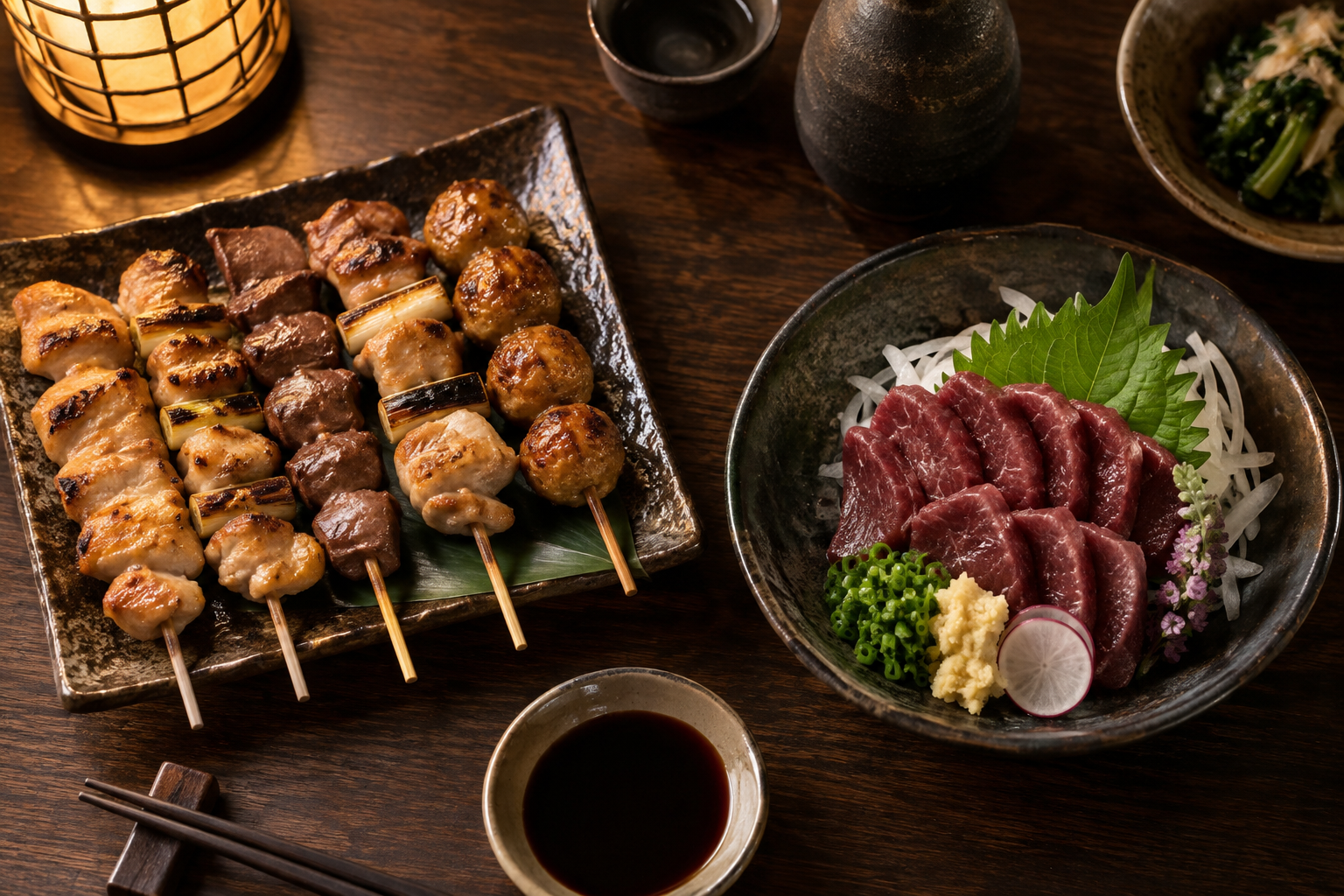
An Osaka yakitori menu may contain more than grilled chicken skewers. Basashi means raw horse meat served as sashimi; yakitori is cooked chicken on skewers. The names and menu sections can be unfamiliar to visitors, so the first useful question is whether the dish is cooked or served raw. That distinction matters more than guessing from a photograph.
Three menu terms to separate
The official Yakitori Senkichi page lists charcoal-grilled skewers, chicken skewered on the day, and Kumamoto-sourced marbled basashi among its featured dishes. The first two are grilled; the last is raw horse sashimi. “From Kumamoto” is the restaurant’s own menu description, not an independent supply-chain certification by this publication.
“Charcoal-grilled skewers” describes the cooking method, not a guaranteed list of chicken cuts or seasonings. “Skewered on the day” is the restaurant’s description of preparation; it does not tell you every cut currently available or how each skewer will be cooked. Look at the current menu and ask about the particular item you want.
“Marbled basashi” is presented as horse-meat sashimi. It is not a skewer or a cooked substitute for a chicken dish. If someone in your party wants only cooked food, say so before ordering and choose from the cooked items instead. This guide does not assess an individual’s dietary or health needs.
Plan around the diners, not a fixed sequence
For two diners, decide whether the meal should revolve around cooked skewers and whether anyone actually wants raw sashimi. Basashi can be a separate optional dish, not a compulsory part of a yakitori dinner. A skewer-focused meal is a complete choice in its own right. The menu should fit the people at the table rather than a prescribed ordering sequence.
The official site displays sample prices, but this article does not promise a fixed bill or availability. Before ordering, check the current menu for per-plate versus per-skewer units, tax-inclusive price, and what can be served that day. If sharing, ask about portion size and whether a small extra plate is needed. Those details prevent a menu label from becoming a mistaken budget.
Useful short questions are “これは焼いた料理ですか、生ですか” (“Is this cooked or raw?”), “馬刺しは今日ありますか” (“Is basashi available today?”), and “一本ずつ注文できますか” (“Can I order by the skewer?”). An English menu or English-speaking service is not guaranteed. Pointing to the exact line and using a short Japanese question may be simpler.
Check the actual restaurant before setting out
The official page lists 3-2-15 Minamikyuhoji-cho, Chuo-ku, Osaka, Sankyubashi Gardenscape E, telephone 06-4256-3135, and displayed hours of 17:00–22:30 with some irregular closures. Check the current official page or call for the date you plan to visit, seating and today’s menu. A listed dish is not a live inventory signal.
First-time visitors can pair our Honmachi Station route guide with a live map. Koetsu Co., Ltd. edited this article using information from Yakitori Senkichi, a restaurant associated with our business. It is a menu-reading guide, not a first-hand dining review or a report of what is in stock tonight.
If the menu feels crowded, choose one cooked item first and consider raw basashi only if someone specifically wants it. The accompanying picture explains the categories of food; it does not show actual portion size or plating. Let the in-store menu and staff answer determine the final order. This keeps expectations aligned with what the restaurant can serve on your visit.