/ Trade / English
Why Can a Light Plush Cost More to Ship? Actual vs Volumetric Weight
A light collectible can occupy a large parcel. Learn how actual and volumetric weight differ, work through a clearly labelled DHL Express example and prepare better questions for an international shipping quote.
Written by Koetsu Co., Ltd.
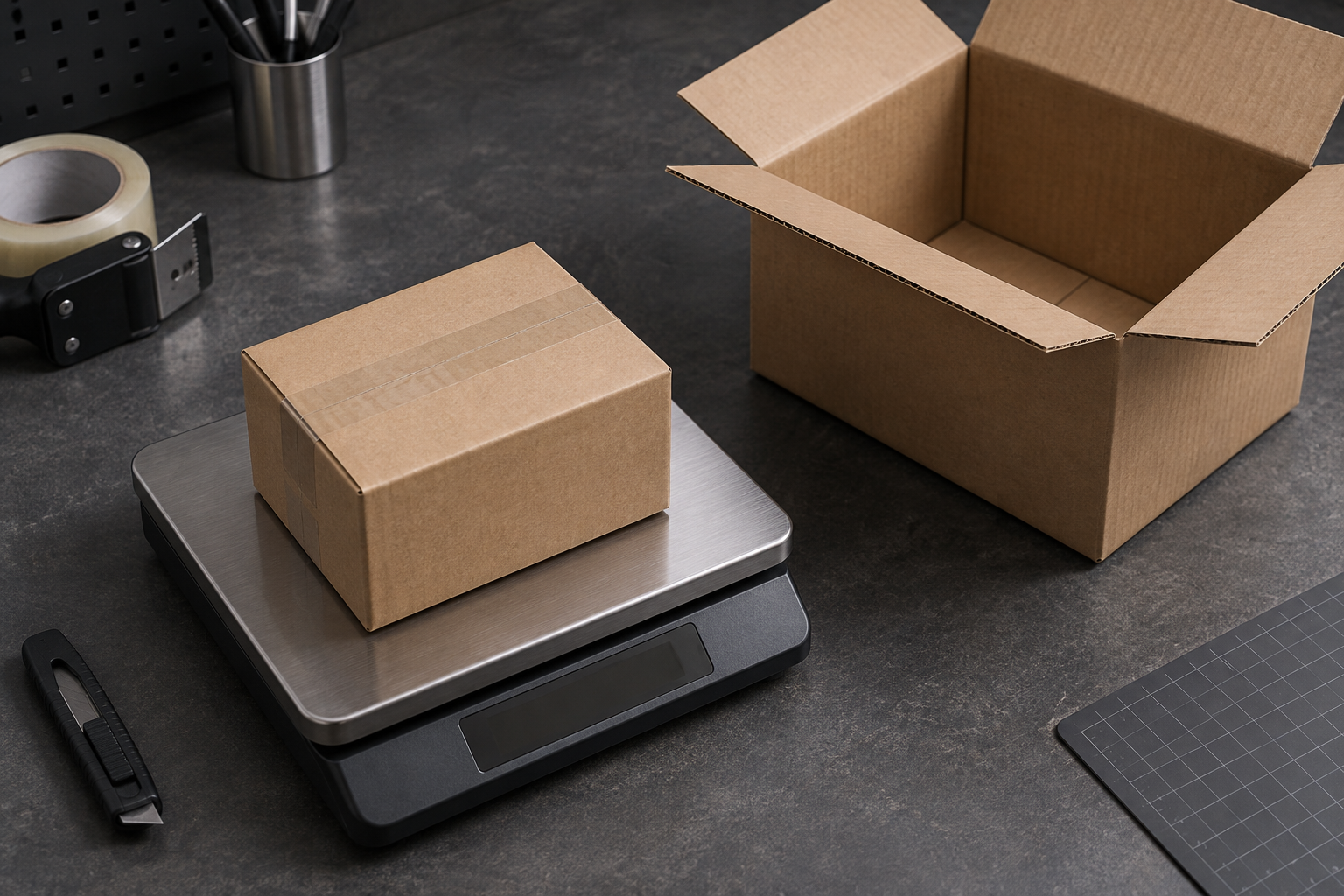
A plush or boxed figure can feel light in your hands while the international shipping quote is higher than expected. To understand the quote, look at the finished parcel as well as the product: its outer dimensions and protective packaging may matter alongside the reading on a scale.
This guide uses DHL Express’s published guidance as one example. Your purchasing service may offer a different carrier or shipping product with different conditions. Identify the actual service before using a formula, and keep an illustrative calculation separate from the final amount you are asked to pay.
Separate scale weight from the space a parcel occupies
Actual weight is the packed parcel’s scale weight. Volumetric weight converts its dimensions into a weight value. DHL’s explanation uses length × width × height in centimetres divided by 5000 for most DHL Express international express shipments.
The MyDHL+ guide says displayed shipping costs use the greater of actual and volumetric weight for each package. Knowing only that the toy is light therefore leaves a missing piece: the dimensions of the parcel that will travel.
A worked example using hypothetical boxes
Imagine a packed parcel weighing 1.5 kg with outer dimensions of 40 × 30 × 25 cm. Using a divisor of 5000 gives 6 kg of volumetric weight. These are hypothetical measurements chosen for this explanation, not measurements of our stock or a promised shipping quote.
| Hypothetical parcel | Outer size (cm) | Actual weight | Volumetric weight (÷5000) |
|---|---|---|---|
| A | 40 × 30 × 25 | 1.5 kg | 6 kg |
| B | 30 × 25 × 20 | 1.5 kg | 3 kg |
Parcel B shows how a smaller set of dimensions changes the calculation even when actual weight stays the same. It does not show that the same collectible can safely fit either box. Nor does halving the calculated weight establish that the charge will halve; a service’s pricing still has to be checked.
Collect the measurements of the finished parcel
Ask the seller or purchasing service for the shipping box’s closed outer dimensions and the total packed weight. Confirm that the figures include the outer carton and protective material. A plush’s advertised height or a figure’s retail-box size is a different measurement and may not describe the shipment.
For several purchases, ask how many finished parcels there will be instead of simply adding the individual product measurements. If you are comparing separate and combined packing, request quotes for the same destination and service conditions. Consolidation should be assessed from those quotes, rather than assumed to be cheaper.
Specify what must be preserved before changing the packing
Collectors may want a retail box kept intact, paper tags left flat or a plush shipped without compression. State those preferences before asking for the smallest possible package. That lets the seller discuss packing that fits your priorities, rather than treating every centimetre of space as expendable.
A concise question is: “What are the dimensions and total weight including the shipping box and protection, and which service will you use?” Mark preliminary figures as estimates. Review the final breakdown once packing is settled, especially if a box size or the number of parcels has changed.
Weight is one part of understanding a purchase quote. Our domestic and international shipping cost guide covers the wider cost breakdown, while the boxes and packaging guide helps explain which box you are asking to preserve.
Sources and further reading
- DHL Japan: Dimensional Weight Explained(Checked: )
- DHL Japan: Prepare Your Shipment on MyDHL+(Checked: )