/ Osaka Food / English
What Is Chicken Nanban? How It Differs from Karaage, the Sweet-Vinegar and Tartar Styles, and Its Origins in Nobeoka, Miyazaki
Using a photo Yakitori Senkichi published on Google of fried chicken with a glossy sweet sauce and a tartar-style sauce, this guide explains how chicken nanban differs from karaage, the sweet-vinegar-only and tartar styles, how the dish spread from a staff meal at a Western-style restaurant in Nobeoka, and what to check when ordering, including egg and wheat, based on material from Japan's agriculture ministry and Nobeoka City.
Written by Koetsu Co., Ltd.
Alongside skewers, yakitori restaurants and izakaya often list fried dishes. Next to karaage you may also see chicken nanban. Both are fried chicken, but they are not made the same way and do not taste the same. Taking a photo of fried chicken that Yakitori Senkichi published on Google as a starting point, this guide explains what chicken nanban is, how it differs from karaage, its two main styles, and what to check when ordering, based on material from Japan's Ministry of Agriculture, Forestry and Fisheries (MAFF) and Nobeoka City.
What chicken nanban is
MAFF's regional-dish database lists chicken nanban as a local dish of Miyazaki Prefecture. According to that page, it is said to have begun in the late 1950s or early 1960s (the Showa 30s) as a staff meal at a Western-style restaurant in Nobeoka City, and at first it was something like fried chicken soaked in sweet vinegar. Later the current style, with tartar sauce on top and a side of salad, appeared and the dish became popular.
The same page says that in the Showa 40s (roughly 1965 to 1974) it was a treat families enjoyed at Western-style restaurants on outings, and that it then spread across Miyazaki Prefecture through school lunches, home cooking and restaurant menus. Nobeoka City's official site also describes Nobeoka as the birthplace of chicken nanban. Today the dish also turns up at restaurants and in boxed lunches well outside Miyazaki.
As for the name, the MAFF page explains that the Portuguese who came to Japan in the Warring States period, and their culture, were called nanban, and that nanban-zuke is a dish soaked in sweet vinegar with chilli; using chicken in this way gave the dish its name. In other words, nanban here refers to the method of soaking in sweet vinegar rather than to heat as such.
How it differs from karaage: the coating and the sweet vinegar
The MAFF page describes the method as dusting the chicken with flour, dipping it in beaten egg, frying it, and then soaking it in sweet vinegar. The flour-and-egg coating is said to help the sweet vinegar soak in. Karaage is usually chicken that has been seasoned, coated in flour or starch, fried and eaten as it is, so the egg coating and the sweet vinegar are the main differences.
On the cut of meat, the same page says breast was traditionally used, and that fattier thigh is sometimes used today. Which cut a restaurant uses and how long it soaks the chicken in sweet vinegar differ from place to place, so if you prefer something lighter or juicier, it is worth asking before you order.
Two styles: sweet vinegar only, or with tartar sauce
Nobeoka City's official site notes that within the city you can find a simple version with only sweet vinegar and a Western-style version with tartar sauce added. The MAFF page likewise describes two types, one with tartar sauce and one with only the sweet-vinegar sauce. So a menu that says chicken nanban does not necessarily mean tartar sauce.
| Sweet vinegar only | With tartar sauce | |
|---|---|---|
| Main flavour | Tangy-sweet vinegar and the coating | Sweet vinegar plus the richness of tartar |
| How Nobeoka City describes it | The simple version | The Western-style version |
| What to check before ordering | Whether the menu mentions tartar | How much tartar, and whether it can come on the side |
The MAFF page lists mayonnaise, ketchup, sugar, boiled egg, cucumber and onion as ingredients of the tartar sauce. Because the coating also uses flour and egg, it is safest to assume chicken nanban contains egg and wheat. If you have a food allergy, assume that ingredients vary between restaurants and always check with the staff before ordering.
Looking at the dish in the photo
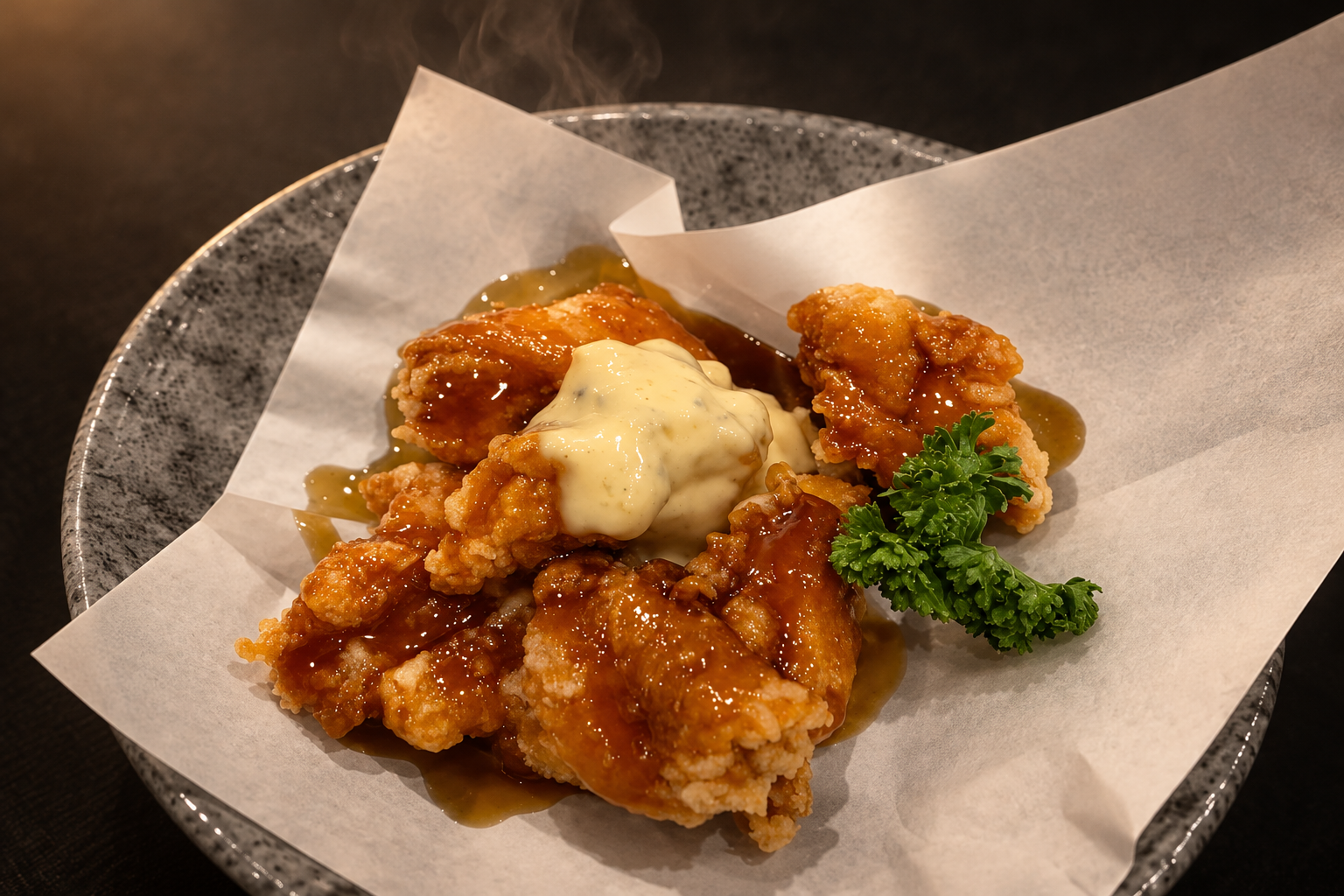
The photo below is one Yakitori Senkichi published on Google, only resized and otherwise unedited. Fried chicken is piled on paper in a grey bowl, coated in a glossy brown sauce, with a white tartar-style sauce in the middle and parsley on the side. In appearance it is close to the style that uses both a sauce and tartar.
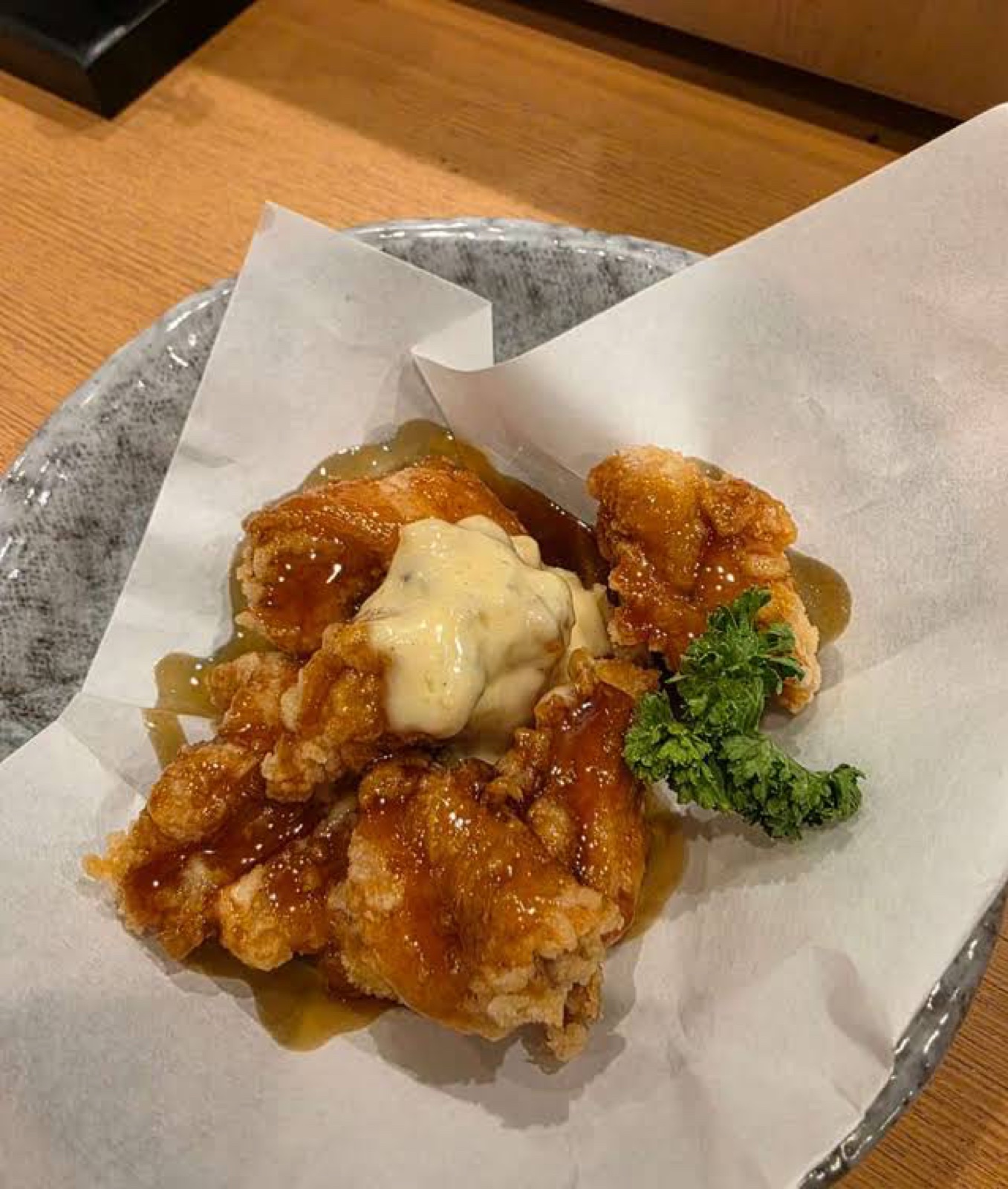
However, a photo only shows what the dish looks like. This guide has not confirmed the name it appears under on the menu, whether the sauce is sweet vinegar, whether it is breast or thigh, or whether it is always available. Menus and availability can change, so if it matters to you, please ask when you visit or when you call to book.
Tips for ordering it at a yakitori restaurant
Fried dishes come straight from the fryer, so it is best to eat them while they are hot. A coating that has soaked up sweet vinegar or sauce softens over time, so you can eat it quickly if you like some crunch, or let it sit a little if you prefer the soaked-in flavour. The inside can be very hot, so take the first bite carefully.
When sharing, ask for small plates and take a piece at a time, so each person can choose pieces with or without tartar. Skewers often come out one at a time as they finish grilling, so ordering a plate of something fried gives the table something to eat while waiting. If you are unsure about the portion size or how many pieces it has, just ask the staff.
- Check whether the chicken nanban on the menu comes with tartar sauce
- Ask whether it is breast or thigh if that matters to you
- Always mention allergies such as egg or wheat before ordering
- Freshly fried chicken is hot inside, so take the first bite carefully
- When sharing, ask for small plates and check the portion and number of pieces
Yakitori Senkichi Minamikyuhoji is at Sankyubashi Gardenscape E, 3-2-15 Minamikyuhojimachi, Chuo-ku, Osaka. Please check opening hours and the current menu on the official site, or contact the restaurant during opening hours. If you order something fried alongside your skewers, the checklist above may help.