/ Osaka Food / English
Nasu (Eggplant) Skewers at a Yakitori Restaurant: Why They Suit Tare, How to Eat Them Hot, and the Autumn Eggplant Saying
Eggplant is a common vegetable skewer at yakitori restaurants. Using a photo of Yakitori Senkichi's tare-glazed eggplant skewer, this guide covers choosing tare or salt, eating the very hot flesh safely, the pigment in the purple skin, and the Japanese saying about autumn eggplant, based on material from public bodies and dietitians.
Written by Koetsu Co., Ltd.
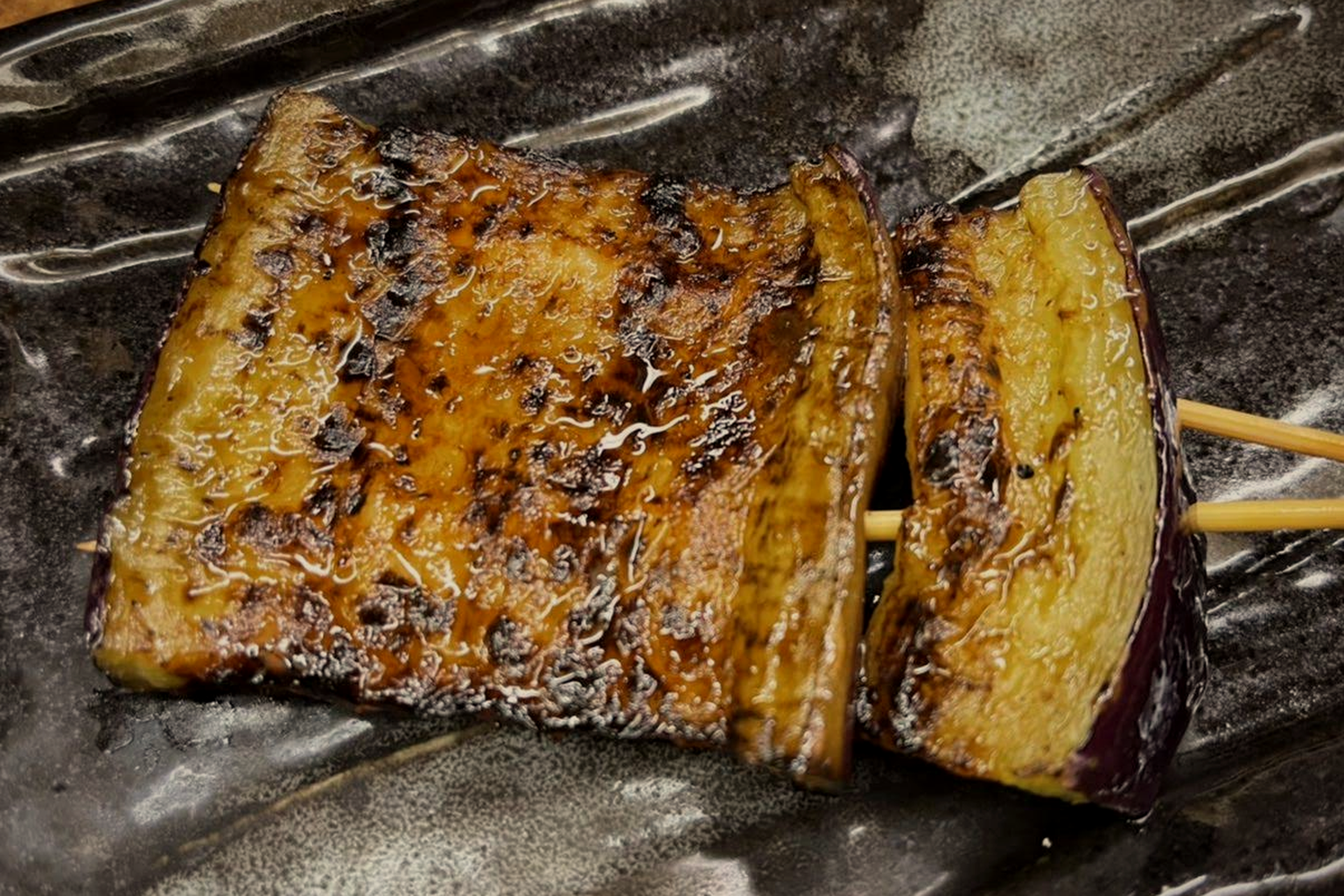
Vegetable skewers are a popular order alongside chicken at yakitori restaurants, and eggplant (nasu) is one of the classics: grilled with tare or salt, the flesh turns soft and almost creamy. Using a photo of an eggplant skewer that Yakitori Senkichi published on Google, this guide looks at choosing the seasoning, eating it hot, the colour of the skin and the Japanese saying about autumn eggplant, based on material from public bodies and dietitians.
What the skewer in the photo looks like
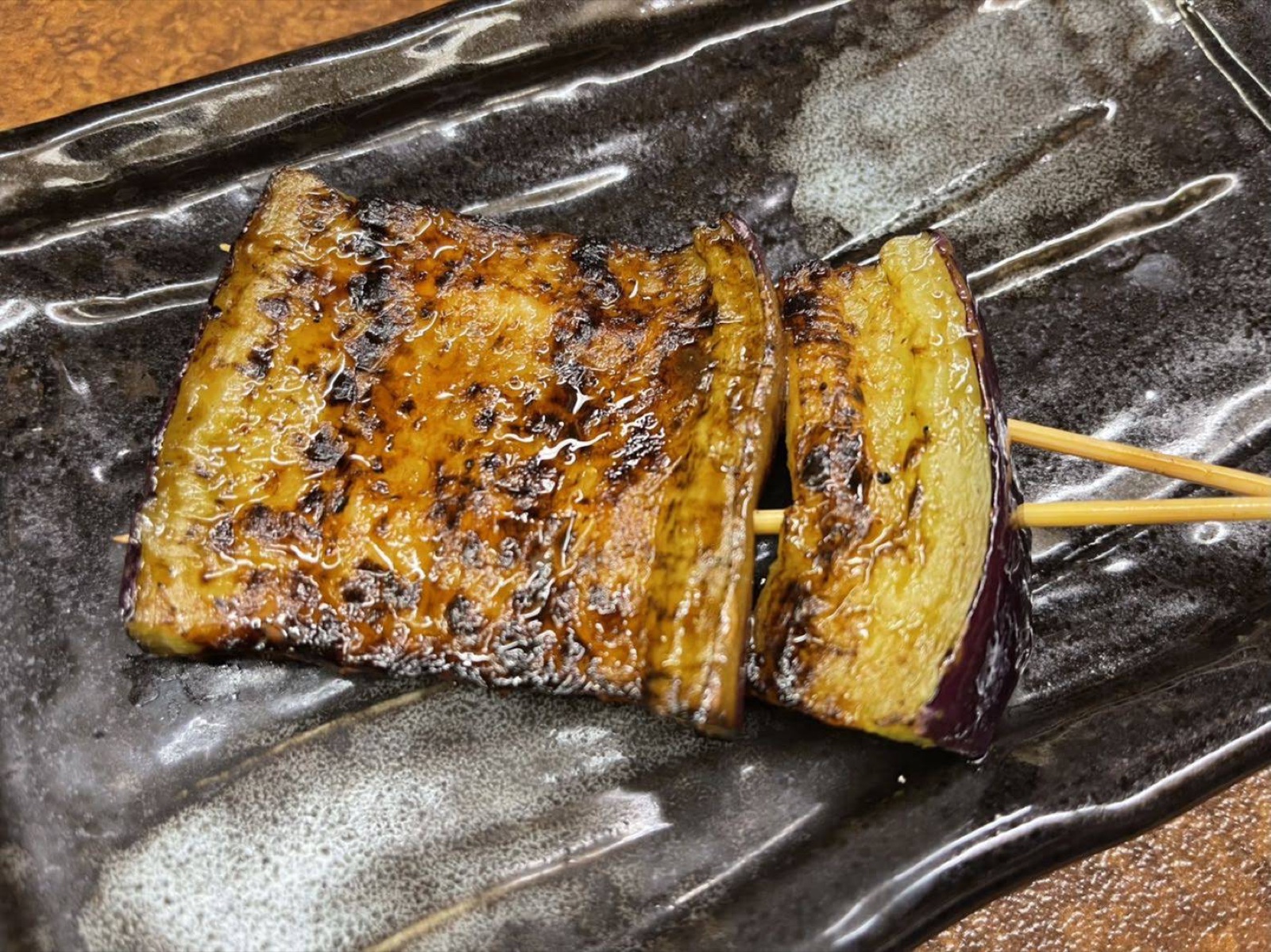
In the photo, two large pieces of eggplant are held on a pair of parallel skewers. The surface is brushed with tare and glossy, with charred spots here and there, and the purple skin can be seen on the edge of the right-hand piece. Two skewers help keep the softened eggplant from spinning or falling apart on the grill and while you eat.
Tare or salt?
A leaflet from ALIC, Japan's agriculture and livestock industries corporation, describes eggplant as going very well with oil. Once grilled, the flesh softens and takes on the tare brushed over it. The skewer in the photo is grilled with tare, so you get the sweet-savoury glaze together with the smoky charred edges.
Some restaurants also offer eggplant grilled with salt, which lets the vegetable's own sweetness and aroma come through. If the menu does not say, asking "Nasu wa tare to shio, dochira desu ka?" (Is the eggplant tare or salt?) will get you the restaurant's recommendation.
Eating it while it is hot
Freshly grilled eggplant is hot all the way through its soft flesh. Even when the surface looks as if it has cooled a little, the inside is often still very hot, so take a small first bite from the edge and check the temperature before carrying on. That makes it much less likely you will burn your mouth.
Because the eggplant is so soft, it tends to slide off if you hold the skewer upright. Hold it sideways and start with the nearest piece, or slide the pieces off with chopsticks onto a small plate. Any tare left on the plate goes nicely with other skewers or rice.
What gives the skin its purple colour?
According to the same ALIC leaflet, the bright purple skin of eggplant contains nasunin, an anthocyanin, which is a type of polyphenol. That pigment is why the skin stays a deep purple even after grilling. The leaflet also notes that most of an eggplant is water.
The skin has a little more bite than the flesh. Most grilled eggplant skewers are eaten skin and all, though some places peel the eggplant before grilling. If texture matters to you, you can ask whether it comes with the skin on.
The saying about autumn eggplant
Japanese has a saying, aki-nasu wa yome ni kuwasu na: "don't let your daughter-in-law eat autumn eggplant". A dietitian's column lists several readings. Taken literally, it is a mean-spirited remark about keeping a delicious food from the daughter-in-law. Other interpretations say it was out of concern for her health, because eggplant was thought to cool the body or be hard to digest, or because autumn eggplant has few seeds and was associated with having fewer children.
Nobody knows for sure which reading is right, but all of them assume that autumn eggplant is especially good. A food-education sheet from Kyoto Prefecture explains that in autumn, the larger gap between day and night temperatures firms up the flesh and makes it even tastier. October is a good time to order an eggplant skewer with that saying in mind.
Checklist before you order
- Is it tare or salt, and can you choose?
- Is the skin left on (if texture matters to you)?
- Take a small first bite from the edge to check the heat
- Hold the skewer sideways or slide the pieces off with chopsticks
- Use leftover tare with other skewers or rice
At Yakitori Senkichi in Minamikyuhoji, Osaka, you can order vegetable skewers alongside the chicken. Please ask the staff about the day's menu and seasoning when you visit.
Sources and further reading
- Kyoto Prefecture food education network: eggplant recipe sheet with a note on autumn eggplant (Japanese PDF)(Checked: )
- Agriculture & Livestock Industries Corporation (ALIC): recommended vegetables, early August 2012 (Japanese PDF)(Checked: )
- Eatreat (dietitian column): the saying "don't let your daughter-in-law eat autumn eggplant" (Japanese)(Checked: )
- Yakitori Senkichi Minamikyuhoji official site (Japanese)(Checked: )