/ Art Toys / English
Jellycat Size Guide: Height, Sitting Height and Display Space
An 18 cm description may refer to sitting height, not the space needed for ears and wings. Use Jellycat’s measuring guide and a real bat listing to plan shelf space and ask useful size questions.
Written by Koetsu Co., Ltd.
When choosing a plush for a shelf, an “approximately 18 cm” description can create the wrong mental picture if you do not know what was measured. Start by asking whether the number describes overall height or the height of the toy when seated.
Jellycat designs come in different shapes, so this guide focuses on measurement direction and posture rather than ranking size names. A bat from our current listings provides an example of how to compare a product description with the space available on a desk or shelf.
Height and sitting height are different measurements
Jellycat’s official measuring guide presents dimensions in the order height, width and length. It separately describes sitting height without the legs included. Identify the field before comparing numbers, because two descriptions may be measuring different aspects of the same toy.
The guide also explains that ears and tails are excluded from its measurements. For display planning, check where visible features such as ears and wings actually extend. The space you need around a toy can be different from a particular measurement listed in the product specification.
| Measurement | What to establish | Why it matters for display |
|---|---|---|
| Height | Posture and the start and end points | Clearance below the shelf above |
| Sitting height | Whether the toy is measured seated | The seated appearance on a desk or shelf |
| Width | Whether extended features are included | Space beside other objects |
| Front-to-back footprint | How far the feet and body project | Shelf depth |
Reading a listing that says “sitting: approximately 18 cm”
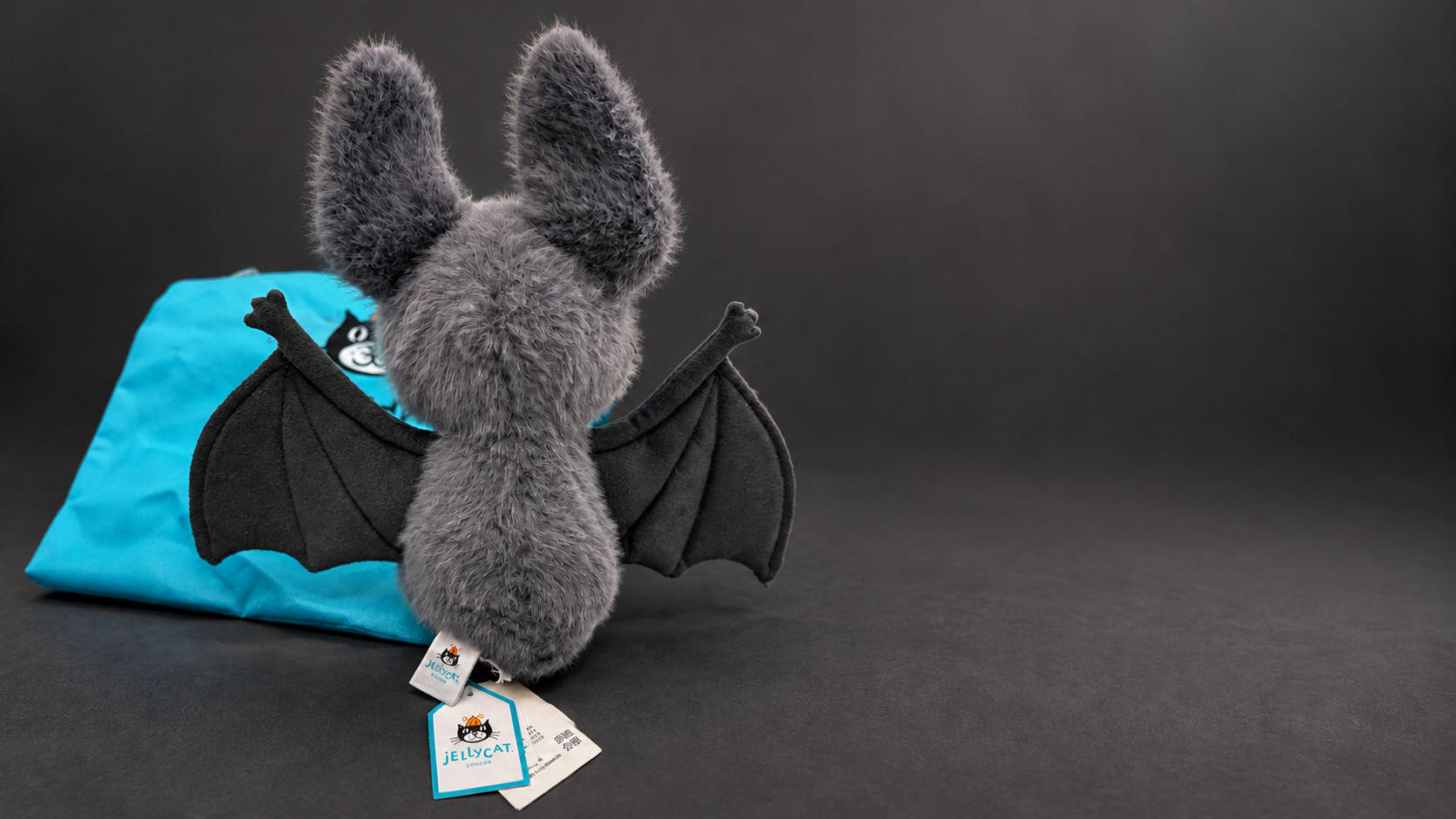
The description of our Broox Bat listing, checked on September 15, 2026, gives a sitting size of approximately 18 cm. That is the seller’s stated measurement; we have not independently remeasured the physical item for this article.
The front photo shows prominent ears and wings, while the rear view makes the spread of the wings and the tag position easier to see. Neither is a ruler photograph. Use them to understand shape, not to calculate an exact width or height from pixels.
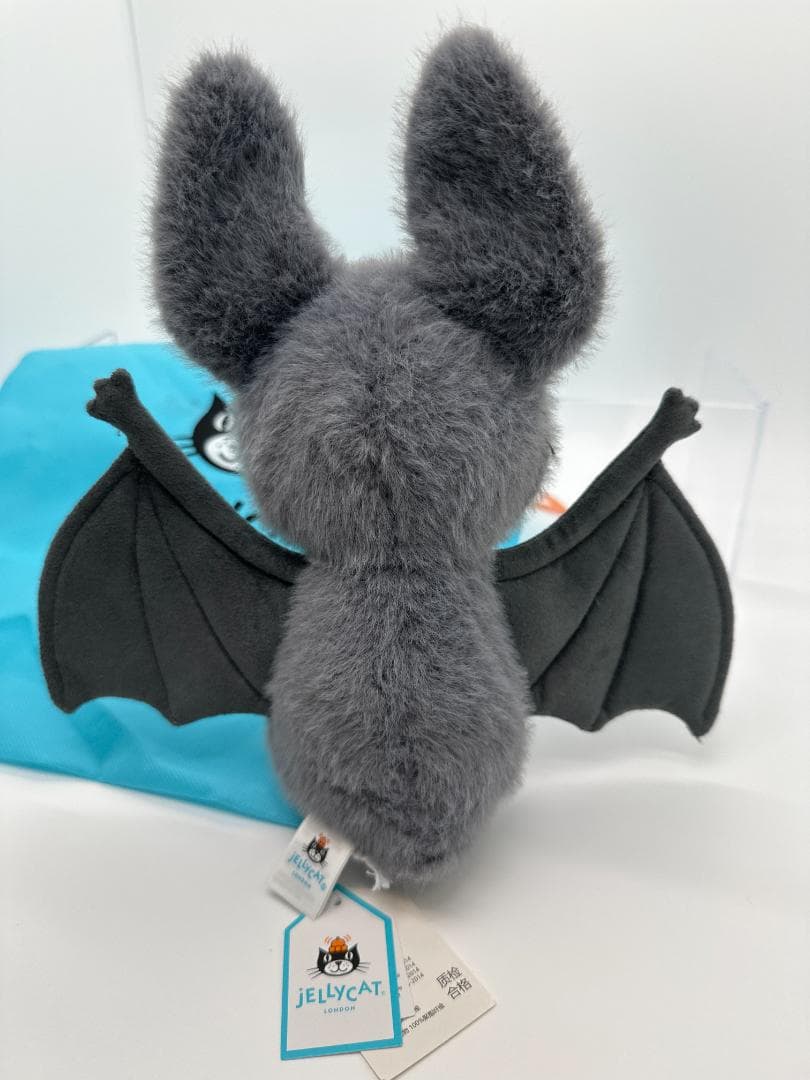
Measure the space in three directions
Measure the available width, depth and clearance to the shelf above. Then consider room around the ears and wings so neighbouring objects do not press against them. There is no universal margin: choose the space according to the toy’s shape and the arrangement you want.
Enough width does not necessarily mean enough depth if the feet project forwards. Look beyond the front view and ask how the toy rests on a surface and whether it keeps the intended pose without support. Those questions are more informative than asking only whether it is “small.”
Request a measurement with clear reference points
A useful request is: “For my shelf, could you measure from the surface to the ear tips while seated, and the maximum width including the wings?” Explain the display purpose and reference points. This is an extra clearance check, not a redefinition of the brand’s standard measurements.
If an extra photograph is available, ask for the toy in the intended pose with the ruler aligned to the points being measured. A storage bag or a person’s hand has no fixed reference size, so an impression of scale alone is a weak basis for a precise fit decision.
After checking dimensions, reread the contents and condition. This listing mentions a storage bag; that does not establish the same inclusion for another listing. Our collectible condition guide can help with the separate questions about packaging and accessories.
Sources and further reading
- Jellycat official: How We Measure(Checked: )
- Our Broox Bat listing(Checked: )