/ Osaka Food / English
Ordering Sake with Yakitori in Osaka: Cold, Room Temperature or Warm, Glass or Ichigo
Sake menus mix words for serving temperature and serving size. Here is how to read terms such as hiya, kan and ichigo, and what to ask before you order with yakitori.
Written by Koetsu Co., Ltd.
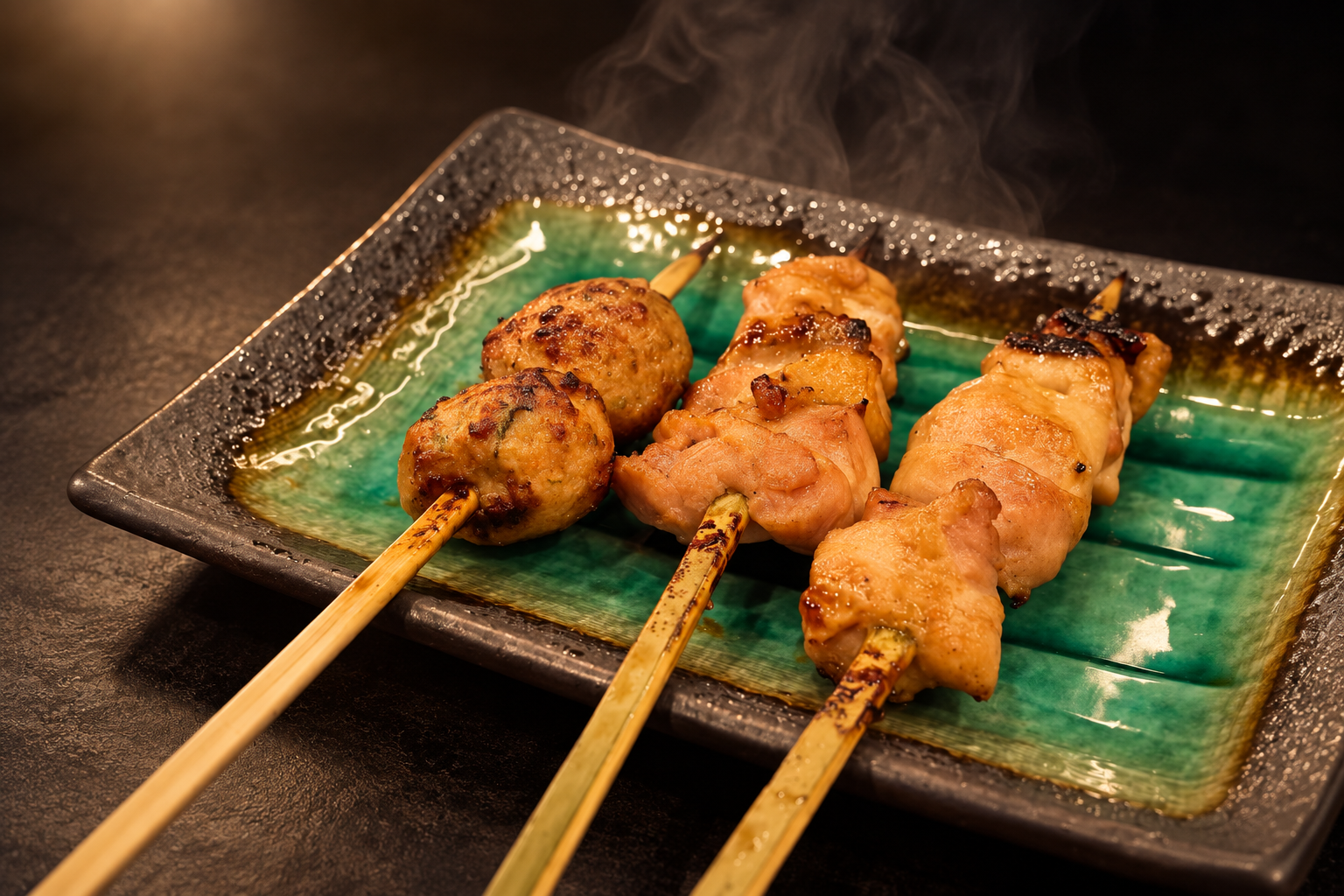
Yakitori restaurants in Japan usually list sake alongside draught beer and highballs. A menu that only says hiya, kan or ichigo can be hard to read, because some words describe temperature and others describe quantity. This guide separates the two so you can order with confidence.
Temperature words: reishu, hiya and kan
Chilled sake is called reishu. The Japan Sake and Shochu Makers Association describes degrees of chill with poetic names: yuki-bie when the bottle is cold enough to collect condensation, hana-bie when the bottle feels clearly cold, and suzu-bie when it has been out of the refrigerator for a while.
The confusing one is hiya. According to the same association, sake at room temperature, where the flask feels only slightly cool, is sometimes called hiya. If you order hiya expecting a refrigerated drink, you may receive sake close to room temperature instead.
Restaurants do not all use these words the same way. If you want it chilled, say so directly; if you prefer room temperature, ask for jōon. Describing the temperature you want is more reliable than relying on a single menu word.
| Name | Approximate temperature |
|---|---|
| Hinata-kan | About 30°C |
| Hitohada-kan | About 35°C |
| Nuru-kan | About 40°C |
| Jō-kan | About 45°C |
| Atsu-kan | About 50°C |
| Tobikiri-kan | 55°C or higher |
Warmed sake is called kan. The Jizake Kuramoto-kai glossary lists names from hinata-kan at around 30°C to tobikiri-kan at 55°C or more, as in the table above. The figures are guides only; the actual temperature depends on how each restaurant warms its sake.
Not every sake on a menu is offered warm. If the menu does not mention kan, ask whether that sake can be warmed before you decide.
Serving size: ichigo and glasses
One go (ichigo) is about 180ml. Tanoshii Osake.jp explains that common sake cups hold roughly 36 to 45ml, so one go fills about four or five cups. If the sake arrives in a one-go flask (tokkuri), finishing it means you have had one go.
Some restaurants serve sake by the glass instead. Glass sizes vary, so when you compare prices, check whether the price is for one go or for one glass before deciding which is better value.
An example: Yakitori Senkichi
When we checked the Yakitori Senkichi Minamikyuhoji official site on 1 October 2026, its drinks list showed "Japanese sake (various) from ¥600". It does not say which brands are available, whether each can be served cold or warm, or whether the price is for one go or a glass, so please ask when you order.
Short phrases for ordering
- "Nihonshu wa tsumetai mono to kan, dochira ga dekimasu ka?" (Can I have the sake cold or warm?)
- "Nurukan de ichigo onegai shimasu." (One go, lukewarm, please.)
- "Glass da to ryō wa dore kurai desu ka?" (How much is in a glass?)
- "Jōon de onegai shimasu." (Room temperature, please.)
Sake can feel stronger than beer even in smaller amounts. Keep track of how much you drink and order water as well. In Japan, drinking alcohol under the age of 20 is prohibited by law.
Separating temperature words from serving-size words makes a sake menu much easier to read. This article was edited by Koetsu Co., Ltd., which is connected with Yakitori Senkichi, after checking each source on 1 October 2026. Drinks and prices can change, so follow the menu and staff guidance on the day of your visit.