/ Osaka Food / English
Shishito Peppers at a Yakitori Restaurant: Why the Occasional One Is Hot, and How to Order and Eat Them
Shishito is a standard vegetable skewer at yakitori restaurants. Most are mild, but every so often one is hot. Using material from Wakayama Prefecture, Japan's agriculture and livestock industries agency (ALIC) and Shinshu University, this guide explains what makes a shishito hot, why you cannot tell by looking, and how to order and season the skewer.
Written by Koetsu Co., Ltd.
Alongside negima and shiitake, shishito is one of the vegetable skewers you see most often at yakitori restaurants. It is a simple skewer, charred over charcoal and seasoned with salt, and most shishito are mild. Every so often, though, you bite into one that is surprisingly hot. This guide explains why that happens, whether you can tell by looking, and how to order and eat shishito at a yakitori restaurant, based on material from public bodies and a university.
What a shishito is
According to ALIC, the shishito is named because the tip of the pod looks like a lion's head (shishi), and its full name is shishitogarashi. Like green bell peppers, it is picked while still unripe, at about 5 cm long. ALIC notes that it is especially common in the Kansai region, where it is used in stir-fries, fried dishes and pickles.
The same document says shishito can be eaten seeds and all, that the occasional one is hot, and that because the pods can burst when heated, it helps to make a small cut in the surface before cooking. That is likely why the shishito on a yakitori skewer sometimes has a small slit or hole in it.
Why the occasional one is hot
Wakayama Prefecture explains that growing conditions such as high temperatures and dry spells cause hot pods to develop, and that because hot pods cannot be told apart from the outside, you sometimes simply hit one when eating. In other words, shishito from the same plant or the same bag can differ depending on the heat and water stress each pod went through as it grew.
A Shinshu University research note describes crossing shishito with the hot Takanotsume chilli. It found that shishito's lack of heat is controlled not by a single gene but by several loci, which the researchers say is quite different from bell peppers and paprika, where a single gene removes the heat.
Wakayama Prefecture, meanwhile, has developed a new variety called Shishiwakamaru, which genetically cannot produce capsaicin and so does not develop hot pods; it came out of joint research between the prefecture's warm-region horticulture centre and Kyoto University of Education. You usually cannot tell from a yakitori menu which variety you are being served, however.
| Common question | What the sources support |
|---|---|
| Can you spot a hot one? | Wakayama Prefecture says they cannot be told apart from the outside |
| What makes one hot? | Growing conditions such as heat and dryness (Wakayama Prefecture) |
| Is there a variety that never gets hot? | Wakayama's Shishiwakamaru does not develop hot pods |
| Why is there a slit? | To stop the pod bursting when heated (ALIC) |
Ordering a shishito skewer
Shishito is a good vegetable skewer to order between meat skewers to refresh your palate. Menus usually list it in hiragana as ししとう under vegetable skewers, and you can order with "Shishito ippon onegaishimasu" (one shishito skewer, please). Some restaurants also offer it with tare or combined with other ingredients, so if you want to know how it is seasoned, ask "Shio desu ka, tare desu ka?" (salt or tare?).
If you do not handle spicy food well, or you are with small children, order shishito on the assumption that the occasional one may be hot. The restaurant cannot test each pod, so even if you ask for mild ones, they cannot guarantee it. If you are worried, take a small bite from the tip first to check.
Eating it, and the seasonings on the table
When eating from the skewer, work your way up to the stem and leave the stem and skewer on the plate. As ALIC notes, the seeds are edible, so there is no need to remove them. Straight off the grill the inside can hold hot steam, so let the first bite cool a little.
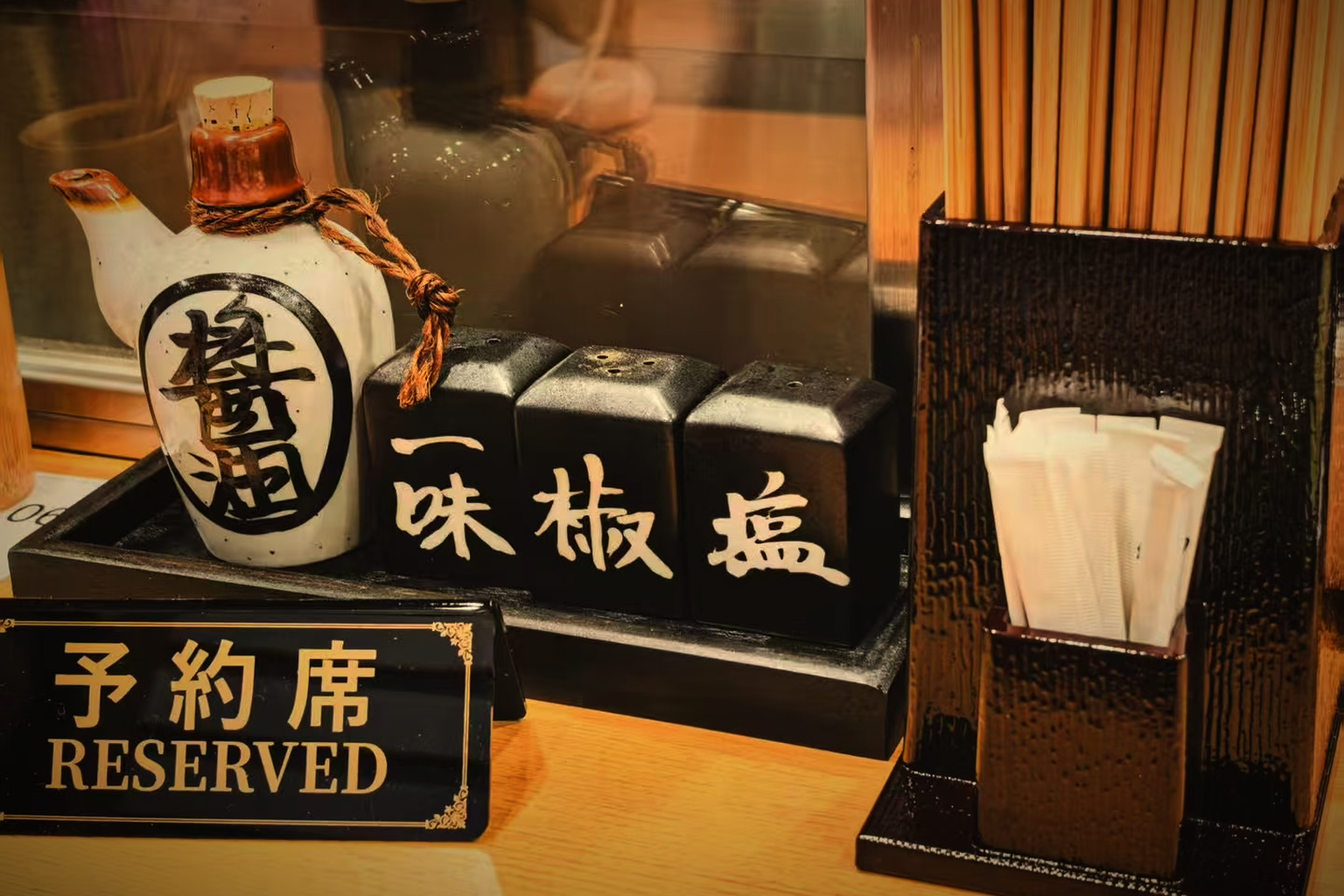
At Yakitori Senkichi the table has soy sauce and shakers of ichimi (ground chilli), sansho (Japanese pepper) and salt, as in the English cover photo. A salt-grilled shishito is good as it is or with a light dusting of sansho. Ichimi adds heat, so it will not help if you have just hit a hot one. If that happens, calm things down with water or rice, and there is no need to finish the pod.
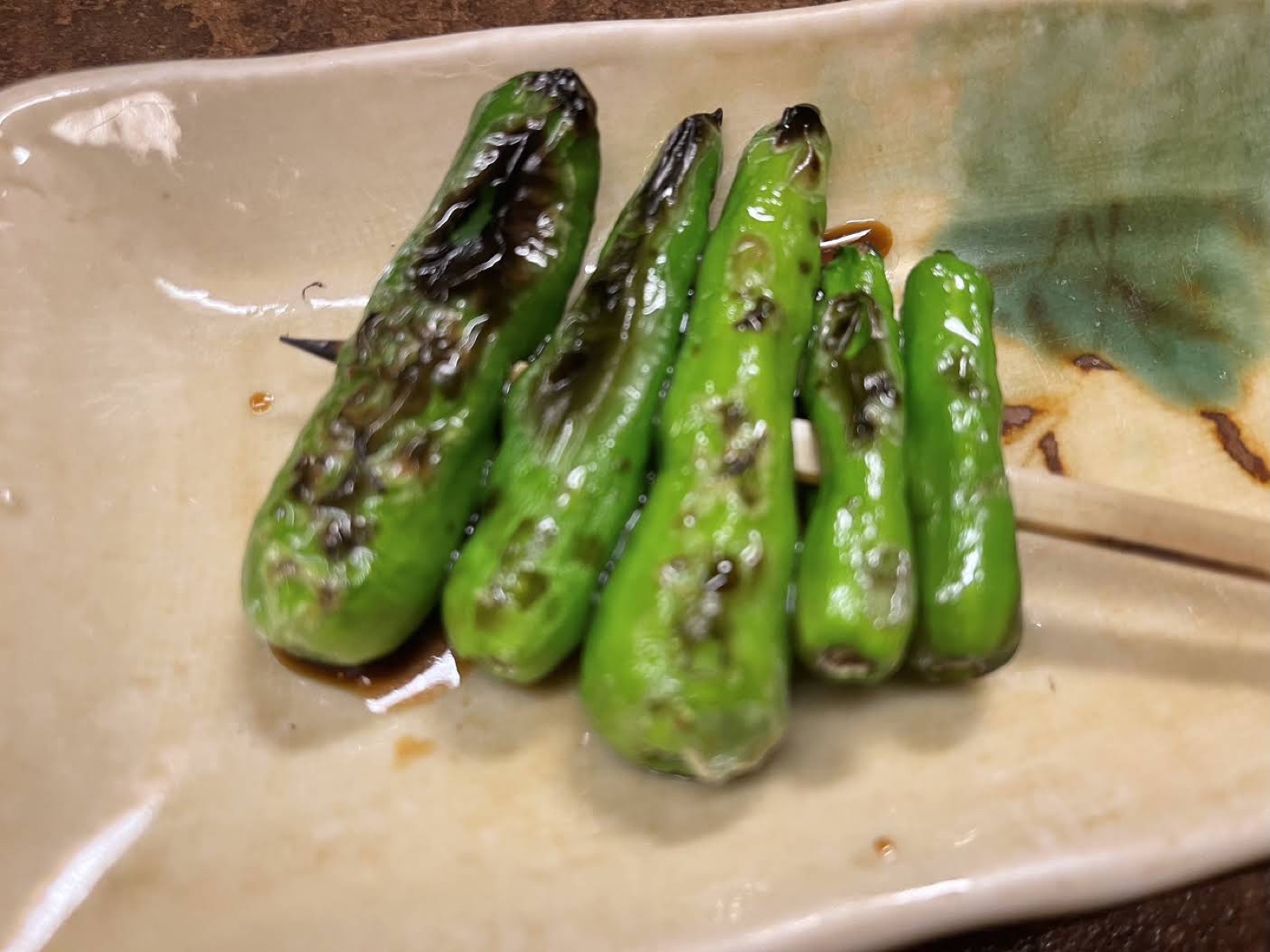
Ordering at Yakitori Senkichi
The photos in this article were published on Google by Yakitori Senkichi in Minamikyuhoji. Menus, prices and the day's produce can change, so please check the menu or ask the staff whether shishito is available and whether it comes with salt or tare. For reservations and opening hours, see the official site and the restaurant information.
Shishito is a skewer that is occasionally hot, which also makes it a good conversation piece. Knowing that you cannot spot a hot one by looking, that the slit is there to stop it bursting, and that the seeds are edible, you can enjoy it between meat skewers without worry.
Sources and further reading
- ALIC Vegetable Information, July 2021: supply and demand of shishito peppers (Japanese, PDF)(Checked: )
- Wakayama Prefecture: Wakayama food terroir, shishito (Japanese)(Checked: )
- Shinshu University Faculty of Agriculture: research note on the loci behind shishito's loss of pungency (Japanese, PDF)(Checked: )
- Yakitori Senkichi Minamikyuhoji official site (Japanese)(Checked: )