/ Osaka Food / English
Lean vs Marbled Basashi: How Horse Sashimi Differs, How to Eat It, and Why It Is Frozen Before Serving
What separates lean and marbled basashi? Comparing two photos Yakitori Senkichi published on Google, this guide covers how the fat looks and what to expect in flavor, how to eat it with onion, ginger, garlic and sweet soy sauce, why horse meat is frozen in distribution, and what to choose if you avoid raw meat.
Written by Koetsu Co., Ltd.
Open a basashi menu and you will often see both lean (赤身, akami) and marbled (霜降り, shimofuri). At Yakitori Senkichi in Minamikyuhoji, the menu as of October 2026 listed lean, premium lean and marbled horse sashimi. Both are raw horse meat, but they look quite different and leave a different impression.
This guide compares two photos the restaurant published on Google to show how the fat differs, how to eat basashi with its condiments and soy sauce, and why horse meat is frozen in distribution. For the basics of ordering basashi alongside yakitori, see our yakitori and basashi dinner guide.
Lean and marbled in two photos
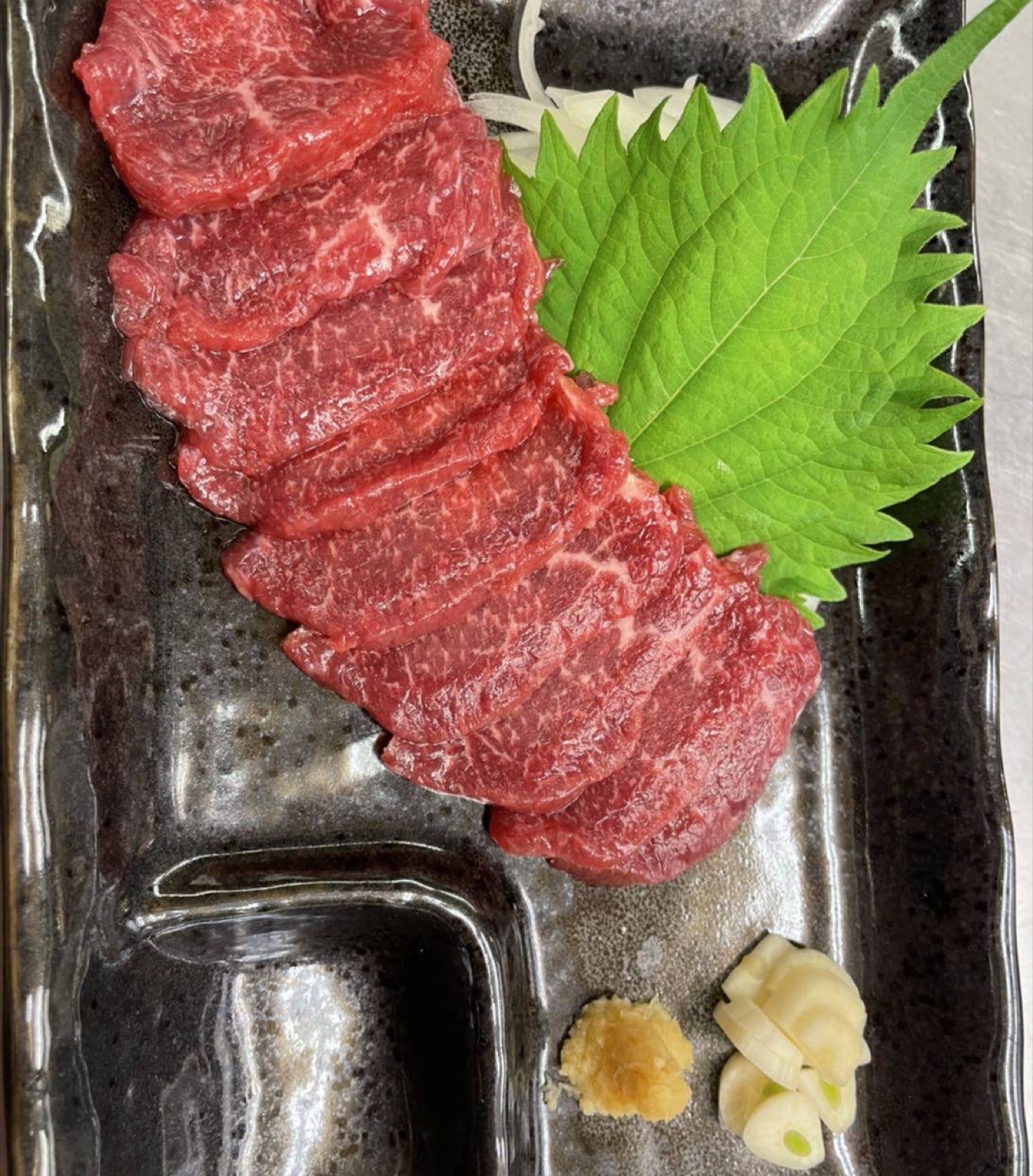
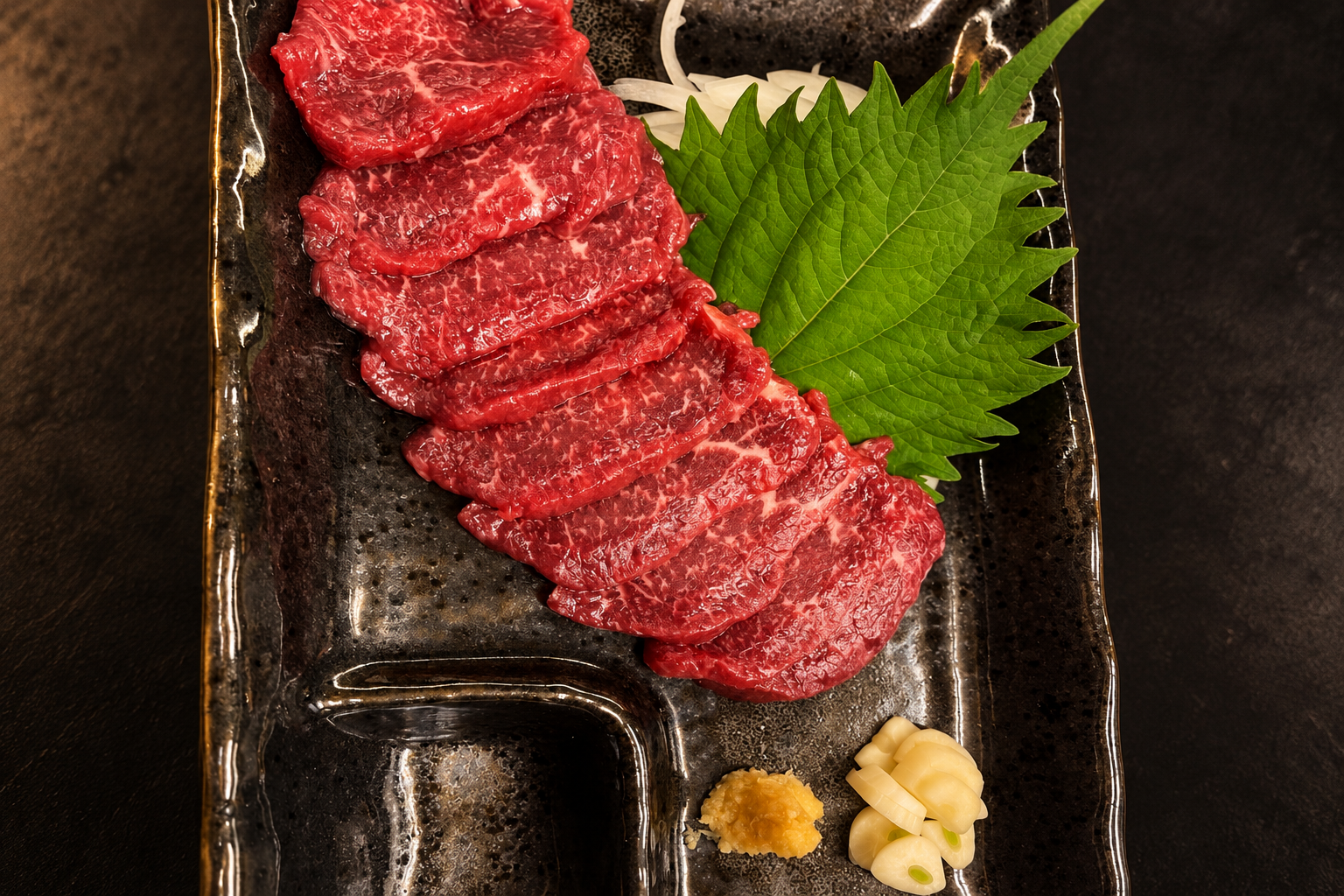
This is the lean cut. It is deep red overall, with only a little fat showing as thin white lines. It comes with a shiso leaf, sliced onion, grated ginger and sliced garlic.
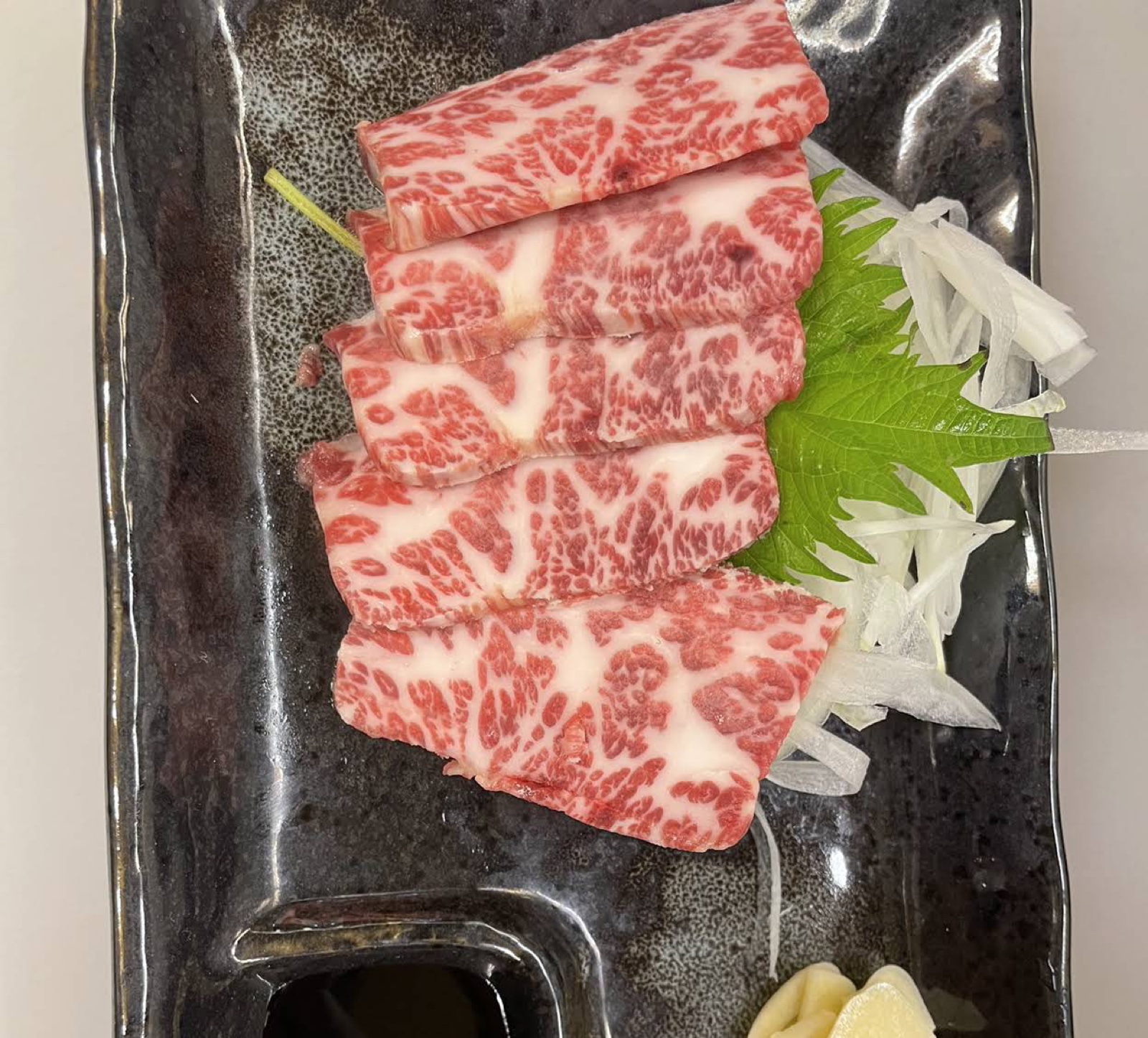
This is the marbled cut. White fat spreads like a net, so the white stands out about as much as the red. The two photos were taken separately, and the cut, plating and portion may vary from day to day.
The difference is mainly fat and cut
According to the agriculture ministry's regional cuisine page, basashi includes marbled cuts such as loin and lean cuts such as round, along with liver and tongue, and the flavor differs by cut. Horse meat also has its own names, such as futaego (belly) and kone, the fat under the mane.
| Lean (akami) | Marbled (shimofuri) | |
|---|---|---|
| Look | Deep red with little fat | A white net of fat |
| Typical impression | Clear meat flavor, tends to feel light | Sweetness of the fat and a softer bite |
| Good when | You do not like much fat | You want something rich in small amounts |
The flavor row is a general tendency, and people perceive it differently. This article does not state which cut our dishes use. Our menu describes the lean basashi as low in fat with a light taste. If the cut matters to you, please ask at the restaurant.
How to eat it: condiments and sweet soy sauce
The same ministry page says Kumamoto-style basashi is eaten with condiments such as sliced onion, grated ginger, garlic and small green onion, dipped in sweet soy sauce. The plate in the photos has a well for the sauce. You might start with just a little condiment to taste the meat, then adjust from there.
The page also says horse fat, as in marbled cuts and kone, melts easily at a low temperature, so it should be eaten soon. Horse meat is also called sakura niku (cherry blossom meat) for its pink cut surface, but it oxidizes easily and darkens over time. Take your photo, but do not wait long to eat.
Why horse meat is frozen
Horse meat can carry a parasite called Sarcocystis fayeri. According to the agriculture ministry's Q&A, freezing can lower the risk, with conditions such as a core temperature of minus 20°C for at least 48 hours. The regional cuisine page also says the meat is processed in hygienically managed facilities and always frozen for distribution.
The City of Nagoya says symptoms from this parasite are diarrhea or vomiting about 4 to 8 hours after eating, usually mild with quick recovery. Freezing addresses this parasite and does not remove every risk of eating raw meat. This article also does not describe our specific sourcing or storage methods.
If you would rather avoid raw meat
Basashi is eaten raw. The health ministry's Q&A advises against giving raw or undercooked meat to children, older people and others at higher risk. If that applies to anyone at your table, or you are unsure about your health, skip it and choose something grilled. Our menu also listed a grilled horse meat skewer, uma himo (馬ひも).
What you can ask before ordering
- Ask the difference: Akami to shimofuri wa, dochira ga sappari shite imasu ka? (Which is lighter, lean or marbled?)
- Ask the portion: Hito-sara wa nan-kire kurai desu ka? (About how many slices are on a plate?)
- Ask availability: Kyo, basashi no shimofuri wa arimasu ka? (Do you have marbled basashi today?)
- Mention condiments: Ninniku wa betsu ni shite moraemasu ka? (Could the garlic be served separately?)
The selection and prices can change, so please check the menu on the day or call. The phrase direct from Kumamoto in our menu is the restaurant's own description, and this article does not certify the origin or supply route. The ministry page also notes a difference in labeling between horse meat born and raised in Kumamoto and meat from foals imported and then raised there. If origin matters to you, please ask.
For wagyu and A5 grades in beef, see our wagyu skewer guide. Menu and restaurant details for Yakitori Senkichi Minamikyuhoji are on the official website. This article reflects what we checked on November 4, 2026.
Sources and further reading
- MAFF, Our Regional Cuisines: Basashi, Kumamoto (Japanese)(Checked: )
- MAFF: Q&A on food poisoning from Sarcocystis fayeri in horse meat (Japanese)(Checked: )
- City of Nagoya: Preventing food poisoning from basashi (Japanese)(Checked: )
- Ministry of Health, Labour and Welfare: enterohemorrhagic E. coli Q&A (Japanese)(Checked: )
- Yakitori Senkichi official website(Checked: )