/ Osaka Food / English
Yakitori in Osaka: Set Course or À La Carte?
Choosing a yakitori dinner near Honmachi or Shinsaibashi? Compare a set course, individual orders and a skewer platter, then check drinks, portions and booking conditions.
Written by Koetsu Co., Ltd.
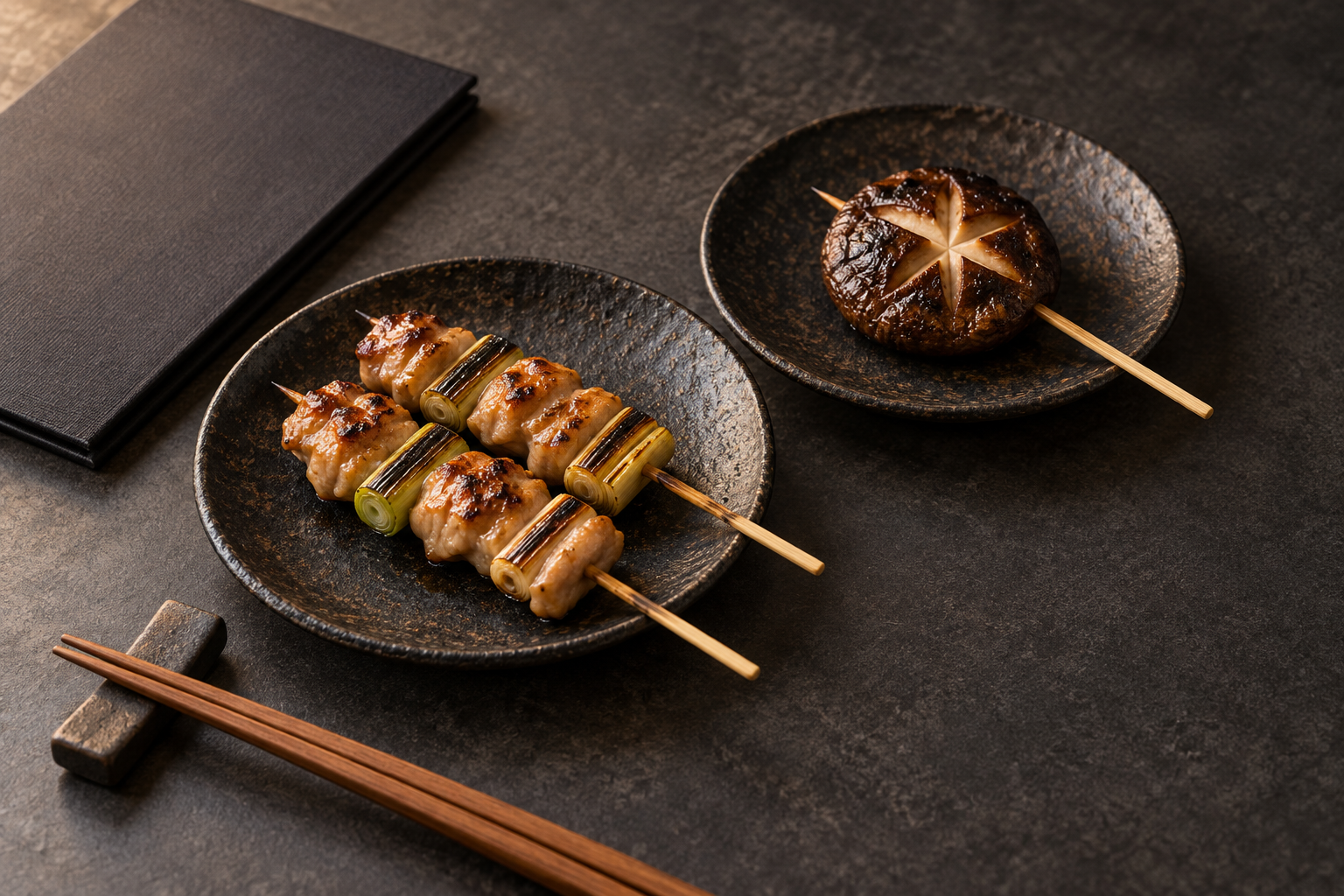
When choosing between a yakitori course and individual orders, start with how you want the evening to feel. Would you prefer to settle the food selection in advance, or choose dishes as you go? That decision is often more useful than trying to predict an exact number of skewers before seeing the menu.
This guide offers a practical comparison for dinner around Honmachi and Shinsaibashi. Its local example is the published menu of Yakitori Senkichi Minamikyuhoji, operated by Koetsu, the publisher of this article. Check the booking page or restaurant for the contents and conditions that apply on your chosen date.
Separate a course, individual orders and a platter
A course is a listed combination of dishes. À la carte means selecting items individually, while a platter groups several items into one order. A skewer platter is not necessarily a full dinner course. Read the units carefully: a count of dishes does not automatically tell you how many skewers each person receives.
| Menu wording | What you choose | What to check |
|---|---|---|
| Set course | A listed combination of dishes | What is included per person; whether changes are possible |
| À la carte | Individual dishes you want | Order units and the time available for extra orders |
| Assorted platter | Several items in one order | Total number of skewers; fixed or variable contents |
| Drink package | Drinks within the plan’s conditions | Whether food is included and which drinks qualify |
If you plan to share, establish whether the platter description refers to one person or one plate. A useful question is, “We are sharing this between two people; how many skewers are in the whole order?” That gives you a basis for choosing extras without guessing portion sizes from a photograph.
Check the food and drinks separately in a real example
On 19 September 2026, the published Senkichi course listed three chef-selected chicken skewers, one Unzen ham skewer, one seasonal vegetable skewer, a side dish and dessert. Rice was not listed among those contents, so ask about it if you want it as part of dinner.
The course list also shows separate plans with a drink package. The word “course” alone does not tell you whether drinks are included. Match the selected plan’s name to its contents, and check the current price and any promotion conditions on the booking screen.
Choose around appetite and your plans
A course can suit an evening when you want the selection settled beforehand and a shared sequence of dishes. Changes for disliked ingredients, extra orders and different plans at the same table are questions for the restaurant, rather than automatic features. Raise those preferences before booking so that the chosen arrangement matches your group.
Consider individual orders after a snack-filled afternoon or when you already know which skewers you want. Start with a manageable selection and check whether there will be time to add more. Extra dishes may take time to prepare, so tell the restaurant about a later appointment instead of assuming every order will arrive immediately.
Compare like with like: food, the drinks you intend to order, possible extras and any applicable table or appetiser charge. A course is not automatically the cheaper choice, and individual ordering is not only for a small appetite. Your planned meal is the useful comparison, rather than the smallest headline price.
Make your booking question specific
For example: “We are planning dinner for two and choosing between a food course and individual orders. Can we add rice, and can we change the order on the day?” This is a question template, not a promise of service. Giving the party size and desired meal makes the answer more useful.
Find the address and contact details on the restaurant page. For the other part of the bill, see our guide to otoshi and cover charges.
Sources and further reading
- Yakitori Senkichi Minamikyuhoji: listed courses(Checked: )
- Senkichi course: published contents(Checked: )
- Yakitori Senkichi Minamikyuhoji: food menu(Checked: )
- Restaurant information and contact details(Checked: )