/ Osaka Food / English
What Is Otoshi? Understanding the Izakaya Cover Charge in Osaka
A small dish arrives before you order: is it free? Learn what otoshi means, what to ask before sitting down and how to check your bill, with a published yakitori restaurant example from central Osaka.
Written by Koetsu Co., Ltd.
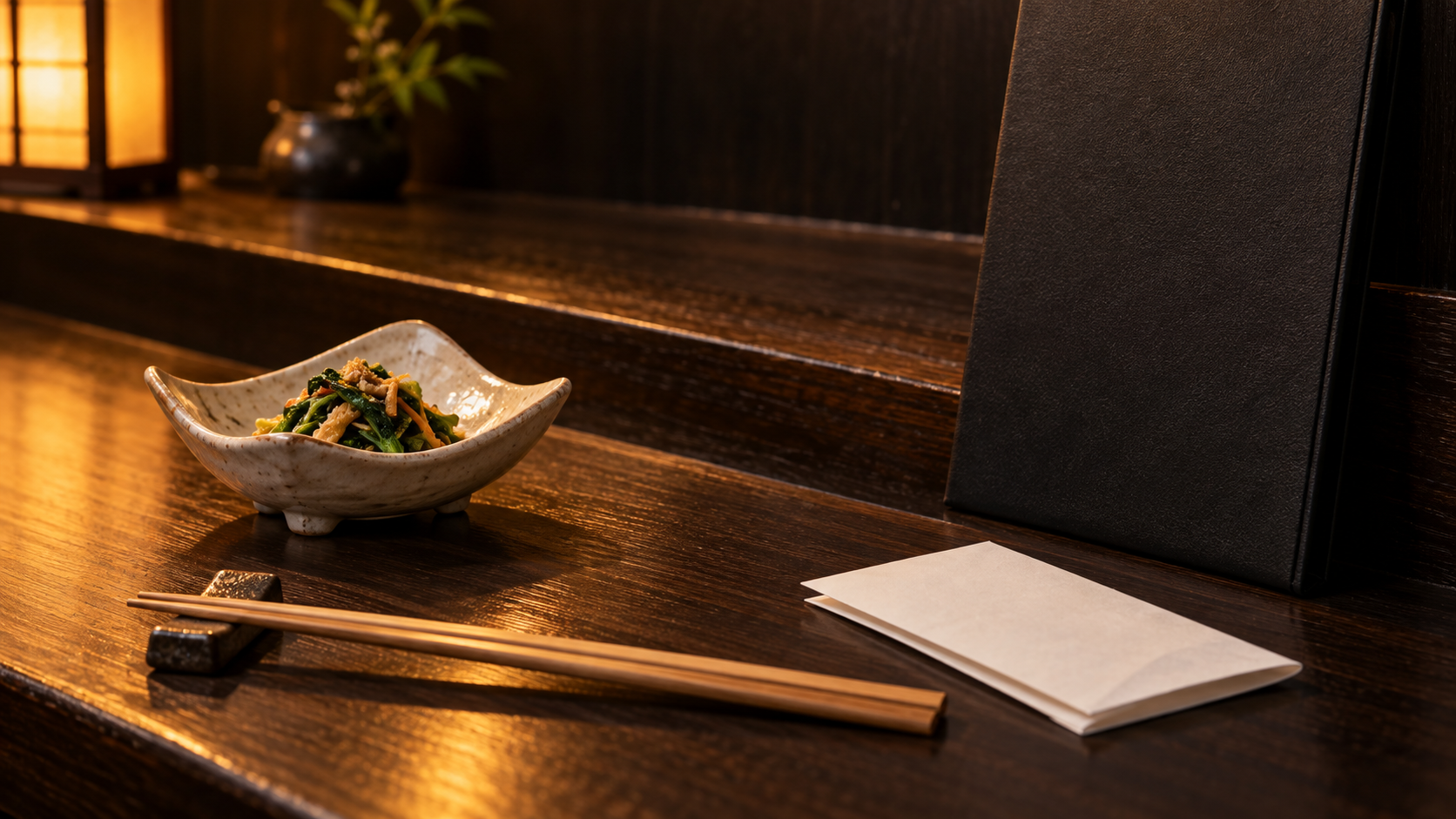
You sit down at an izakaya in Osaka and a small dish arrives before you have ordered. Learning about otoshi before dinner makes it easier to understand that moment—and the line that may appear on your bill later. A short question at the start can help you settle in comfortably.
There is no single charge or application rule for every restaurant. This guide explains the wording, suggests a useful order for asking questions and gives one published example for visitors considering a yakitori dinner around Honmachi and Minamikyuhojimachi.
How otoshi differs from an appetizer you order
Tokyo’s official tourism guide, GO TOKYO, describes otoshi as a small dish served before ordering, usually associated with a cover charge at places such as izakaya. This is general context about dining in Japan, rather than a statement of any individual Osaka restaurant’s policy.
An appetizer you choose from the menu is a dish you have ordered. Otoshi may arrive automatically. The useful distinction is how it was offered, so do not use “I did not order it” as evidence that the dish is complimentary. Ask how it is charged.
Confirm the amount and who it applies to
Start with the entrance notice or menu, then ask whether the amount is charged per person or per group and how it applies to your party. Ask separately about children or guests who will not drink alcohol if that matters for your visit. Do not infer those details from the price alone.
| What to clarify | A question in Japanese | Meaning |
|---|---|---|
| Whether there is a charge | お通し代はありますか? | Is there an otoshi charge? |
| Amount and unit | 一人いくらですか? | How much is it per person? |
| What the displayed price includes | この金額は税込みですか? | Does this amount include tax? |
| Other charges | ほかに席料はありますか? | Is there a separate seating charge? |
Treat these questions as tools for clarification, not a list of charges every restaurant imposes. If both otoshi and a seating charge are mentioned, ask how they relate. Do not automatically add them twice or assume that one necessarily includes the other.
A published example in Minamikyuhojimachi
The restaurant page for Yakitori Senkichi Minamikyuhoji lists otoshi at ¥330 including tax, checked on September 14, 2026. When comparing dinner options near Honmachi and Shinsaibashi, this is a published detail you can check alongside the food and drinks you plan to order.
That price line does not explain how every guest, including children, is treated or identify the dish served that evening. Confirm the current amount and its application to your group with the restaurant. The starter dishes pictured in this article are illustrations, not its current menu.
If you cannot eat the dish—and when the bill arrives
If you have food requirements, explain them before the dish is served. Ask separately whether the starter can be changed or declined and what happens to the charge if so. These are different questions; a substitution or a waived charge should not be assumed.
Read the bill by category: the dishes you ordered, drinks and any otoshi or other stated charge. Point to an unfamiliar line and ask “Kore wa nan no ryokin desu ka?”—“What is this charge for?” If you booked a course, clarify its inclusions before adding extra orders.
Once the charges are clear, turn to the enjoyable part: choosing your skewers. Our Osaka yakitori ordering guide explains chicken cuts and salt or sauce. A brief conversation at the start leaves more room to focus on the dinner you want.