/ Osaka Food / English
Bonchiri (Bonjiri), the Chicken Tail Skewer: Where It Comes From, Why It Is So Rich, and Tips for Ordering at Yakitori Senkichi
Bonchiri, bonjiri and tail on a yakitori menu all mean the meat at the base of the chicken's tail. Why is it so rich and chewy, why does each bird give so little, and what is the oil gland that gets removed? Using the photo Yakitori Senkichi shows on its menu, this guide covers the cut and what to check when you order.
Written by Koetsu Co., Ltd.
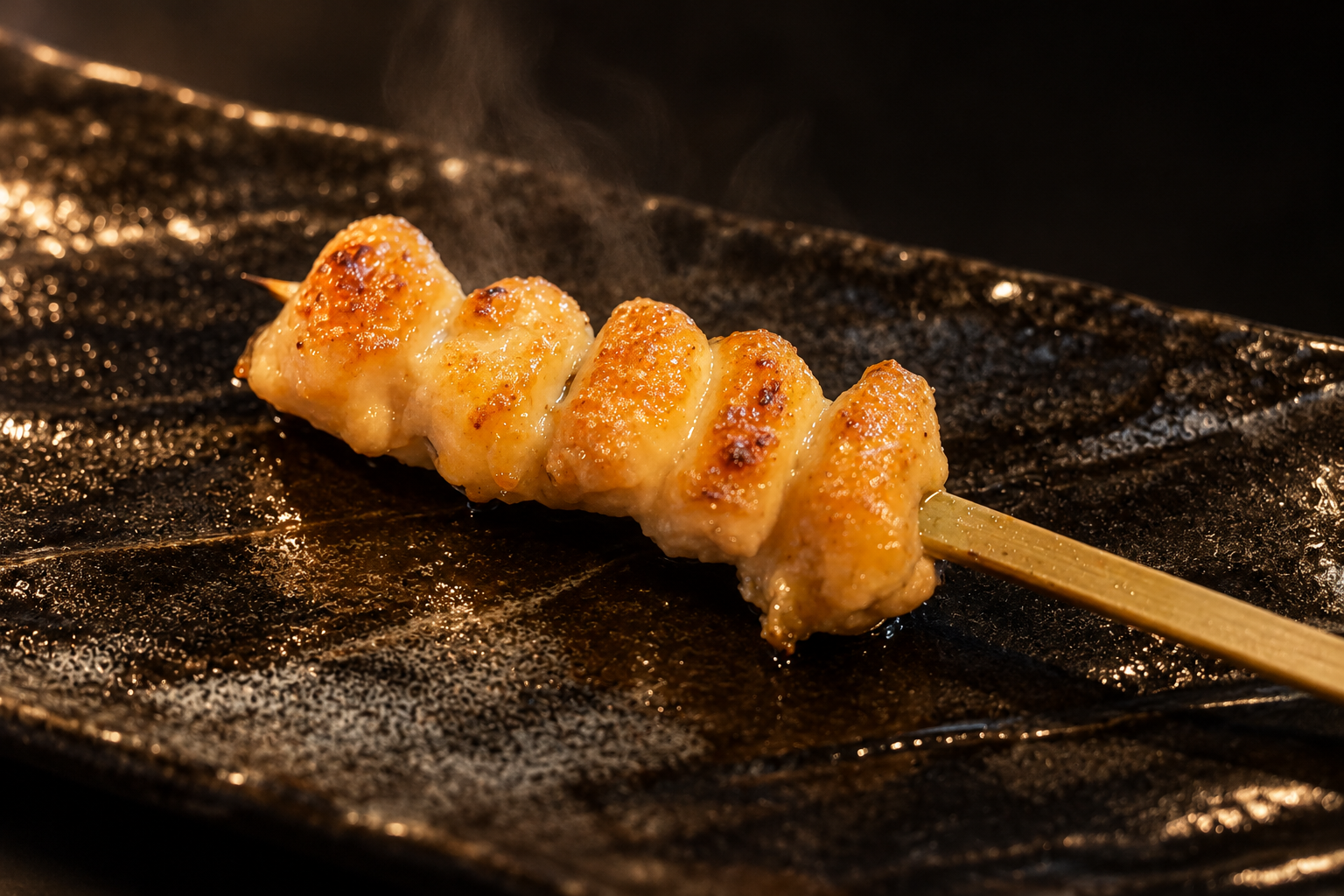
Bonchiri, bonjiri and tail on a yakitori menu all refer to the meat around the base of a chicken's tail. At Yakitori Senkichi in Minamikyuhoji, the in-store mobile ordering menu we checked in late October 2026 listed bonchiri (tail) at 275 yen in its yakitori section. Prices and items can change, so please check the menu in the restaurant for the latest.
Using the photo Senkichi shows on its menu, this guide looks at what makes bonchiri distinctive, why it has so many names, how to enjoy such a rich skewer, and what to check when ordering. We could not confirm from public information where Senkichi sources it, how it is prepared, how long it is grilled or exactly how it is seasoned.
Senkichi's bonchiri in the photo
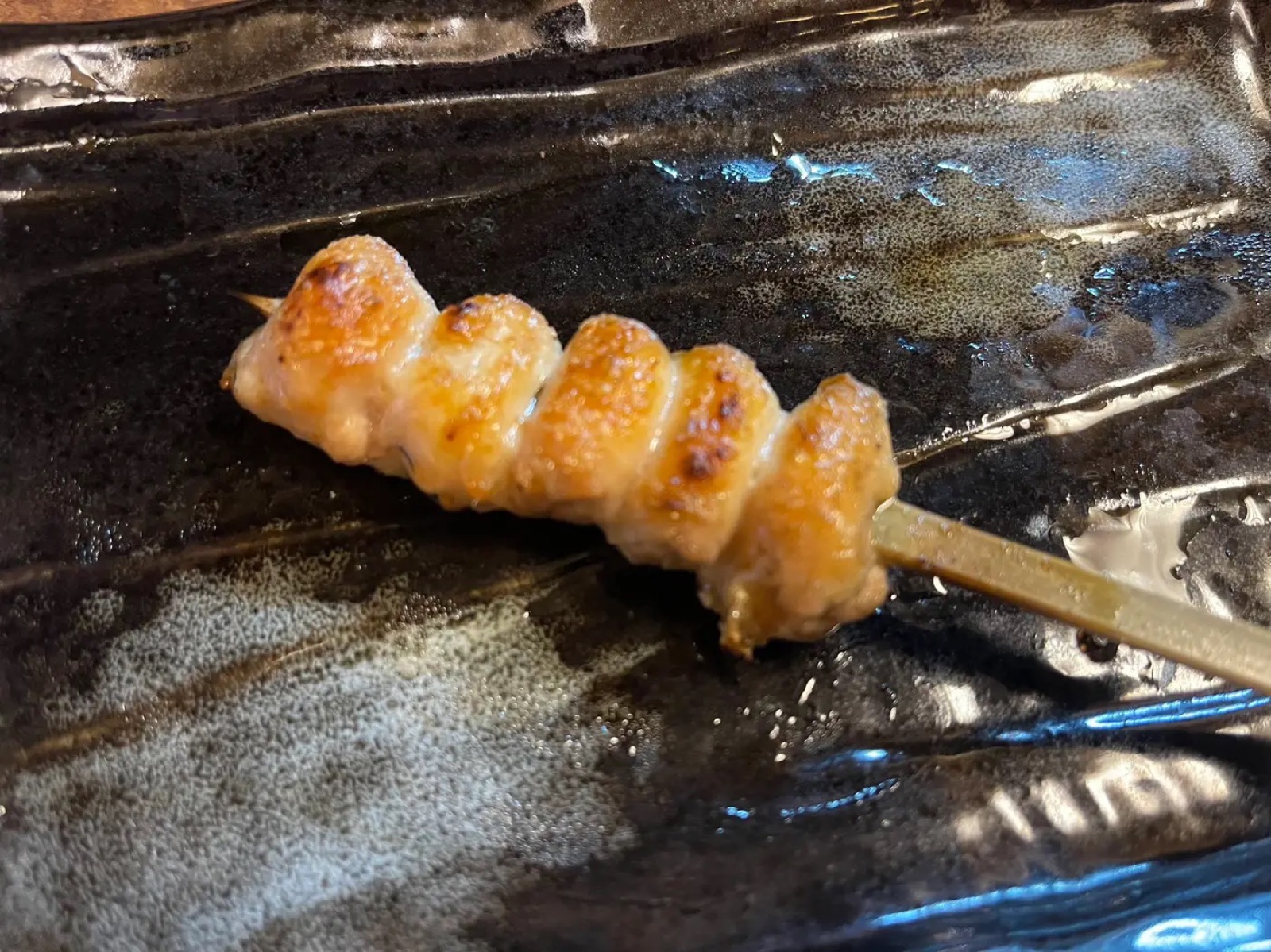
In the photo, about five small pieces sit tightly packed on the skewer. Each one is plump and rounded, browned on top, and the whole skewer shines with fat. The menu simply says bonchiri (tail), with no note on tare or salt. Judging by the colour it does not look as if a dark tare has been brushed on, but we cannot be sure. Please ask the staff when you order whether you can choose the seasoning.
Which part is bonchiri, and why so many names?
Preco Foods, a supplier of yakitori ingredients, calls this cut bonchiri and gives o (tail) as its yakitori menu name. It describes the cut as carrying plenty of fat with a soft, chewy texture. The same page notes that cut names and menu names can differ depending on how the bird is butchered and on the restaurant.
The recipe site DELISH KITCHEN describes bonjiri as the small, triangular piece of meat at the base of the tail, around the tailbone. Each bird yields only a little, which is why it is considered a rare cut. The site says the name is said to come from the tail's resemblance to a bonbori, the paper lantern used in Japan's Doll Festival displays, and that some restaurants call it tail or sankaku (triangle), or even use different names for male and female birds. The origin of the name is not settled, so treat it as a popular explanation rather than fact.
Senkichi's menu puts two names side by side: bonchiri (tail). If another restaurant writes bonjiri or tail, it usually means the same cut. That said, each restaurant cuts and skewers it in its own way, so if you are unsure, asking the staff is the most reliable option.
Why is it so rich? The oil gland and preparation
Near the bonchiri there is a gland that produces oil to keep the feathers water-resistant. DELISH KITCHEN describes it as a pale yellow part called the aburatsubo, or oil pot, and says it is greasy with a strong smell, so dishes taste better when it is removed. Bonchiri served at yakitori restaurants is normally prepared this way before skewering, though we have not confirmed how Senkichi does it.
Preco Foods notes that cooking it thoroughly to render the fat brings out its chewy texture. Over charcoal, the excess fat drips away, the surface turns crisp and fragrant, and juicy fat stays inside. Straight off the grill that fat is very hot, so let it cool for a moment before the first bite.
Bonchiri is still chicken, so it should be eaten well cooked. Japan's Ministry of Agriculture, Forestry and Fisheries recommends heating chicken to 75°C at the centre for at least one minute to prevent food poisoning from Campylobacter, which can be present on chicken, and advises choosing thoroughly cooked dishes when eating out. A browned surface is not enough; it needs to be cooked through.
How does it compare with other skewers?
| Skewer | Cut | Typical texture and flavour |
|---|---|---|
| Bonchiri (tail) | Base of the tail | Very rich and chewy; crisp and fragrant outside when grilled |
| Kawa (skin) | Skin from the neck, breast and so on | Can be crisp or soft depending on how it is grilled |
| Seseri | Neck meat | Springy working muscle with a moderate amount of fat |
| Hatsu | Heart | Springy bite with a clean, mild flavour |
The table shows general tendencies; the cut and grilling style of each restaurant make a difference. Our separate guides cover kawa (skin), seseri and hatsu in more detail. Rich skewers are easier to enjoy to the end if you alternate them with lighter ones such as negima or sasami, or with vegetable skewers.
Tips for ordering at Yakitori Senkichi
- Look for bonchiri (tail) in the yakitori section of the menu (as of our late-October 2026 check)
- Ask when ordering whether you can choose salt or tare
- It is rich, so start with one and pair it with lighter skewers or vegetables
- The fat is hot straight off the grill, so let it cool briefly
- If it does not look cooked through, tell the staff
If this is your first time ordering yakitori, our guide to ordering yakitori in Osaka explains cut names and how to ask for salt or tare. Senkichi's location and opening hours are on its official website.
Bonchiri is a skewer for enjoying rich, savoury fat from a cut each bird gives only a little of. Even when the menu name changes from place to place, remembering "base of the tail" will keep you from getting lost. Enjoy a well-grilled, piping-hot skewer alongside a few lighter ones.