/ Osaka Food / English
Hatsu, the Chicken Heart Skewer: What It Tastes Like, How It Differs from Hatsumoto, and Tips for Ordering at Yakitori Senkichi
Hatsu on a yakitori menu is chicken heart. What is the texture like, where does the name come from, and how is it different from hatsumoto, the part at its base? Using the photo Yakitori Senkichi shows on its ordering menu, this guide covers the cut, why organ skewers should be eaten well cooked, and what to check when you order.
Written by Koetsu Co., Ltd.
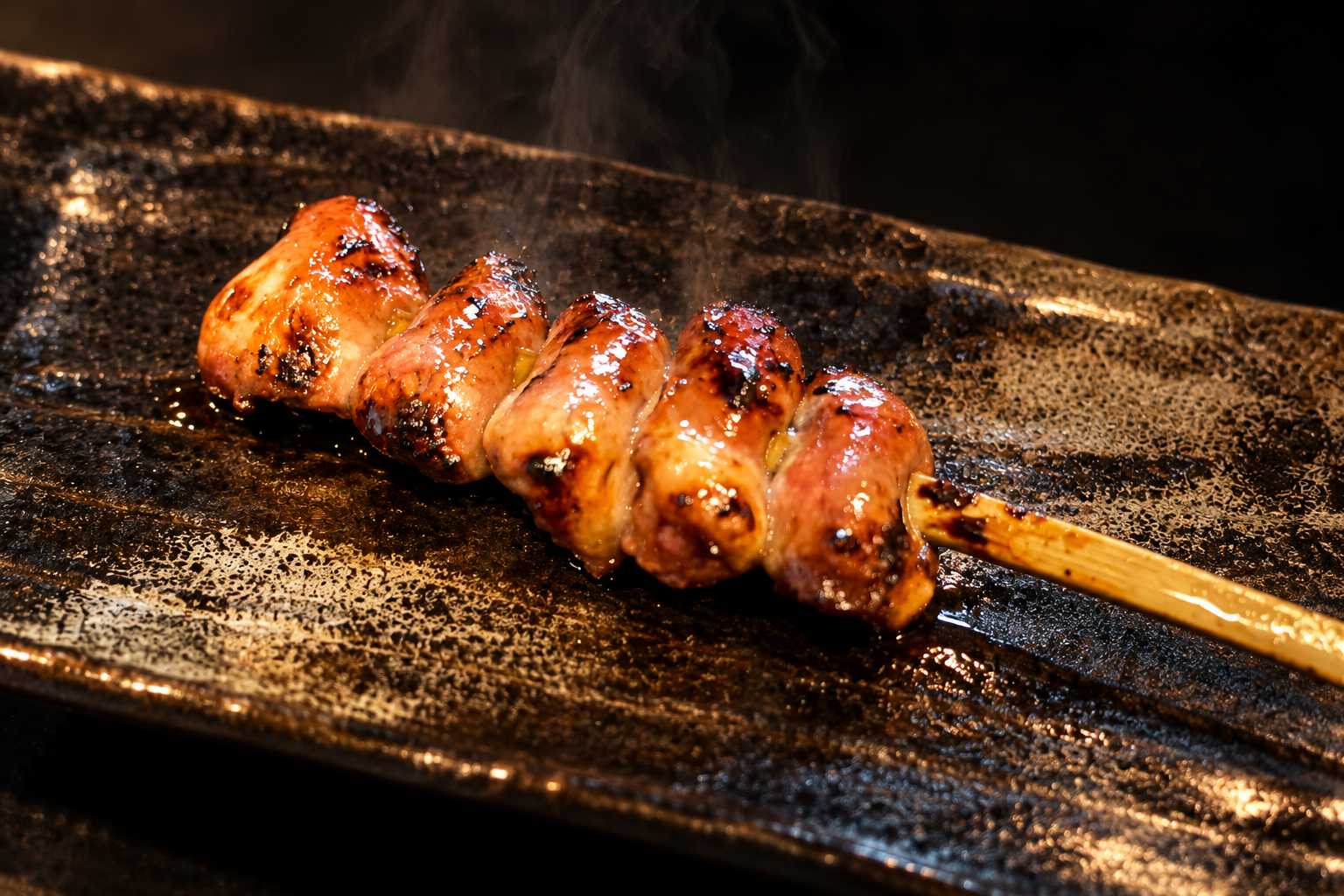
Hatsu (also written ハツ) on a yakitori menu is chicken heart. At Yakitori Senkichi in Minamikyuhoji, the in-store mobile ordering menu we checked in late October 2026 listed hatsu (heart) at 275 yen in its recommendations section. The yakitori section of the same menu also listed a limited-quantity item called tori horumo (hatsumoto) at 342 yen. Prices and items can change, so please check the menu in the restaurant for the latest.
Using the photo Senkichi shows on its menu, this guide looks at what makes hatsu distinctive, how it differs from hatsumoto, why organ skewers should be eaten well cooked, and what to check when ordering. We could not confirm from public information where Senkichi sources its hearts, how they are prepared, how long they are grilled or exactly how they are seasoned.
Senkichi's hatsu in the photo
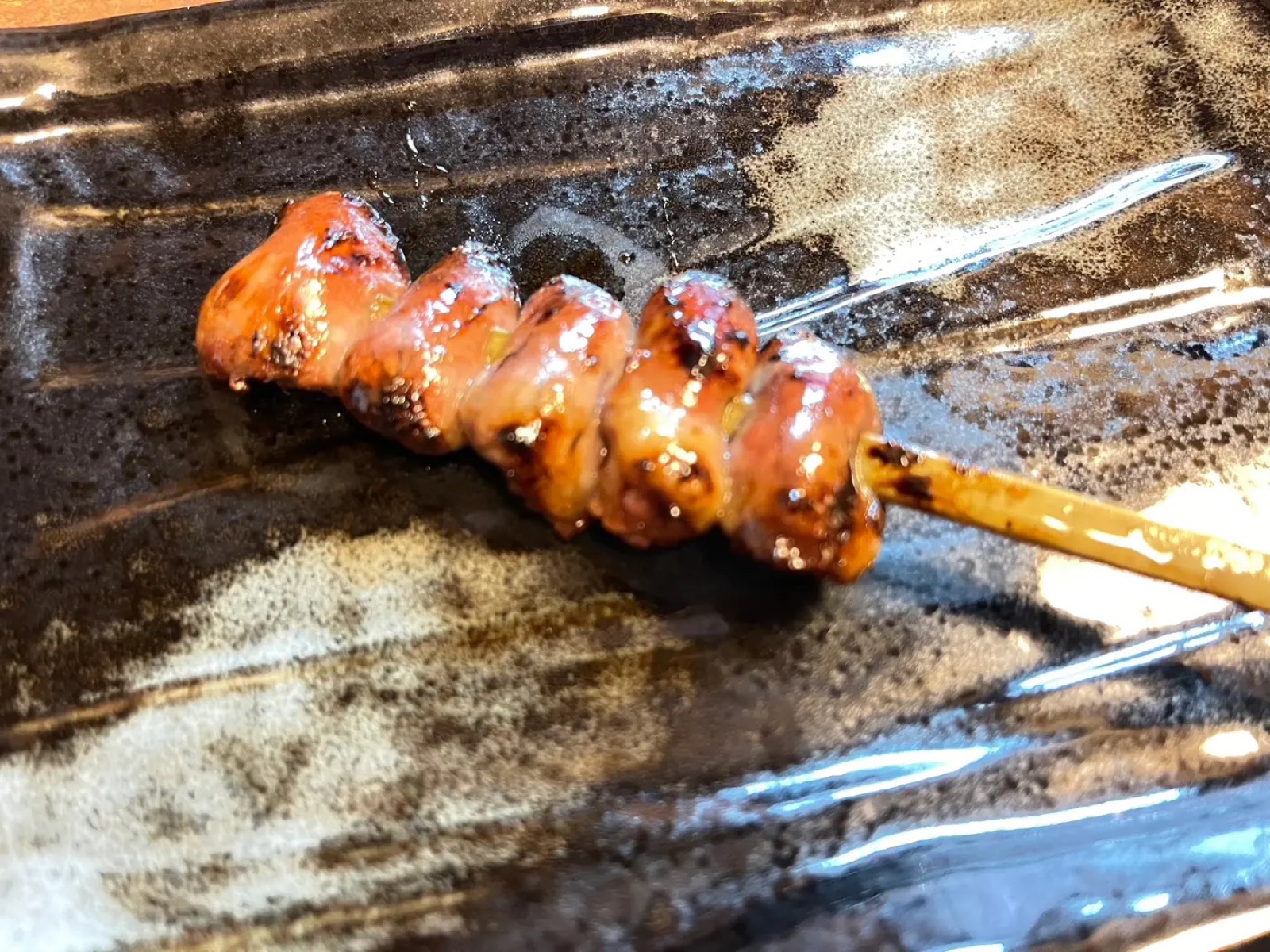
In the photo, five small hearts sit in a row on the skewer. They keep their rounded shape, so they look clearly different from negima, where thigh meat is cut into cubes, or from seseri, where long strips are folded onto the stick. The surface is glossy with browned spots here and there. The menu simply says hatsu (heart), with no note on whether it comes with tare or salt, so please ask the staff when you order whether you can choose the seasoning.
What kind of cut is hatsu, and where does the name come from?
Preco Foods, a supplier of yakitori ingredients, gives hatsu or kokoro as the yakitori menu names for the heart, and says hatsu is thought to come from the English word hearts. It describes the cut as having a springy bite and a clean, mild flavour without a strong taste.
According to the same guide, for yakitori the heart is cut open lengthwise and the blood inside is removed before it goes on the skewer. How far it is opened and how many go on one skewer vary from restaurant to restaurant, and Preco Foods notes that the names of cuts and menu items can also differ depending on how the bird is butchered and on the restaurant.
Hatsu and hatsumoto: the difference
Hatsumoto is the part at the base of the heart where the blood vessels connect. Preco Foods describes it as well marbled with fat and juicy, with a little chew when you bite into it, and notes that it is also called kokoro-nokori, roughly the leftover of the heart. On Senkichi's menu it appears as tori horumo (hatsumoto), marked as limited in quantity.
| Menu name | Cut | Typical texture |
|---|---|---|
| Hatsu (hatsu, kokoro) | Heart | Springy, mild |
| Hatsumoto (kokoro-nokori) | Base of the heart where the vessels connect | Fatty and juicy, a little chewy |
| Sunagimo | Gizzard | Crunchy |
| Reba | Liver | Soft, rich |
The textures in the table are general tendencies and change with how the skewer is cut and grilled. If you want to compare organ skewers, ordering hatsu next to crunchy sunagimo (gizzard) and soft reba (liver) makes the differences easy to notice. For a meat skewer with a similar springiness, try seseri, the neck meat.
Why organ skewers should be well cooked
On Campylobacter food poisoning, Japan's Ministry of Agriculture, Forestry and Fisheries warns that chicken and its organs, such as liver, are not necessarily safe to eat raw just because they are fresh. For home cooking it gives a guideline of heating the centre to at least 75°C for at least one minute, and when eating out it recommends choosing well-cooked dishes.
Hatsu is an organ too. If the inside looks reddish or you are unsure whether it is cooked enough, please do not hesitate to tell the staff. We found no published description of how Senkichi grills its hatsu, but if you are concerned you can say yoku-yaki de onegai shimasu (well done, please) when you order.
Tips for ordering hatsu at Senkichi
- Price and availability: hatsu 275 yen and hatsumoto 342 yen (limited quantity) as checked in late October 2026; see the menu in the restaurant for the latest
- Seasoning: the menu does not say, so ask whether you can choose tare or salt
- Doneness: if you are concerned, ask for yoku-yaki (well done)
- Comparing: ordering hatsu with hatsumoto, sunagimo or liver makes the differences easy to taste
- Not keen on organs: start with meat skewers such as thigh (kashiwa) or seseri
For the basics of ordering yakitori, including how many skewers to start with and how to ask for tare or salt, see our guide to ordering yakitori in Osaka. For Yakitori Senkichi's location and opening hours, please check the official website.