/ Osaka Food / English
What Does "Skewered Same Day" Mean on a Yakitori Menu? A Guide to Kushiuchi
Some yakitori menus in Japan say the skewers are made the same day (tōjitsu kushiuchi). Here is what kushiuchi means, why it matters for grilling, and what you can ask at the restaurant, using Yakitori Senkichi's menu as an example.
Written by Koetsu Co., Ltd.
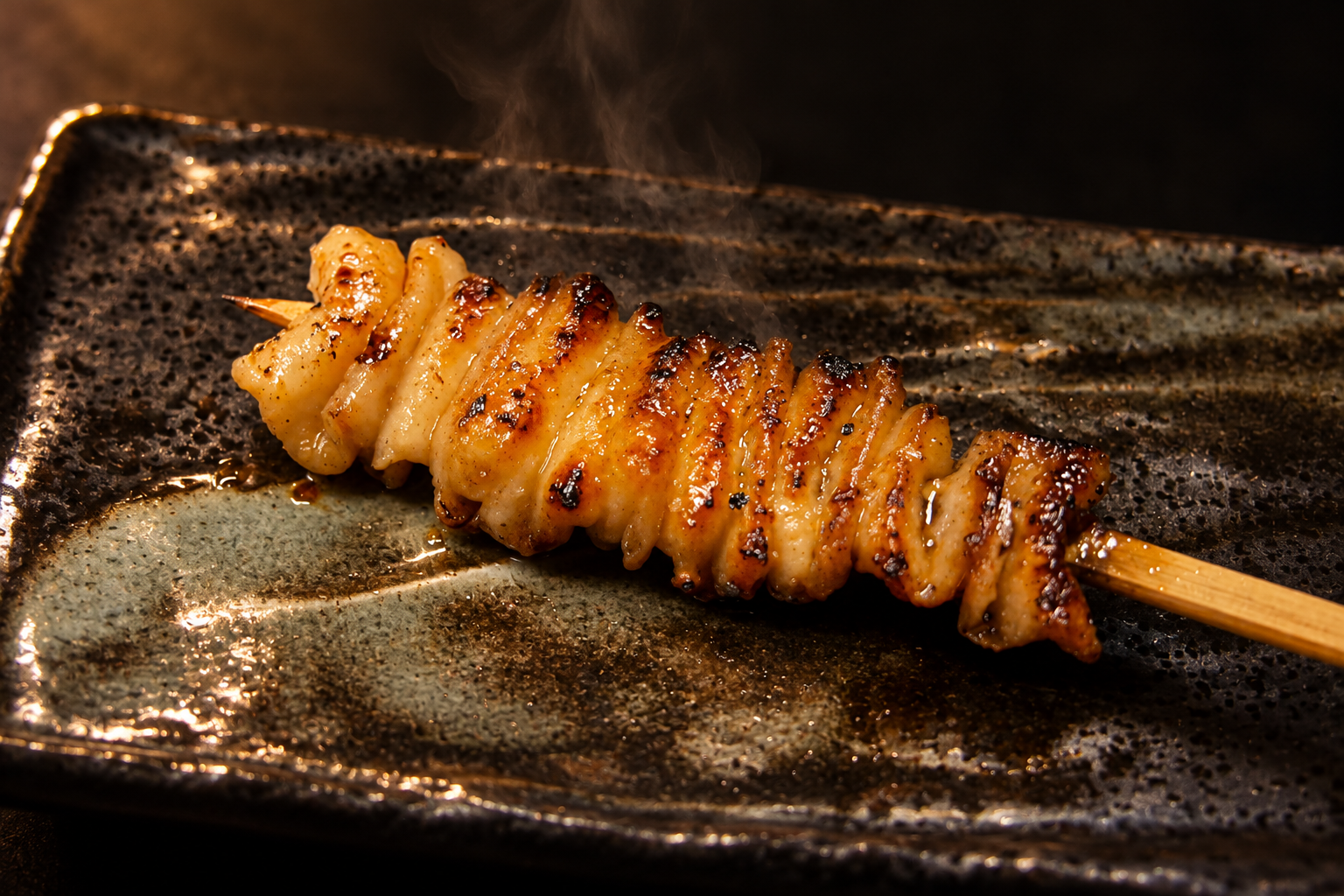
Some yakitori menus in Japan add a phrase such as tōjitsu kushiuchi (skewered the same day) or jika kushiuchi (skewered in-house). Unlike notes about cuts or seasoning, these words describe how the skewers are prepared. This guide explains what kushiuchi is, why a restaurant might mention it, and what to look at before you order.
What kushiuchi means
Kushiuchi simply means threading meat, eel or other ingredients onto skewers for grilling (Kotobank dictionary). At a yakitori restaurant it is part of the preparation: pieces of chicken, spring onion and so on are threaded onto skewers one by one.
There is a saying among yakitori cooks: "three years to learn skewering, a lifetime to learn grilling" (kushiuchi sannen, yaki isshō). An article on Inshokuten.com explains it as three years to master skewering and a whole career to refine grilling, which shows how much skewering is thought to affect the finished dish.
Why skewering matters
According to the same article, good skewering means balancing the weight, thickness and size of each piece, finding each piece's centre of gravity so it does not spin on the skewer, and piercing across the grain. Pieces of a similar size cook more evenly, and fewer gaps give a neater finished skewer.
| Menu wording | What it tells you | What it does not tell you (ask) |
|---|---|---|
| Tōjitsu kushiuchi (skewered same day) | The restaurant says skewers are made that day | Exact prep time, origin of the chicken, which cuts |
| Jika / tennai kushiuchi (skewered in-house) | The restaurant skewers its own meat | When it was skewered |
| No mention | Nothing either way | How the skewers are prepared |
Skewering is also time-consuming work. Food wholesaler Preco Foods describes a service that skewers meat for restaurants, by hand or by machine, with options such as 30 to 80 grams per chicken-thigh skewer. In other words, restaurants prepare their skewers in different ways.
So it is best to read "skewered same day" as the restaurant telling you something about its own preparation. It is not a guarantee of flavour, but it gives you a natural opening to ask about anything you want to know.
Yakitori Senkichi's menu
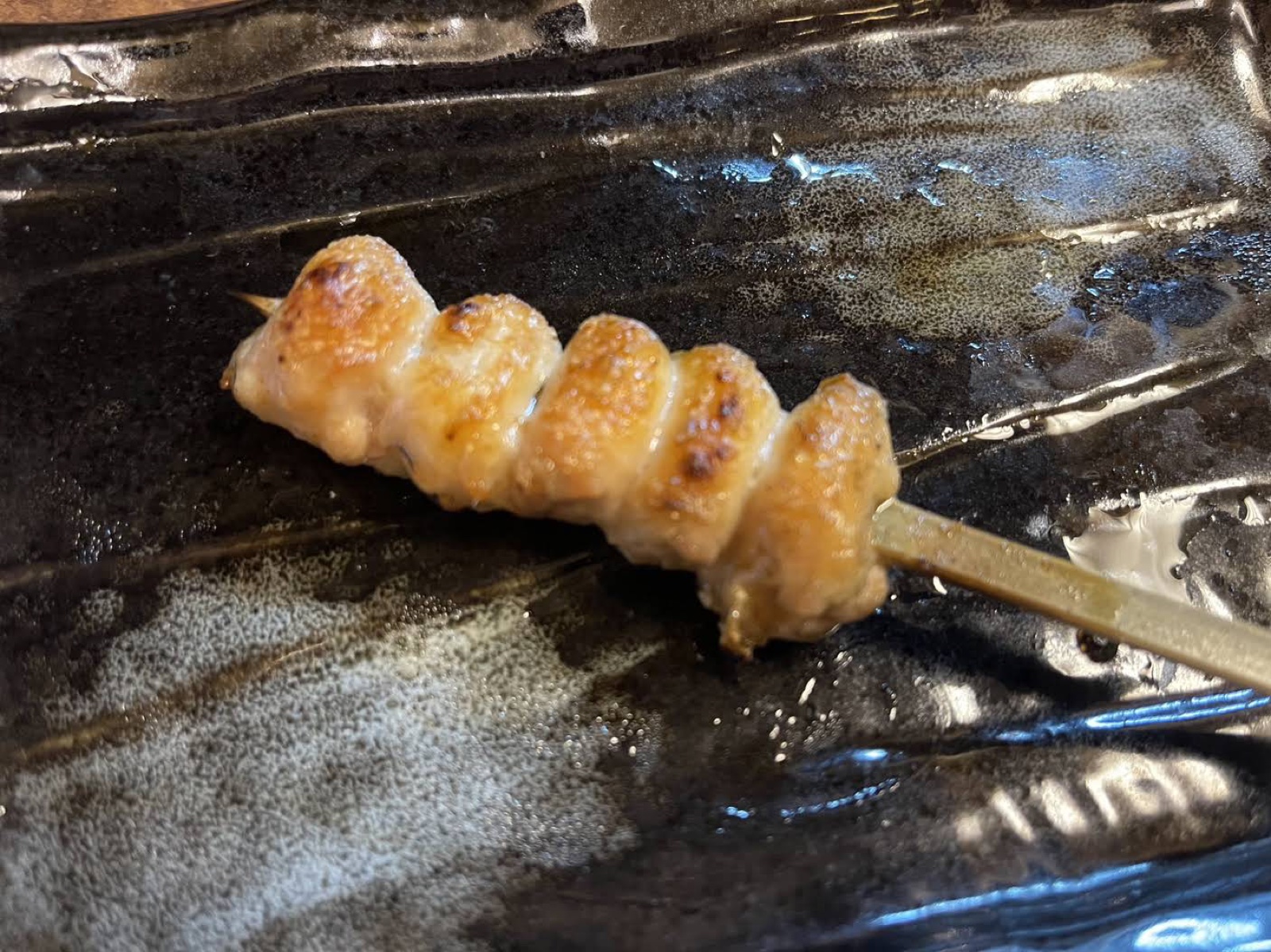
When we checked the Yakitori Senkichi Minamikyuhoji official site on 2 October 2026, its food menu listed "same-day skewered yakitori from ¥220" alongside "charcoal-grilled skewers from ¥220". The site does not say when the skewers are made or which cuts are available that day, so please check the day's menu and ask the staff.
What to look at before ordering
- The cut names on the day's menu, which often show what is available
- Any "sold out" notes, as some skewers end when that day's batch is gone
- Salt or tare sauce: ask whether a cut has a recommended seasoning
- Quantity: start with two or three skewers each and add more as you go
For the basics of cuts and salt versus tare, see our guide to ordering yakitori in Osaka. For beef, pork and vegetable skewers, see reading a yakitori and kushiyaki menu.
Short phrases to ask at the restaurant
- "Kyō no osusume no kushi wa dore desu ka?" (Which skewers do you recommend today?)
- "Kono kushi wa shio to tare, dochira ga osusume desu ka?" (Salt or tare for this one?)
- "Mada nokotte iru kushi wa dore desu ka?" (Which skewers are still available?)
"Skewered same day" is one piece of information a restaurant shares about how it prepares yakitori. Knowing what the words mean makes reading the menu a little more interesting.
This article was edited by Koetsu Co., Ltd., which is connected with Yakitori Senkichi, after checking each source on 2 October 2026. Menus, prices and preparation can change, so follow the menu and staff guidance on the day of your visit. In Japan, drinking alcohol under the age of 20 is prohibited by law.